





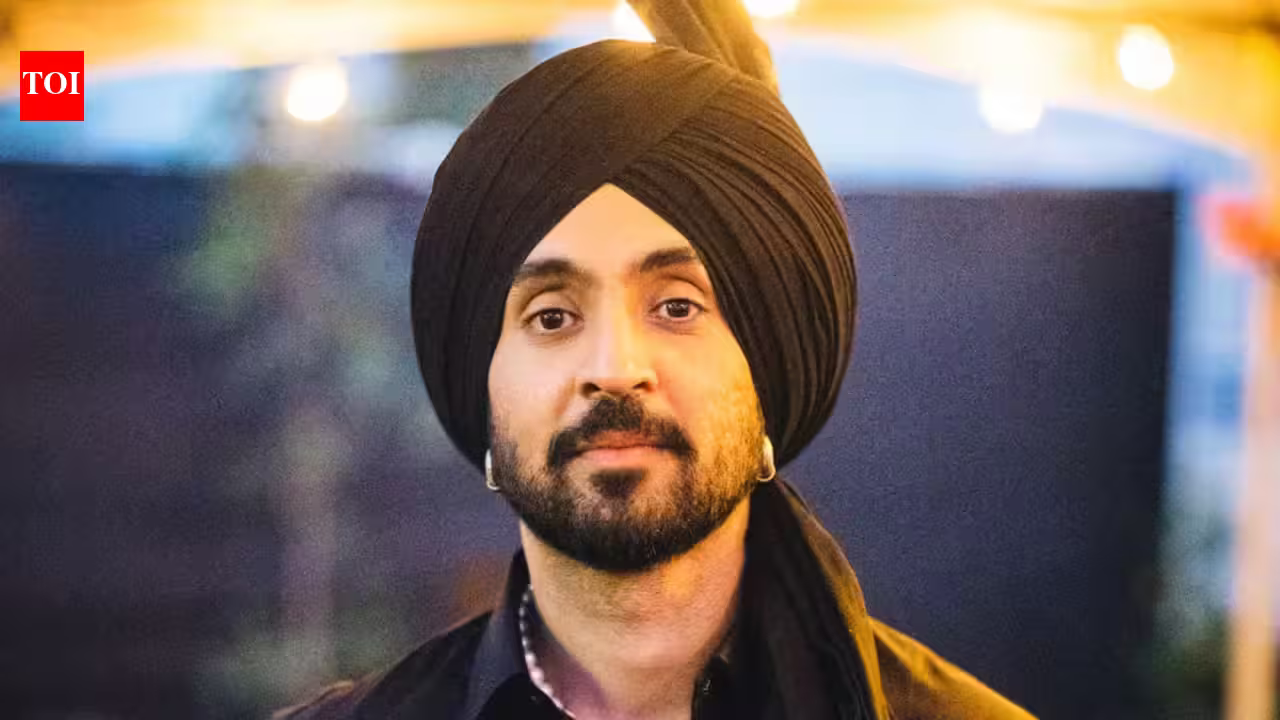
The phenomenon that is Diljit Dosanjh has officially reached a fever pitch, but as the Punjabi global superstar prepares to take the stage at Ahmedabad’s Narendra Modi Stadium, the atmosphere is thickening with more than just anticipation. While fans are clamoring for a piece of the Dil-Luminati tour, a significant legal hurdle has emerged, casting a shadow over the setlist and highlighting an ongoing battle between creative expression and social responsibility.
### The Contested Setlist: A Moral Standpoint
The controversy stems from a formal objection raised by Dr. Pandit Rao Dharennavar, a sociology professor at Chandigarh’s PGGC-46, who is well-known for his crusades against the glorification of vice in Punjabi pop culture. Dr. Dharennavar has issued a stern ultimatum to the singer: drop four specific tracks from the Ahmedabad performance or face the consequences of the Gujarat High Court.
The songs in question—”Patiala Peg,” “Panj Tara,” “Je Bichcho Feem Labbiya,” and “Jatt Utthe Fire Karda”—have long been staples of Dosanjh’s high-energy shows. However, the professor argues that these tracks promote the consumption of liquor, narcotics, and the dangerous glorification of gun culture.
“These songs contain lyrics promoting alcohol, drugs and gun culture, which can have a negative impact on children,” Dr. Dharennavar stated, citing a 2019 Punjab and Haryana High Court order that ostensibly restricted the live performance of songs promoting substance abuse. He claims that Dosanjh has ignored these legal boundaries during previous stops on his tour, including recent performances in Indore and Delhi, and he is prepared to file a contempt of court case if the singer decides to proceed with the controversial tracks in Gujarat.
### The Clash Between Art and Policy
At the heart of this dispute is a broader societal tension. Dr. Dharennavar’s stance is firmly rooted in the government’s “Nasha Mukt Bharat” (Drug-Free India) campaign, an ambitious initiative that seeks to curb the prevalence of substance abuse through public awareness. For the professor, the stage is not a neutral ground; he views the massive amplification provided by a stadium concert as a powerful tool that, when misused, can undermine national public health efforts.
Critics of the professor’s stance argue that music is a mirror of cultural reality, not necessarily an endorsement of it. They point out that artists like Dosanjh are entertainers whose catalogs span decades, and expecting them to curate their setlists based on evolving social sensitivities can feel like censorship. Yet, when an artist achieves the level of stardom that Dosanjh has, their “influence” is no longer just a figure of speech; it is a measurable social force, and the pressure to exercise that influence responsibly is becoming a standard feature of modern Indian tour management.
### Security on Steroids: A Logistical Giant
While the legal threats dominate the headlines, the Ahmedabad police are bracing for a logistical challenge of unprecedented proportions. With an expected attendance of 85,000 fans, the event has essentially become a small city that needs to be managed for a single night. Ahmedabad Police Commissioner Anupam Singh Gehlot has confirmed a massive security deployment, with roughly 2,000 police personnel stationed at the venue.
This is not a typical concert security detail; it is a full-scale operation. The state has mobilized three companies of the State Reserve Police, alongside Bomb Detection and Disposal Squads (BDDS), Quick Response Teams, and specialized units from the Crime Branch and the Special Operations Group (SOG). The stadium will be under the watchful eye of 600 CCTV cameras, ensuring that even the most remote corners of the venue are being monitored.
Commissioner Gehlot emphasized that the safety of the massive crowd is the priority. “Around 90,000 people, including support staff and security personnel, are expected to be present,” he noted. With such a massive influx of bodies, the police are leaving nothing to chance, implementing strict entry and exit protocols to prevent stampedes and ensure that the “Dil-Luminati” energy remains contained within the stadium walls.
### Managing the Masses: Prohibitions and Protocols
For those heading to the Narendra Modi Stadium, the experience will be heavily regulated. In an effort to streamline security checks and reduce the risk of items being used as projectiles or hidden hazards, police have implemented a strict prohibition on items as common as water bottles and bags.
To mitigate the inconvenience, the organizers have set up locker facilities outside the venue, allowing attendees to store their belongings before entering. In a nod to practical needs, exceptions have been made for female attendees, who are permitted to carry small power banks, acknowledging the reality of spending an entire day waiting for a show that will likely drain every phone battery in the house.
### The Verdict: Compliance or Rebellion?
As of now, the Dosanjh camp has remained relatively quiet regarding the specific demand to cut the four tracks. For an artist, changing a setlist mid-tour is a major disruption—these songs are carefully choreographed, and they are often the moments that generate the loudest crowd engagement. However, the threat of a contempt of court case is not something any promoter takes lightly.
Will Dosanjh bow to the pressure, or will he stand by his discography? If he chooses to drop the songs, he risks disappointing fans who have paid for the classic “Diljit experience.” If he performs them, he faces the very real threat of legal action that could lead to a messy, high-profile court battle right in the middle of his peak.
One thing is certain: all eyes are on Ahmedabad. The concert is no longer just about the music; it is a test case for how far the long arm of the law can reach into the world of live entertainment. Whether this leads to a new era of “sanitized” setlists in India or a fierce debate over artistic freedom remains to be seen. For now, 85,000 fans are simply waiting for the lights to go down, hoping that the only drama they witness is the one happening on stage.
Disclaimer: This content is auto-generated for informational purposes only.
Source: Read Original News