








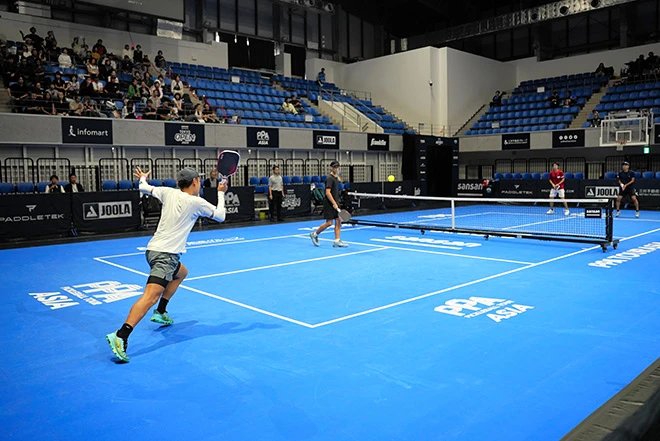
TOKYO — Japan is currently in the grip of a pickleball fever, with the sport’s meteoric rise catching the nation’s infrastructure off guard. As participation numbers surge across the country, enthusiasts are finding themselves in a desperate race for court space, with facilities increasingly unable to meet the skyrocketing demand.
Often described as a blend of tennis, badminton, and table tennis, pickleball has evolved from a niche American pastime into a global phenomenon. In Japan, the player population has seen an extraordinary climb, jumping from roughly 9,000 in 2024 to approximately 330,000 by 2026. This rapid growth has been fueled by heavy media exposure, influencer endorsements, and the sport’s inherent accessibility, which allows beginners to enjoy competitive rallies within just an hour of picking up a paddle.
However, the physical landscape of Japanese sports is struggling to keep pace. The Pickleball Japan Federation, established earlier this year, reports a flood of requests from local communities, schools, and private businesses seeking to build dedicated courts. Currently, many players are forced to compete for time in multipurpose gymnasiums, and some venues have reached a breaking point, officially closing their doors to new reservation requests.
“It is almost impossible to make a reservation,” noted one frustrated local player, a sentiment shared by thousands as the sport moves from a casual hobby to a lifestyle staple. For many, “Morning pickle”—a quick session before heading to the office—has already become a standard daily routine.
The commercial sector is betting big on the sport’s long-term sustainability. Following a massive $225 million global investment in the pickleball circuit, the industry is eyeing the 2032 Brisbane Olympics as a potential future stage for the sport. In Japan, corporations are taking the lead in talent cultivation. The “Pickleball X” project, spearheaded by the business services provider Sansan, has begun training elite athletes, including former top-tier tennis players like Nasa Hatakeyama, to compete on the professional world stage. In July, Sansan even converted a former indoor swimming pool in Tokyo’s Ikebukuro district into a seven-court facility to bolster training and public access.
Despite the excitement, experts urge a balanced approach. Yoshifusa Ichii, a professor of sports culture studies at Ritsumeikan University, notes that the sport’s survival beyond the current “boom” will depend on its ability to offer unique value across different age groups.
For now, the priority remains infrastructure. As organizations like the Well Racket Club—which saw its membership swell to 3,000 after converting unused tennis courts—demonstrate, the appetite for the game is far from satisfied. Whether Japan can expand its court capacity fast enough to match the enthusiasm of its newest athletes remains the ultimate test for the future of the sport in the region.
Disclaimer: This content is auto-generated for informational purposes only.
Source: Read Original News