







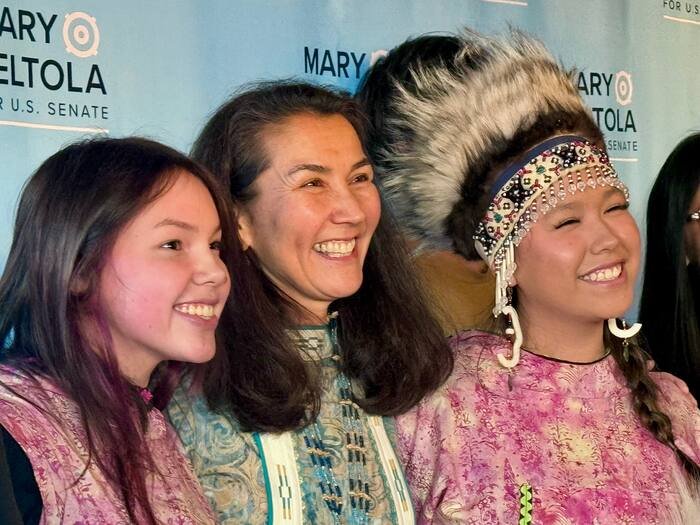
ANCHORAGE, Alaska – With just over a week remaining before the midterm elections, the high-stakes battle for Alaska’s U.S. Senate seat has intensified, as incumbent Republican Sen. Dan Sullivan and Democratic challenger Mary Peltola aggressively court a vital voting bloc: Alaska Natives.
The candidates’ outreach efforts took center stage at this week’s Alaska Federation of Natives (AFN) conference in Anchorage. While the organization endorsed Peltola, who is Yup’ik, during her previous House campaigns, it has opted to remain neutral in this year’s Senate race. Seeking to bridge the gap, some major entities, such as the regional Native corporation Sealaska, have issued dual endorsements, citing a desire to honor both candidates’ contributions to the state’s diverse communities.
The contest is being closely watched nationally, as it remains a key factor in the battle for control of the U.S. Senate. However, the race took a contentious turn on Friday. President Donald Trump, who held a rally for Sullivan earlier this month, announced he has instructed his administration to file a lawsuit to block the certification of the election should the incumbent lose. The legal challenge centers on potential voter confusion caused by the presence of a second candidate on the ranked-choice ballot: Daniel J. Sullivan Jr., who is running without a party affiliation. U.S. Attorney General Todd Blanche stated the litigation is necessary to ensure voters were not “misled” by the similar names.
For many Alaska Natives, who make up approximately one-fifth of the state’s population, the focus remains on tangible outcomes rather than legal maneuvering. Advocates have noted persistent barriers to the ballot box, including mail delays and inconsistent polling hours in remote villages. Activist Dallas Goldtooth, speaking at the conference, acknowledged a sense of cynicism among some voters regarding the impact of their participation, but emphasized the necessity of making their voices heard.
Both candidates used their platform at the conference to address issues critical to the Native population. Sullivan, praised by some leaders for his work on land allotments for Vietnam War-era veterans, leaned into his record as a champion for the state’s interests. Peltola, meanwhile, delivered a deeply personal address, advocating for increased resources to combat the crisis of missing and murdered Indigenous people and reaffirming her commitment to protecting subsistence fisheries.
Energy policy remains a defining point of contention. Rural communities, struggling with the high costs of diesel for heat and electricity, are acutely sensitive to the shifting landscape of energy politics. While Peltola has pledged to work with a Republican administration to expand oil and gas drilling, Sullivan has campaigned on painting her as an ally of “Lower 48” liberals who, he claims, threaten Alaska’s energy independence.
As the November 3 election nears, both campaigns are working to sway a constituency that, while diverse in its political leanings, holds significant influence in the final outcome of this pivotal race.
Disclaimer: This content is auto-generated for informational purposes only.
Source: Read Original News