








The Indian film industry is no stranger to ambitious projects, but Nitesh Tiwari’s Ramayana is operating on a scale that feels less like a movie production and more like a cultural event of national importance. As the clock ticks down toward Ganesh Chaturthi, the air is thick with the kind of palpable electricity that only accompanies a generational cinematic endeavor. For months, the rumor mill has been churning with leaks, speculative casting calls, and whispers of sets built with obsessive, awe-inspiring detail. Now, the veil is finally being lifted.
The makers of this magnum opus have chosen the auspicious occasion of Ganesh Chaturthi to signal the beginning of their musical campaign. It is a strategic, deeply symbolic choice that aligns perfectly with the ethos of the narrative. Starting with the “Siya Ram” poster reveal at 7:30 AM IST on September 14, the production is effectively planting its flag in the heart of the festive season, setting a tone of reverence and grandeur that they hope will carry the film through its long road to theaters.
A Musical Trio for the Ages
Perhaps the most tantalizing aspect of this initial rollout is the sheer pedigree of the talent involved in the soundtrack. In an era where music is often relegated to background noise or quick-fix remixes, Ramayana is doubling down on the art of the sonic experience. The announcement that the first musical offering, “Jai Jai Ram,” is composed by the legendary A.R. Rahman is, in itself, a massive statement of intent.
Rahman, who has spent decades perfecting the ability to weave spiritual gravitas with contemporary melodic sensibilities, is the ideal choice to score an epic of this magnitude. When you pair his compositions with the lyrical depth of Dr. Kumar Vishwas—a poet who commands immense respect for his command over Hindi and Sanskrit literature—you get a recipe for something truly timeless. Add to that the golden vocals of Arijit Singh and Shreya Ghoshal, and you have a powerhouse quartet that effectively guarantees an emotional resonance that will likely transcend the screen. This isn’t just a song launch; it is the debut of a soundscape that will define the viewing experience for millions.
The Weight of Expectation
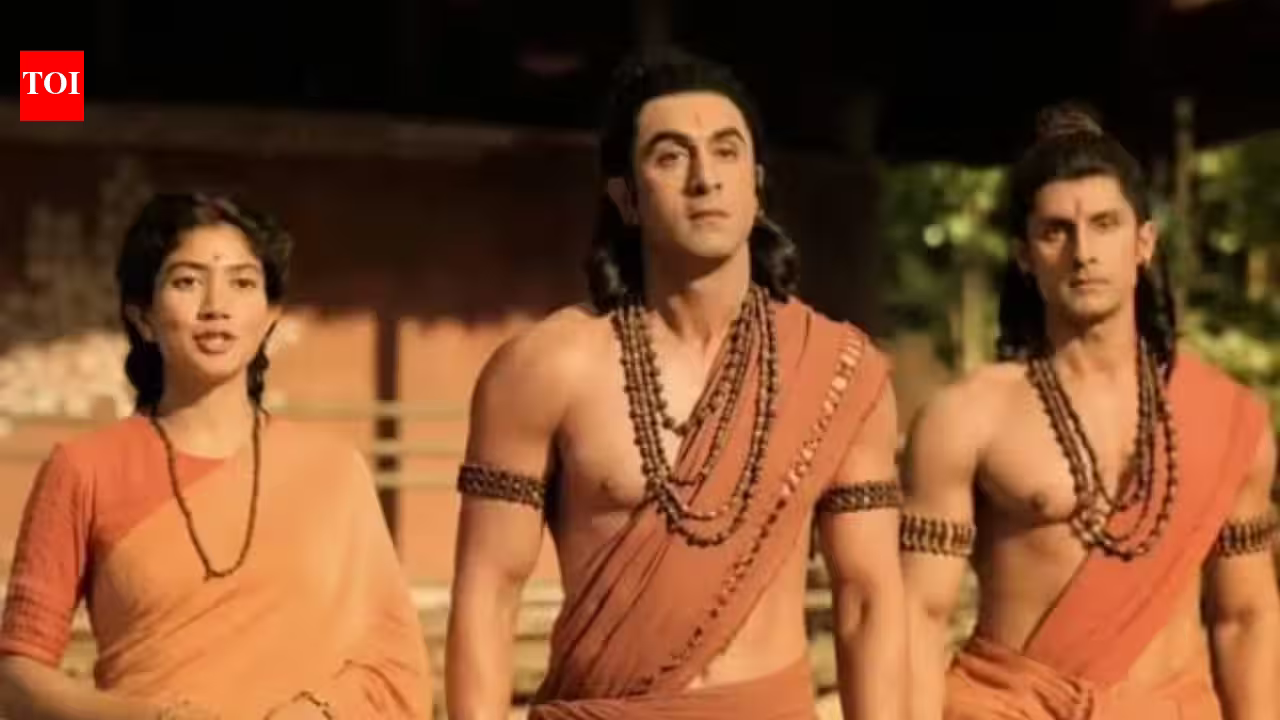
Directing a project of this nature is a thankless task for most, but Nitesh Tiwari—the man behind the acclaimed Dangal—is no stranger to navigating high stakes. With Ramayana, he is attempting to translate one of the most widely read and deeply ingrained epics in history into a two-part cinematic tapestry. The casting choices have already sparked endless debates across social media, which is perhaps the truest sign of the film’s massive cultural footprint.
Ranbir Kapoor stepping into the role of Lord Rama brings a certain nuanced, stoic charisma that the character demands. Opposite him, Sai Pallavi’s casting as Sita has been widely celebrated as a masterstroke of authenticity and grace. However, the curiosity surrounding Yash—the man behind the “Rocky Bhai” phenomenon—portraying Ravana is perhaps the most intriguing variable. Seeing how Tiwari balances the larger-than-life energy of his star cast against the necessary delicacy of the source material will be the true test of this film’s legacy.
An International Standard
While the heart of the film is undeniably rooted in Indian tradition, the production infrastructure is unmistakably global. The news that the music will feature a collaboration between AR Rahman and none other than Hans Zimmer is a clear signal that Namit Malhotra, the film’s producer, is aiming for a level of international polish rarely seen in Indian mythological adaptations.
Bringing in Zimmer—a composer whose work has defined the sound of modern Hollywood epics like Dune and The Dark Knight—suggests that the production team is prioritizing a global audio identity. It is an acknowledgment that while Ramayana is a story of Indian heritage, the technical execution is designed to stand toe-to-toe with the biggest franchises in world cinema. This isn’t just about making a movie; it is about creating a benchmark for Indian visual storytelling.
The Long Road to 2026
Despite the excitement generated by this week’s announcements, we must temper our anticipation with patience. The schedule released by the production house is long and deliberate. With Part One slated for a worldwide release in November 2026 and Part Two arriving the following Diwali in 2027, the team is playing the long game.
In an industry that often rushes to capitalize on hype, this multi-year roadmap suggests a commitment to quality control and post-production perfection. By spacing out the two parts, the makers are allowing the audience to digest the scale of the world they are building. It also gives the marketing team the runway to drop teasers, trailers, and musical offerings like “Jai Jai Ram” in a way that builds a cumulative narrative arc, rather than blowing their entire creative load in a single weekend.
Why This Matters
Why does the unveiling of a poster and a song feel so significant? Because Ramayana represents a bridge between eras. It is the modern manifestation of a story that has been told through oral traditions, dance-dramas, television serials, and literature for millennia. Each generation demands a version that speaks its own language—visually, sonically, and emotionally.
By blending the literary precision of Dr. Kumar Vishwas, the transcendent music of Rahman and Zimmer, and a cast that bridges the gap between traditional acting schools and contemporary superstardom, the team behind Ramayana is clearly aiming to be the definitive cinematic voice of the current era. As we wake up on September 14 to catch that first glimpse of the “Siya Ram” poster, we aren’t just looking at a movie promotion. We are watching the beginning of an epic quest to bring the greatest story ever told back to the forefront of the global cultural consciousness. And if the lineup of talent is any indication, it’s a quest that is off to a truly auspicious start.
Disclaimer: This content is auto-generated for informational purposes only.
Source: Read Original News