








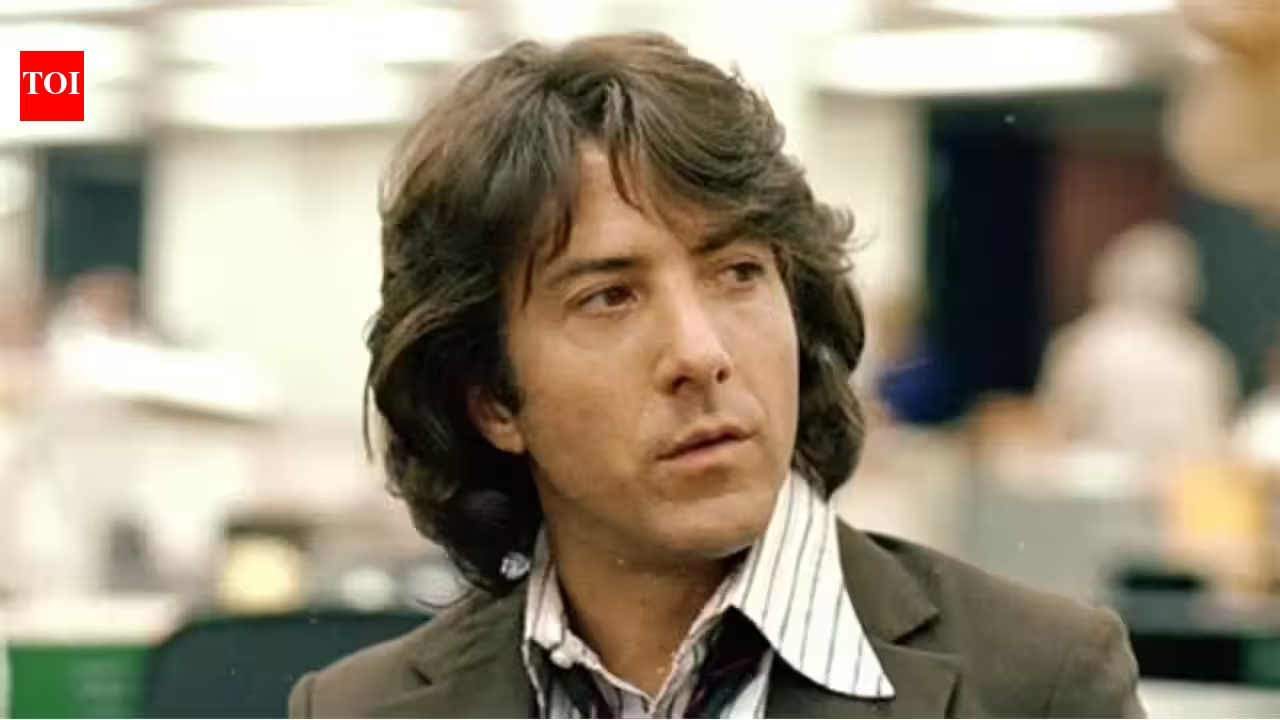
For over half a century, Dustin Hoffman has occupied a singular space in the American cultural consciousness. From the neurotic, trembling Benjamin Braddock in The Graduate to the fierce, transformative depth of Tootsie and Rain Man, he is an actor who has defined the craft for generations. Yet, for all the thousands of hours he has spent inhabiting other people, the man behind the masks has remained surprisingly elusive.
That changes with Look At Me, his long-awaited memoir co-written with Ariel Levy. Published this November, the book is less of a chronological victory lap and more of a psychological excavation. Hoffman isn’t just recounting the roles; he is finally addressing the demons, the insecurities, and the controversies that have shadowed his remarkable career.
A Childhood Defined by the Shadow of a Brother
To understand the man, one must understand the boy who felt invisible. Readers expecting a polished Hollywood origin story will find something far rawer. Hoffman pulls no punches when describing his upbringing, detailing a youth plagued by pervasive bullying and a crushing sense of inadequacy.
Perhaps the most poignant thread in the book is his relationship with his older brother, Ronny. While Dustin spent his early years feeling like the black sheep of the family—the one who “wouldn’t amount to anything”—he watched Ronny excel as an economist, a professor, and a lawyer. The comparison was constant, a quiet furnace of insecurity that burned beneath Hoffman’s skin. Yet, in these pages, there is no lingering bitterness. Instead, there is a complex, almost begrudging admiration. Hoffman recounts how he learned to hold his ground against the bullies of his youth, a trait that arguably fueled the grit he eventually brought to the screen.
The Paradox of Fame: Broke and Iconic
One of the most fascinating segments of the memoir details the surreal, paradoxical period surrounding the 1967 release of The Graduate. For the general public, the film turned Hoffman into an overnight global sensation. For Hoffman, it was a period of bizarre, almost Kafkaesque struggle.
“My life was surreal,” he writes. “I couldn’t go out on the street without people coming up to touch me and ask for my autograph, but I was still basically broke.” The financial reality, he reveals, was staggering: he took home a mere $3,000 from the production after expenses. He shares a particularly stinging anecdote about his poster appearing at an unemployment center. He couldn’t even utilize the services he was entitled to because he was terrified that passersby—recognizing the face of the biggest star in the country—would assume he was wealthy, creating a dissonance that felt like a punchline to a cruel joke. “It was a terrible experience making the movie that changed my life,” he admits, providing a sobering counterpoint to the myth of the “overnight success.”
Reckoning with the ‘MeToo’ Era
Perhaps the most scrutinized portion of the book involves his candid address of the sexual misconduct allegations that surfaced during the #MeToo movement in 2017. When the reckoning arrived, it sent shockwaves through the industry, and Hoffman was not exempt from the scrutiny.
In Look At Me, Hoffman attempts to navigate a difficult middle ground. He does not deny the shift in cultural consciousness; rather, he frames his past behavior through the lens of a different era. Addressing his time on sets like Straw Dogs (1971) and Tootsie (1982), he acknowledges that his conduct may have caused discomfort, but he draws a sharp line between “crass humor” and predation.
“I’m sure it’s true that in my life, especially forty years ago, I made some women uncomfortable,” he writes. “But ‘uncomfortable’ is a subjective emotional state.” He characterizes himself as a “Borscht Belt flirt,” borrowing a description once given to him by Bill Murray, and defends his penchant for crude jokes as a form of performance rather than coercion.
The Defensive Stance: ‘It’s Not Something I’ve Ever Done’
When discussing the broader implications of #MeToo, Hoffman is unwavering in his own defense. While he expresses support for the movement’s goals, noting that “plenty of women had put up with way too much for way too long,” he maintains an absolute denial regarding the allegations brought against him.
“Not for a second did I worry that anything negative would be said about me,” he reflects, “because the idea of taking something from someone sexually that they didn’t want to give… it’s just not something I’ve ever done.” By addressing the allegations directly but framing them against a backdrop of generational shifts and a specific type of personal humor, Hoffman is making a clear plea to his audience: judge the man by his intent as much as his impact.
The Legacy of the Actor
Ultimately, Look At Me is the story of a man who found his salvation in the classroom. Hoffman recounts the pivotal moment he signed up for an acting course, not out of passion, but because he needed three credits to fill his schedule.
“Suddenly, I could memorize, I could study, I could focus,” he recalls. That spark of focus didn’t just lead to an acting career; it saved him from the trajectory his childhood bullies had predicted for him. Whether or not his readers choose to accept his perspective on the controversies of his later years, there is no denying the depth of the introspection here. Hoffman is looking at himself, and for the first time in a long time, he is inviting us to look closely, too—flaws, ego, talent, and all.
Disclaimer: This content is auto-generated for informational purposes only.
Source: Read Original News