









From Saplings to Protest: Harsimrat Kaur Badal’s Political Pivot in Punjab
Chandigarh: Nearly two decades ago, Harsimrat Kaur Badal captured the public imagination at the Golden Temple by distributing saplings as part of the “Nanhi Chhaan” initiative. The campaign, which sought to address the dual crises of female foeticide and environmental degradation, served as her introduction to large-scale social activism. Today, the symbolic saplings have been replaced by political memorandums as the four-term parliamentarian steers a new, aggressive mobilization strategy ahead of the 2027 Punjab Assembly elections.
The “Maawan-Dhiyan” Offensive
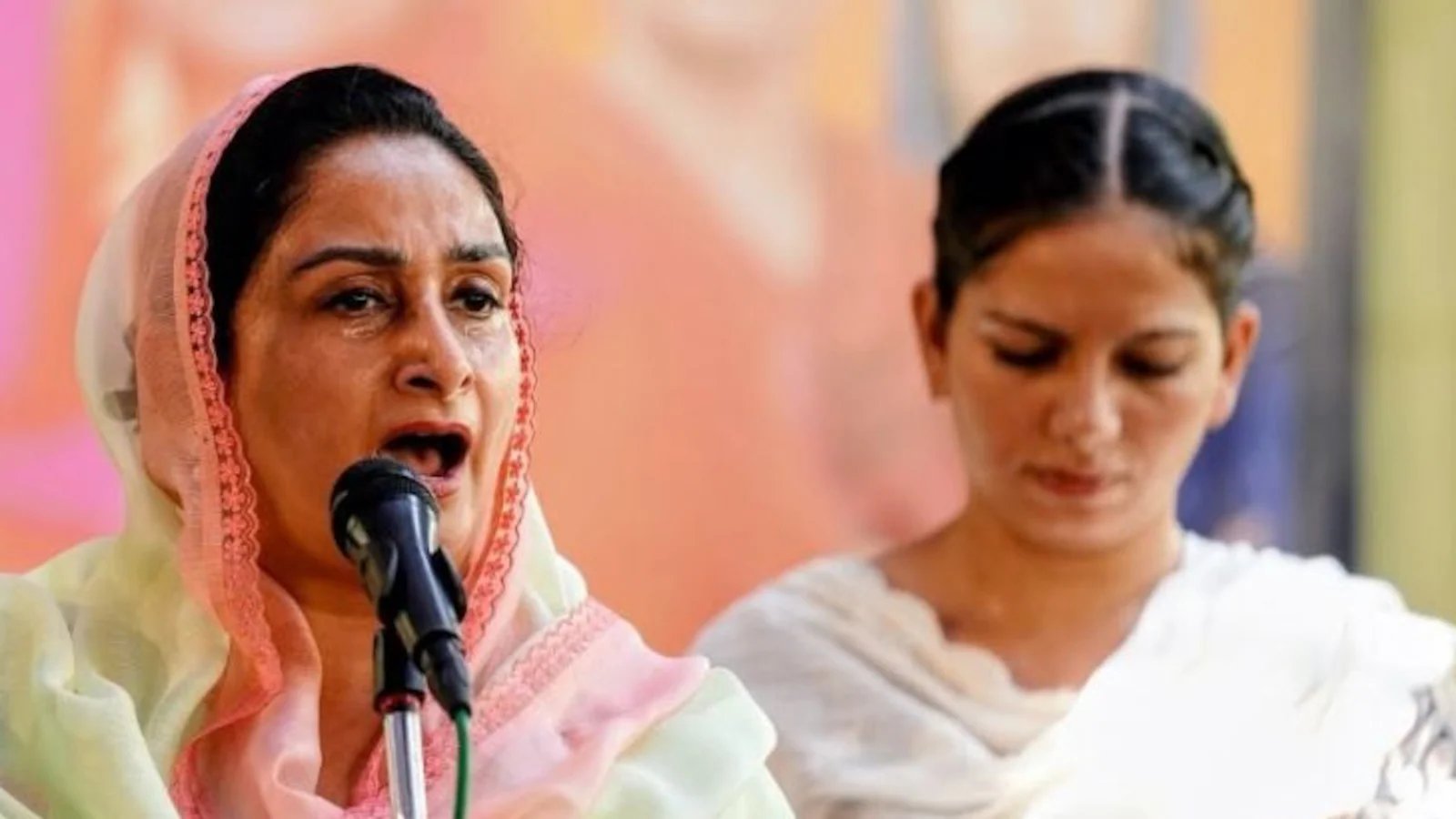
On September 21, Harsimrat launched the “Maawan-Dhiyan” (Mothers-Daughters) campaign in Bathinda, marking a definitive shift toward direct, women-centric political advocacy. While she previously engaged with women’s issues through the lens of social empowerment, she is now framing them as a central pillar of her party’s electoral agenda. Covering regions like Mansa, Sardulgarh, Lambi, and Gidderbaha, the campaign tackles urgent grievances including drug abuse, alleged police high-handedness, and the necessity for greater financial security for rural families.
“Punjab’s future lies in the hands of its women,” Harsimrat declared during a rally in Lambi, positioning herself as a frontline defender of the constituency that has supported her for two decades.
Stepping Into the Void
The urgency of this political reinvention was accelerated by an August 13 incident in Nanded, where Shiromani Akali Dal (SAD) president and her husband, Sukhbir Singh Badal, was attacked with a kirpan. The assault forced Harsimrat to transition from a supporting political figure to the party’s primary voice on the campaign trail.
Her recent speeches have moved beyond local grievances, touching upon state-level controversies such as the legacy of beadbi (sacrilege) cases and the perceived erosion of Punjab’s autonomy. By addressing these sensitive topics, she is attempting to anchor the party’s future in a narrative of accountability and resilience.
Navigating the Legacy and the Future
Harsimrat’s journey is complicated by the weight of the Badal family name and the Shiromani Akali Dal’s historical baggage. The party has struggled to regain its footing since the 2015 sacrilege controversy and the subsequent electoral setbacks. Furthermore, the 2020 resignation of Harsimrat from the Union Cabinet over contentious farm laws serves as both a badge of defiance and a reminder of the party’s frayed ties with its former partner, the BJP.
While the BJP has signaled an intention to contest the 2027 elections independently, persistent speculation regarding a potential alliance continues to cloud the state’s political horizon. For Harsimrat, the challenge is to reconcile the party’s past with a vision for the future.
A Test of Political Identity
The “Maawan-Dhiyan” campaign represents a critical evolution in her career. Whether this initiative succeeds in mobilizing the female electorate—or merely serves as a platform to voice long-standing frustrations—remains to be seen. Harsimrat is currently attempting to balance her deep-rooted familial identity with an individual political stature that can command authority beyond the traditional voter base.
As the 2027 polls approach, the woman who once used social symbolism to raise awareness for the girl child is now counting on those same women to help the Akali Dal reclaim its relevance in a shifting, high-stakes political landscape.
Disclaimer: This content is auto-generated for informational purposes only.
Source: Read Original News