









KATHMANDU – In the quiet, incense-filled halls of the Mustang Gumba monastery in Kathmandu, the silence is punctuated only by the low chanting of prayers for the dead. It has been over a week since a catastrophic flash flood tore through the Bhote Koshi River on August 26, 2026, leaving a trail of devastation that has silenced entire villages and left thousands clinging to fragile threads of hope.
For the survivors huddled in temporary shelters, the tragedy has defied local language. At the monastery, a group of victims from the Rasuwa district—many having lost their homes, livelihoods, and entire families—debated how to name their new collective. They eventually settled on the “Himali Tsunami and Flood Victims Management Committee.”
“Some were hesitant to use the word ‘Tsunami’ for the mountains,” said Chhesang Thokra, who lost his mother and sisters to the deluge. “But this catastrophe is exactly that. It came from the sky and swallowed our world.”
The scale of the disaster is still being tallied. Government authorities report over 5,000 people are still missing, while search teams have recovered nearly 1,400 bodies. An estimated 14,000 survivors have been displaced. The flood, believed by experts to have been triggered by a massive glacial collapse and landslide entering the Lende Khola, surged downstream with such force that it submerged five-story buildings in mud.
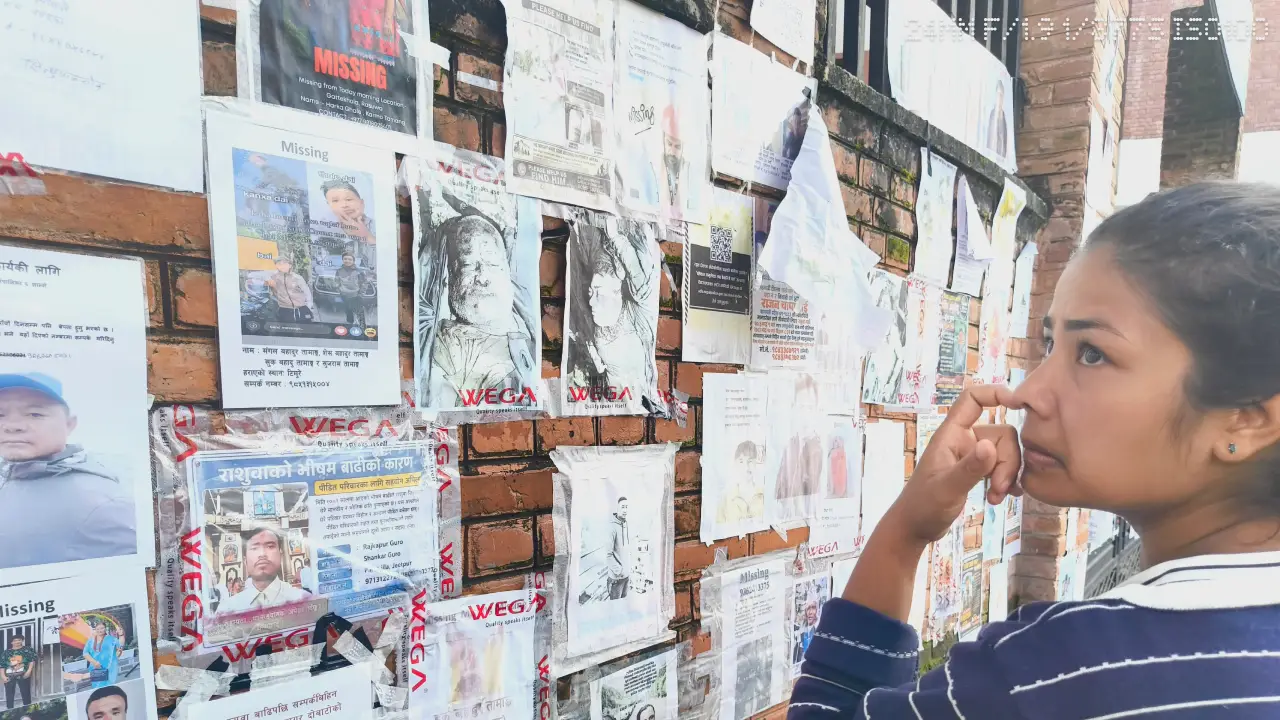
At the makeshift “Wall of Information” outside Kathmandu’s teaching hospitals, the heartbreak is visible in hundreds of handwritten posters. Families scan wall-to-wall photos of swollen, disfigured remains, searching for a familiar face. For many, like Devdhari Raya, the search has been fruitless. “I want to see him once, to say a final goodbye,” he said, his voice trembling as he spoke of his son, a carpenter who vanished when the flood hit his workplace in Nuwakot.
With morgues overwhelmed, the government has begun mass burials for unidentified victims, a move that has sparked controversy but is deemed necessary to prevent disease outbreaks. To cope, families are increasingly turning to symbolic rituals. At the sacred Pashupati Arya Ghat, hundreds of relatives gathered recently to perform cremation rites using figures made of Kusha grass, marking the passing of loved ones whose bodies may never be recovered.
Beyond the immediate grief, a shadow of financial ruin looms. Survivors from the border trade hub of Timure, which was completely washed away, now face the crushing burden of unpayable bank loans and the total loss of their commercial base.
Psychological trauma is the hidden secondary disaster. Dr. Suraj Tiwari, a consultant psychiatrist, warned that survivors are exhibiting acute stress disorders and, in many cases, suicidal ideation. “They are carrying multiple layers of grief,” he noted.
Despite the darkness, a quiet resilience persists. In the monastery, the newly formed committee has moved beyond food and clothing, now seeking support for long-term rehabilitation. As he looked toward children playing soccer in the courtyard—many of whom are now orphaned—Dorje Tamang, the committee’s vice-chair, stood firm. “We lost our homes and our kin, but we have not lost hope,” he said. “The future remains.”
Disclaimer: This content is auto-generated for informational purposes only.
Source: Read Original News