







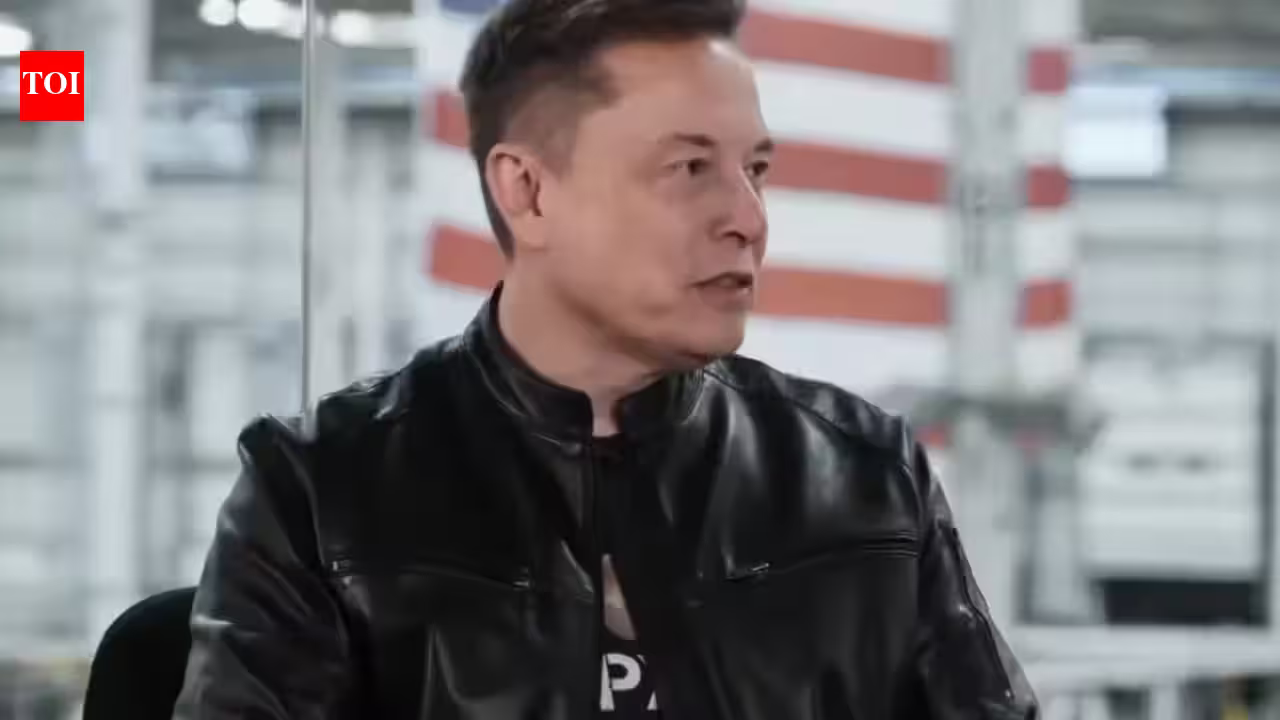
The Unchecked Titan: Why Alex Gibney’s ‘Musk’ Is the Most Polarizing Film of the Year
In the hyper-accelerated landscape of modern tech, few figures loom as large—or as divisively—as Elon Musk. From the vacuum of space to the chaotic discourse of the platform formerly known as Twitter, his fingerprints are everywhere. Now, the man who has spent the last decade disrupting industries is about to become the subject of his own high-stakes disruption: a sprawling, four-hour cinematic deep dive titled Musk, directed by the prolific Oscar-winning documentarian Alex Gibney.
As the industry prepares for the film’s high-profile premieres at the 83rd Venice Film Festival and the Toronto International Film Festival, the narrative surrounding the project is already electric. This is not a sanctioned biography or a glossy PR puff piece. It is, by all indications, a forensic examination of a man who has accumulated enough power to influence the trajectory of global communication, energy, and governance.
A Trail of Unfiltered Chaos
The recently dropped trailer for Musk is a masterclass in tonal dissonance. It opens with the awe-inspiring, near-mythic imagery of a rocket launch, tapping into the “real-life Iron Man” archetype that Musk has curated for himself over the years. Yet, the audio track quickly subverts the spectacle. Over the roar of the engines, a cacophony of sound bites competes for the viewer’s attention. We hear him described as “the greatest living inventor” in one breath, and “manifestly cruel and selfish” in the next.
The marketing hook is as sharp as it is blunt: the film labels its subject “Earth’s most unchecked man.” As the rocket hits the ground in a jarring explosion, the tension shifts from the wonder of engineering to the erratic reality of the individual steering the ship. The trailer culminates in a biting voiceover that asks if we are watching a visionary at work or, as the film suggests, “a man who has lost his mind.” It is a provocative opening statement for a film that promises to spend 240 minutes deconstructing the cult of personality surrounding the world’s most visible centibillionaire.
The Architect of the ‘Hit Piece’
Alex Gibney is no stranger to taking down giants. With a filmography that includes Enron: The Smartest Guys in the Room and The Inventor: Out for Blood in Silicon Valley, he has built his career on peeling back the layers of corporate hubris. Gibney specializes in identifying the rot at the center of institutional power, and Musk appears to be his most ambitious project to date.
The production has been shrouded in a level of intensity commensurate with its subject. Having spent nearly four years meticulously gathering interviews and digging into the history of Musk’s various enterprises—from the mass adoption of electric vehicles via Tesla to the geopolitical chess game of Starlink—Gibney is positioning this film as the definitive, if critical, record of the “ultimate tech bro.”
When news of the project first surfaced in 2023, the reaction was immediate and predictable. Musk himself took to X to dismiss the impending documentary as a “hit piece.” Gibney’s retort was swift and surgically precise: “How would you know?” This brief, public sparring match highlights the core friction of the documentary: Gibney has not sought Musk’s participation, choosing instead to build his narrative entirely outside the reach of Musk’s formidable communications machine. By operating without the subject’s blessing, Gibney has ensured that the film remains an objective, if sharp, interrogation rather than an authorized narrative.
The Paradox of the Billionaire
At the heart of the documentary lies the central contradiction of the Musk era. How does a man who prides himself on hyper-rationalism and the cold efficiency of engineering also operate with such overt volatility? The Toronto International Film Festival’s synopsis of the film touches on the sheer scale of the subject matter: “Elon Musk has amassed so much power, he’s like a character in a Marvel comic book.”
The film navigates the transition from Musk the engineer to Musk the political wildcard. It examines the takeover of Twitter and the integration of DOGE (the Department of Government Efficiency) into the fabric of American policy. The documentary does not shy away from the idea that Musk is no longer just a CEO; he is a geopolitical actor, one who holds the kill switches to internet access in war zones and the keys to the most public town square in the world. By framing him through the lens of a four-hour epic, Gibney is asking the audience to reconcile the man who builds rockets with the man who triggers cultural firestorms with a single late-night post.
The Verdict Awaits
With an official release date set for October 16, 2026, the cultural impact of Musk is already being felt in the corridors of power and the comment sections of social media. The film is poised to be more than just a piece of entertainment; it is an artifact of our time—a time when the line between tech innovation and individual whim has blurred into nothingness.
For those expecting a standard documentary, the sheer runtime suggests a deep dive into the minutiae that usually escapes the headlines. For those expecting a hit piece, Gibney’s record suggests a nuanced, albeit devastating, portrait of accountability. Regardless of one’s personal stance on Elon Musk, Musk is destined to be a flashpoint in the national conversation. As the credits roll, the audience will be left with the same question the trailer poses: when an individual becomes more powerful than the institutions meant to regulate them, what happens when that person decides to stop following the rules?
We won’t have to wait much longer to find out. As the film hits theaters this fall, expect the debate over the “Earth’s most unchecked man” to reach a fever pitch. In an era of constant noise, Gibney has managed to capture a portrait of the loudest voice in the room. Whether that voice is one of a genius or a cautionary tale, remains for the public to decide.
Disclaimer: This content is auto-generated for informational purposes only.
Source: Read Original News