








Record-Breaking Demand Forces Local Food Banks to Implement New Restrictions
CITY CENTER — In a sobering reflection of the deepening cost-of-living crisis, local food bank administrators announced on Tuesday that they are facing “unprecedented” demand that has pushed their facilities to the breaking point. As inflation continues to impact grocery prices and housing costs, charitable organizations are being forced to implement new restrictions on how often residents can access essential supplies.
At the central distribution site, where lines regularly wrap around the block before sunrise, volunteer coordinators confirmed that they have seen a 40 percent increase in new families seeking assistance compared to this time last year. Many of those waiting in line are first-time visitors, including full-time workers and retirees who have found their budgets completely exhausted by rent hikes and soaring utility bills.
“We are essentially in a state of constant triage,” said Sarah Jenkins, director of operations at the city’s largest food hub. “We want to help everyone who comes to our door, but our shelves are emptying faster than our donors can replenish them. We have reached a point where we have to ask ourselves how we can stretch our current inventory to ensure that we don’t run out completely before the end of the month.”
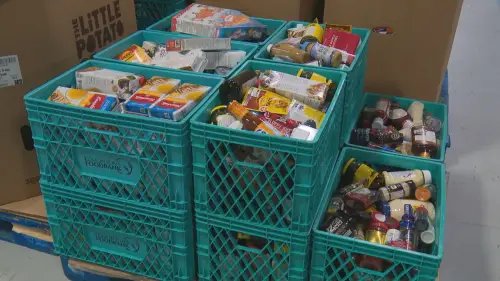
Under the new guidelines, which take effect immediately, households will be limited to one visit every two weeks, down from the previous weekly allowance. Additionally, the pantry has moved to a pre-packaged box system to maximize efficiency and minimize waste, as the volume of people requiring aid has far outpaced the capacity for “choice-based” shopping.
The demographic of those seeking help has shifted significantly. While food banks have traditionally served the most vulnerable populations, volunteers report an influx of “middle-class” households who are struggling to maintain housing security while trying to keep their refrigerators stocked.
“I never imagined I would be standing in this line,” said one attendee, who requested anonymity. “I work forty hours a week, but after I pay for my apartment and my commute, there is literally nothing left for food. It’s not a choice between luxuries anymore; it’s a choice between having a roof or having dinner.”
Local officials are calling on the provincial and federal governments to provide emergency intervention, citing the growing strain on non-profits that are increasingly filling the gaps left by the social safety net. As the city braces for the coming winter months—a period that historically sees a spike in demand for both heat and food—food bank directors are pleading for an immediate increase in monetary and shelf-stable food donations.
For now, the focus remains on keeping the doors open. “We are doing our absolute best,” Jenkins said. “But the reality is that the community’s needs have outgrown our current infrastructure. We are standing on thin ice.”
Disclaimer: This content is auto-generated for informational purposes only.
Source: Read Original News