








Compiled by Barry R. Ashpole. LAUNCHED IN 2024, THE END-OF-LIFE CARE BEHIND BARS WEBSITE fills a critical information and advocacy gap for a unique, often overlooked population. While general prison healthcare has gained attention, keeping pace with research on palliative care within correctional facilities remains a challenge for busy professionals.
As a dedicated advocacy, teaching, and research hub, this site streamlines access to essential knowledge. Users can find the latest developments, including curated reviews of articles and reports, in the monthly bulletins on the “Current Thinking” page, while the “Spotlight” page offers commentaries on key issues. As this resource grows, it aims to foster a necessary shift in societal attitudes toward the care and dignity of incarcerated individuals at the end of life.
Following are selected articles, reports, etc., from the latest (May) posting. Access the monthly postings at: https://bit.ly/47sVCRU
_________________________________________________________________________________________________________
‘Dying on the Inside’ explores aging in prison, talks with women lifers at State Correctional Institution Muncy
WPSU-FM (U.S.) | Online – 30 April 2026 – The five-episode podcast explores the issue of the aging prison population through the stories of some of the 143 women serving life sentences at the State Correctional Institution at Muncy… Because of those lifers getting older, the prison now has a new, nearly $6 million infirmary … [with] … a hospice wing, a dialysis center and many other services to deal with people who are aging. Prison systems are not built for aging people. It could cost up to $120,000 a year to take care of one aging person. If someone [incarcerated] didn’t take a life, it does raise a lot of questions that are being raised and discussed right now as a result of a case from the Pennsylvania Supreme Court, as to whether or not it is cruel to force them to die in prison if in fact they didn’t take a life themselves. It’s time that we have a difficult conversation about what justice looks like at the end of long prison sentences. Download podcast at: https://bit.ly/4t9PFSH
Growing old behind bars: Why the prison system isn’t ready
UNIVERSITY OF THE WEST OF ENGLAND (U.K.) | Online – 18 April 2026 – Older prisoners, typically defined in England and Wales as those aged 50 and above, are now the fastest-growing demographic in the prison system. That might seem young by community standards, but prison populations age differently. Years of poor health, substance misuse, and stress mean that a 50-year-old in prison may have the physical health of someone much older. There are several reasons behind this demographic shift. Longer sentences mean people are ageing inside prison. Historical prosecutions, particularly for sexual offences, have brought older individuals into custody later in life. And, more broadly, the general population itself is ageing. A prison system that was never designed for older people is now having to accommodate them in growing numbers. Ageing in prison brings with it a range of health challenges, many of which are more severe than those seen in the general population. Full text: https://bit.ly/4cIo2dp
Extract from University of the West of England posting
Dying in prison: An uncomfortable reality
Perhaps the most sobering aspect of an ageing prison population is the increasing number of people dying in custody. For some older prisoners, particularly those serving long sentences, the prospect of dying in prison is very real. This raises profound ethical and practical questions. End-of-life (EoL) care in prisons has improved in recent years, with initiatives such as the ‘Dying Well in Custody Charter’ promoting more compassionate approaches.1 Hospice involvement is growing, and some prisons have developed dedicated palliative care pathways. But provision remains inconsistent. Issues such as limited access to specialist care, the use of restraints, and delays in compassionate release continue to be raised. For individuals nearing the EoL, these challenges can have a significant impact on dignity and quality of care.
- ‘Dying well in custody: A national framework for local action,’ National Health Service England (2024): https://bit.ly/4evqeEQ
Spring Conference on Correctional Health Care, 18-21 April 2026: Highlights
NATIONAL COMMISSION ON CORRECTIONAL HEALTH CARE (U.S.) – Summaries of selected presentations:
‘Hospice and palliative care: Promoting dignity in life and death’ – Hospice and palliative care are an integral part of providing excellent patient care and have their own unique challenges and benefits within the correctional setting. In this roundtable, participants learned about one successful hospice program, discussed challenges of running a hospice program in a correctional facility, and explored the benefits of using incarcerated volunteers rather than bringing in a community-based hospice organization.
‘Transformative care behind bars: Building a peer-led hospice program’ – This roundtable explored the development and implementation of a peer-led hospice program in a correctional setting. Attendees gained insight into training incarcerated volunteers as hospice porters, supporting patients and families through end-of-life care, and aligning programs with reentry and system-level goals. Discussion included strategies to foster dignity, compassion, and continuity of care.
‘Meeting the needs of elderly patients through end-of-life planning’ – This session explored the importance of proactive end-of-life (EoL) planning in correctional settings, guided by the NCCHC position statement on Medical Orders for Life-Sustaining Treatment.1 Attendees reviewed trends in the aging incarcerated population, examined the role of EoL planning, and discussed cultural sensitivity, family involvement, and patient autonomy. The session also addressed legal considerations, challenges with advance directives, and practical strategies for developing compliant institutional policies.
- ‘Medical Orders for Life-Sustaining Treatment,’ NCCHC (June 2022): https://bit.ly/41ISFu6
‘Best practices in advance care planning for incarcerated patients’ – Advance care planning (ACP) is a best practice that includes healthcare proxies and POLST (Physician Orders for Life-Sustaining Treatment) forms. Based on a review of 10 years of medical records for a large regional hospital, the presenter found ACP for incarcerated patients was significantly lower than for the general population. In this presentation, she discussed the study’s findings, reviewed an ethics consultation case example, and addressed barriers to ACP.
Access summaries at: https://bit.ly/4cG6puG
_________________________
Illinois House passes plan creating Illinois Department of Corrections end-of-life peer support program
WAND TV NEWS (U.S.) | Online – 17 April 2026 – The Illinois House passed a bill this week to create an end-of-life care (EoLC) peer support program within the Illinois Department of Corrections (IDOC). Sponsors and advocates said peer-to-peer hospice programs can provide an opportunity for penance for past offenses through service to others and help develop healthy coping mechanisms for feelings of loss and grief. A limited number of prisons have already started peer-to-peer programs, but the services are not available for incarcerated women. “This peer support program is about dignity,” said Representative Nicolle Grasse (D-Arlington Heights). “It’s about recognizing our shared humanity at the end of life…” “Right now, a terminally ill person in IDOC isn’t receiving any form of true EoLC,” said Yosef Moore, diversion and reentry policy analyst for Access Living. “No one is attending to their mental, emotional, or spiritual needs. Instead, a human being is left to die alone.” Full text: https://bit.ly/41C6rPb
“You don’t want to have cancer while you’re in prison”: A qualitative study of supporting people with serious illness in prison
INTERNATIONAL JOURNAL OF PRISON HEALTH (U.K.) | Online – 13 April 2026 – This is the first U.K. study to examine both family and third-sector staff perspectives on supporting seriously ill people in prison. By combining lived-experience testimony with practitioner insight, the authors outline actionable recommendations for policy and practice change. Their aim was to uncover systemic barriers to care, understand the challenges families face, highlight examples of good practice, and use these insights to inform practical recommendations for improving prison healthcare and support. Study participants described resource shortages, poor communication and inflexible institutional rules that could compromise dignity and delay treatment. Families experienced emotional strain over a perceived lack of transparency and accountability. Positive staff efforts and peer support were emphasised, but better multidisciplinary collaboration and family-inclusive policies are needed. Abstract: https://bit.ly/4t4RBN8
How prison leaders hope a new programme will help inmates cope with bereavement
EDINBURGH EVENING NEWS (U.K.) | Online – 4 May 2026 – A Church of Scotland minister has spearheaded a new strategy to support prisoners struggling to cope with bereavement. Rev. Douglas Creighton’s work has led to HMP Edinburgh becoming the first jail in the U.K. to be awarded a Bereavement Charter Mark for the compassionate way in which it helps individuals to process grief. He is the Facilitating Chaplain there and said a prison sentence is challenging for individuals and their families in many ways but being separated makes it particularly hard to work through bereavement and loss. Mr Creighton said he has observed “reduced volatility” among men who have completed a programme called the Bereavement Journey. Bereavement Care Awareness training has been introduced for the senior management team and first-line managers, which includes having difficult conversations and supporting colleagues in times of grief. Full text: https://bit.ly/4290FEW
____________________________________________________________________________________
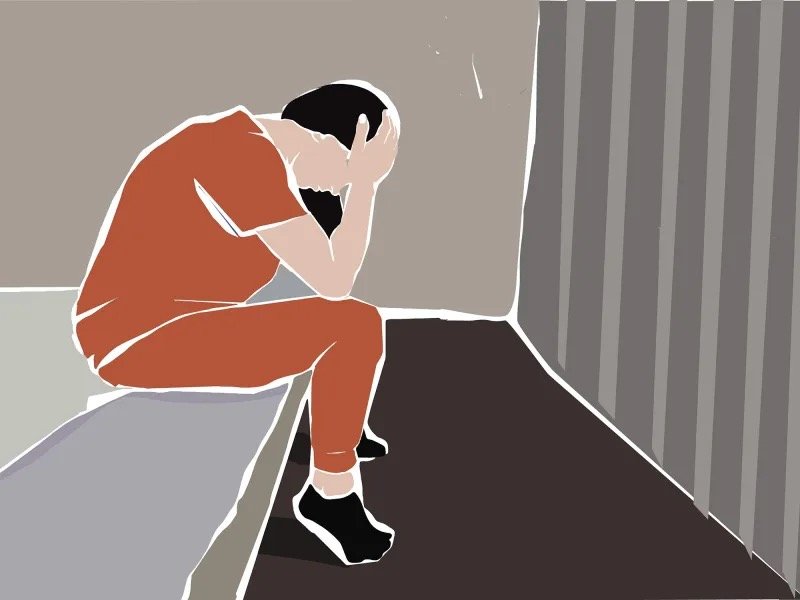
Lead photo: Source: Prison Journalism Project: https://bit.ly/4cGxEW1
Barry R. Ashpole, Ontario, CANADA Biosketch: https://bit.ly/3XMTRs4
BARRY R. ASHPOLE is an educator and communications consultant living in Ontario, Canada. Now semi-retired, he has been involved in palliative and end-of-life care since 1985. He established the End of-Life Care Behind Bars website (https://bit.ly/4dU4qmi), an advocacy, teaching and research “tool” to inform and, hopefully, affect a seismic shift in society’s attitudes towards the health and well-being of the incarcerated. Regular postings include annotated listings of current articles, reports, and so on, culled from the professional literature, the news media and other sources.
Republish This Article
The author believes in the free flow of information. Republish this article for free, online or in print, under Creative Commons licence, with due credit to the author and source. https://bit.ly/3B9EK6n