








#32 (July 2026) – Highlights: LAUNCHED IN 2024, THE END-OF-LIFE CARE BEHIND BARS WEBSITE fills a critical information and advocacy gap for a unique, often overlooked population. While general prison healthcare has gained attention, keeping pace with research on palliative care within correctional facilities remains a challenge for busy professionals. As a dedicated advocacy, teaching, and research hub, this site streamlines access to essential knowledge.
Users can find the latest developments, including curated reviews of articles and reports, in the monthly bulletins on the “Current Thinking” page, while the “Spotlight” page offers commentaries on several key issues. As this resource grows, it aims to foster a necessary shift in societal attitudes toward the care and dignity of incarcerated individuals at the end of life.
Following are selected articles, reports, etc., from the latest (May) posting. Access the monthly postings at: https://bit.ly/47sVCRU
_________________________________________________________________________________________________________
Ageing behind bars: Safeguarding the health and dignity of older people in prison
JOURNAL OF EPIDEMIOLOGY & POPULATION HEALTH (Martinique) | Online – 15 June 2026 – Failing to adapt prison healthcare systems to the needs of older prisoners constitutes a form of systemic neglect. Three central ethical questions arise: First, do current detention practices respect the dignity of severely frail or terminally ill individuals? Secondly, is the sentence imposed on people with advanced cognitive or functional decline proportionate and meaningful? Thirdly, whether age constitutes an overlooked axis of inequality in penal systems deserves consideration. Although many jurisdictions have compassionate or medical release mechanisms, these remain underused and are applied inconsistently. Prisoners who are getting older are costing more to look after because they are more likely to be hospitalized, to use more medicines and to need more security. However, failure to adapt systems generates higher indirect costs. These costs result from preventable complications, emergency care, litigation, and excess mortality. Full text: https://bit.ly/3RmCdxW
Representatives from 37 member states discuss updated … standard on healthcare in prisons
COUNCIL OF EUROPE | Online – 10 June 2026 – Participants [including prison administrations, health authorities, healthcare professionals, experts and partner organisations] deepened their understanding of the revised standards and to exchange views on their practical implementation in prison systems across Europe.1 Healthcare in prisons remains one of the most important dimensions of humane and lawful detention and a key safeguard for the protection of the rights of persons deprived of liberty. The updated standards reflect lessons learned from … visits to places of detention, dialogue with national authorities, and the identification of recurring challenges and good practices. Participants examined how the standards provide practical guidance on key aspects of prison healthcare, including equivalence of care, professional independence of healthcare staff, medical confidentiality, continuity of treatment, access to specialised care, mental healthcare, admission screening, and the prevention and documentation of injuries. Full text: https://bit.ly/4eTfOAa
- ‘Healthcare in Prisons,’ Council of Europe (2025): https://bit.ly/4asgVFw
Prisons: Palliative care – question for Ministry of Justice
U.K. PARLIAMENT | Online – 8 June 2026 – Asked of the Secretary of State during parliamentary debate: “a) how many prisons in England have undertaken voluntary self-assessment against the ‘Dying Well in Custody Charter’ since 2024,1 and b) what plans are in place to ensure that the Charter is implemented consistently by all prisons and prison healthcare providers, as recommended by the Chief Medical Officer, and how implementation will be monitored.” In response: “HM Prison & Probation Service, in partnership with the National Health Service, has revised the ‘Dying Well in Custody Charter Self-Assessment Toolkit.’ This voluntary toolkit includes good practice examples and is designed to support local partnership activity. Information on how many prisons have undertaken voluntary self-assessment using the toolkit is not held centrally and could not be obtained without incurring disproportionate cost.” Access at: https://bit.ly/3Qb0HK7
- ‘Dying Well in Custody Charter: A national framework for local action,’ National Health Service England (2024):https://bit.ly/4evqeEQ
Delivering palliative and end-of-life care in a maximum security prison: Development and implementation of a collaborative care model at Port Phillip Prison, Victoria
INTERNATIONAL COLLABORATIVE FOR BEST CARE FOR THE DYING PERSON (Australia) | Online – 4 June 2026 – As the incarcerated population ages, access to palliative and end-of-life care (EoLC) within custodial settings remains critically underdeveloped. This presentation describes the development and implementation of a best-practice palliative care (PC) model… Developed through collaboration between St. Vincent’s Hospital Melbourne Palliative Care Service and Correctional Health Service, the model sought to proactively identify patients with life-limiting illness and facilitate timely specialist involvement, comprehensive symptom management, advance care planning, and on site EoLC (see sidebar). This approach aimed to reduce preventable emergency presentations and external hospital admissions, improving both the quality and place of care for this vulnerable population. Implementation was guided by a structured governance framework, continuous improvement methodology, and multi-stakeholder engagement. Abstract: https://bit.ly/4e7M8Pr
New Illinois state law requires prisons to submit annual hospice reports
PRISON LEGAL NEWS (U.S.) | Online – 1 April 2026 – American prison populations are aging rapidly while studies have continued to show that prisoners have significantly lower life expectancies than those outside of prisons. In Illinois, some 23% of state prisoners are over the age of 50. That is a huge jump from just 4% in 1988; more than 1,000 Illinois prisoners are over the age of 65. As more prisoners age past their life expectancies, how prisons deal with end-of-life care (EoLC) becomes a critical concern. The Illinois Department of Corrections (DoC) does not have a formalized hospice and palliative care (PC) system. How EoLC takes place can vary significantly from prison to prison. The DoC nevertheless has a policy that provides for “safe, dignified and comfortable dying, self-determined life closure and effective grieving.” Often, PC is provided by aides pulled from the general prison population. Illinois prisons, however, do not maintain a centralized data repository on which prisoners are assigned as aides, or even the number of prisoner aides. Neither have the prisons maintained a centralized or consistent system for tracking patient outcomes, such as how long the patient survived under hospice and PC, how they died, or whether there were any care-related grievances. Full text: https://bit.ly/4oniIBs
An interesting read you might have missed
A survey of state correctional healthcare providers on advance care planning: Opportunity for collaboration with corrections
AMERICAN JOURNAL OF HOSPICE & PALLIATIVE MEDICINE, 2024;41(9):1951-1057 (U.S.) The authors focused on … use of healthcare directives [and] decision-making about goals-of-care… Most [survey respondents] reported their prison did not have a dedicated end-of-life care program and only 11% offered a peer-care program. Two-thirds indicated their facility provided the opportunity to designate a healthcare agent with physicians most likely responsible for facilitating completion of a healthcare directive. Care of persons aging and dying in prison is complex and requires further investigation addressing staff and prison population education, ethics guidelines for care, compassionate release, and advance care planning. Hospice and palliative care professionals could collaborate with corrections professionals and national organizations to provide innovative education and support to enhance the humane care of this vulnerable population. Request the full text directly from the authors at:https://bit.ly/4e61jIE
N.B. See ‘Care planning in correctional healthcare: In defence of prison inmates’ autonomy – current thinking,’ posted on the ‘Spotlight’ page of the End-of-Life Care Behind Bars website: https://bit.ly/3X1Agq3 BRA
“There was no crib notes on how to grieve”: Finding grief space during and after a juvenile life prison sentence
OMEGA – JOURNAL OF DEATH & DYING (U.S.) | Online – 16 June 2026 – Carceral settings prevent individuals from engaging in supportive grief processing… This is particularly relevant for individuals sentenced to life or long prison sentences during childhood. This study explored death-related loss and grief experiences, before, during, and after incarceration… Findings emphasized the lack of grief spaces in carceral settings, often prompting deferred grief. Grief deferred until post-release addressed death losses that began accumulating prior to incarceration and were further compounded by losses that occurred during incarceration. Grief processing was further obstructed during incarceration through delayed death notifications, barriers to death rituals, and dehumanizing expectations for funeral attendance in shackles and/or a jumpsuit. Findings highlight the need for humane policies establishing carceral grief spaces and support for incarcerated grievers. Abstract: https://bit.ly/3ShVhxu
There is no hotline for us when we are grieving
CITIZENS FOR PRISON REFORM (U.S.) | Online – 9 June 2026 – Too often, conversations about prison deaths focus only on investigations, policies, or headlines. What is often overlooked is the emotional impact these deaths have on the people living inside these facilities alongside one another every day. Many incarcerated people form deep bonds while navigating years of incarceration together. They laugh together, cry together, support one another through hardships, celebrate milestones, mourn losses from home, and survive difficult prison conditions side by side. When someone dies inside, that grief does not disappear simply because the person was incarcerated. How do incarcerated people grieve? What support exists for people living inside prisons when someone they knew dies? Could facilities create healthier ways for incarcerated individuals to process grief after deaths inside the prison? Could memorial gatherings, peer support circles, or facilitated grief discussions help people process loss in healthier ways? Full text: https://bit.ly/4e9pk1z
N.B. See ‘“In prison, there is no space to grieve,’ posted on the ‘Spotlight’ page of the End-of-Life Care Behind Bars website: https://bit.ly/3X1Agq3 BRA
Source: Prison Journalism Project: https://bit.ly/4szp2Go
____________________________________________________________________________________
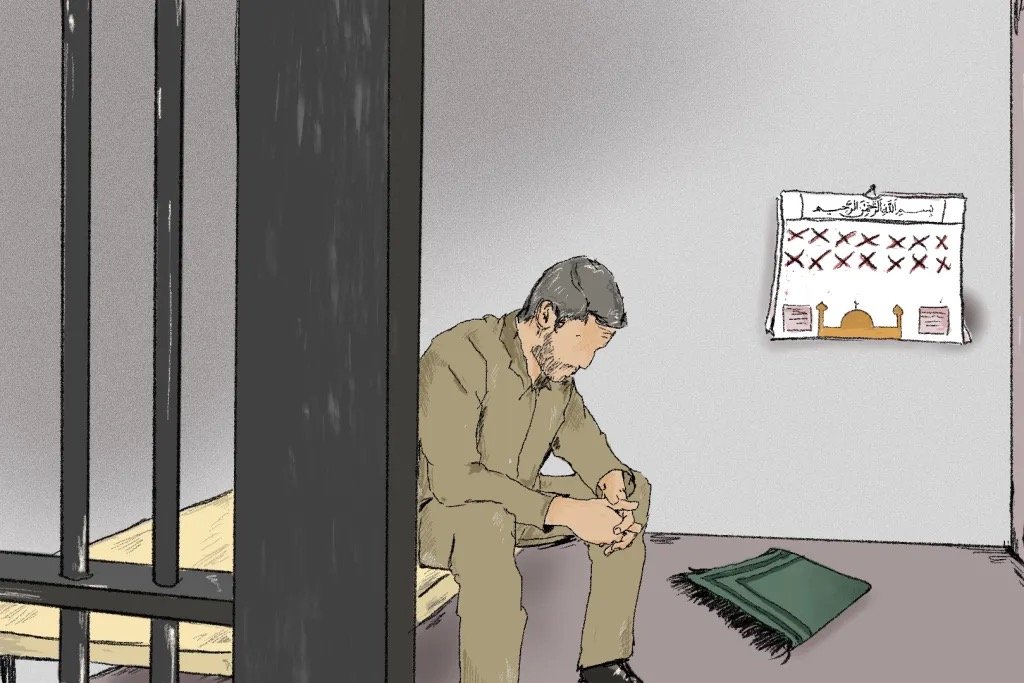
Lead picture Source: Prison Journalism Project: https://bit.ly/4szp2Go
Barry R. Ashpole, Ontario, CANADA Biosketch: https://bit.ly/3XMTRs4
BARRY R. ASHPOLE is an educator and communications consultant living in Ontario, Canada. Now semi-retired, he has been involved in palliative and end-of-life care since 1985. He established the End of-Life Care Behind Bars website (https://bit.ly/4dU4qmi), an advocacy, teaching and research “tool” to inform and, hopefully, affect a seismic shift in society’s attitudes towards the health and well-being of the incarcerated. Regular postings include annotated listings of current articles, reports, and so on, culled from the professional literature, the news media and other sources.
Republish This Article
The author believes in the free flow of information. Republish this article for free, online or in print, under Creative Commons licence, with due credit to the author and source. https://bit.ly/47sVCRU