








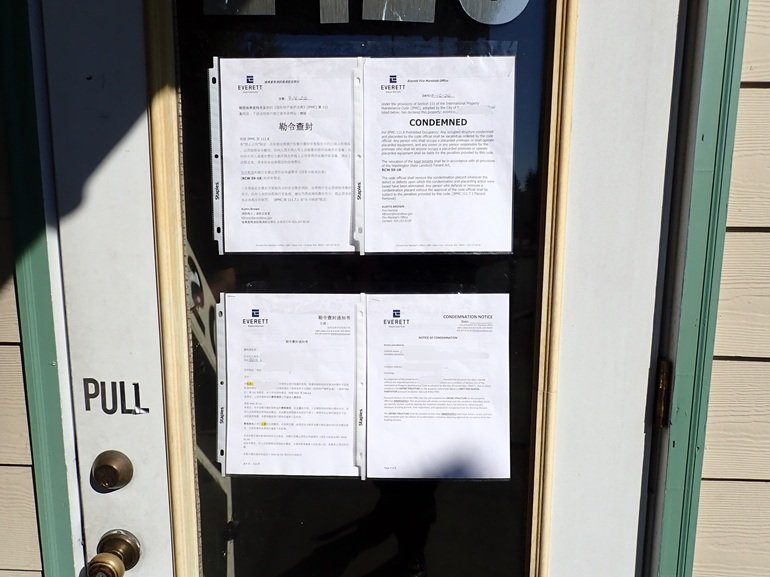
EVERETT, Wash. — A sweeping municipal crackdown in Everett has resulted in the closure or condemnation of 19 massage parlors following a strategic update to city ordinances aimed at curbing human trafficking and illicit sexual services. The operation, a collaborative effort between local law enforcement, the Everett Fire Marshal’s Office, and the Washington State Attorney General’s Office, signals a new era in how cities are leveraging data and administrative code to dismantle underground criminal networks.
Data-Driven Enforcement and Institutional Collaboration
The operation was initiated following a June City Council vote to update Everett Municipal Code (EMC) 8.72, which bolstered the city’s ability to inspect businesses and hold property owners accountable. Investigators focused on 44 locations identified through a combination of community tips, online advertising audits, and intelligence provided by “The Network,” a non-profit organization that utilizes data analytics to map illicit massage businesses (IMBs).
This digital-first approach to local law enforcement reflects a growing trend where municipalities integrate specialized tech platforms to identify patterns of criminal activity that might otherwise go unnoticed. By analyzing web traffic and review platforms, authorities were able to pinpoint businesses using the veneer of therapeutic services to mask exploitation. The state’s Criminal Justice Division further supported the initiative by formally notifying the landlords of 23 properties, highlighting potential legal liabilities. This pressure from the Attorney General’s office proved highly effective, leading 11 businesses to vacate their premises immediately.
Addressing Life-Safety Hazards and Human Rights
Beyond the criminal investigations, the city’s Fire Marshal identified severe infrastructure issues that underscore the hazardous conditions inherent in illicit operations. Inspections revealed illegal residential modifications, such as makeshift bedrooms located inside commercial suites, as well as significant fire code violations. Investigators discovered dangerous electrical setups, dryers venting into attic spaces, and—most alarmingly—exits that were locked or obstructed, potentially trapping workers inside during an emergency.
“Fire and life safety inspections help us find hidden hazards before an emergency happens,” said Everett Fire Marshal Kurtis Brown. For officials, the priority remains a dual-track strategy: enforce strict building codes to strip away the physical infrastructure used for illicit activities, while simultaneously deploying bilingual officers to ensure that workers—who are often victims of trafficking—are connected with social services and informed of their legal rights.
The Role of Local Governance and Future Implications
The success of the Everett operation provides a blueprint for other cities grappling with the intersection of public safety, building code compliance, and human rights. Mayor Cassie Franklin has framed the ordinance not just as a crackdown on crime, but as a mechanism to support legitimate, licensed businesses that were previously undermined by unregulated, illegal competitors.
The city’s strategy involves:
- Accountability: Implementing penalties for landlords who knowingly rent to illegal operators.
- Transparency: Providing multilingual resources for vulnerable employees, ensuring they have access to state-backed safety nets.
- Continuous Monitoring: Utilizing fire and life safety inspections as a standard, repeatable process to maintain commercial standards.
As the Everett Police Department continues its scrutiny of the remaining locations, the city’s reliance on data-sharing and inter-agency coordination marks a significant shift. By treating illicit massage parlors as both a criminal threat and a public safety hazard, Everett is demonstrating that municipal code, when coupled with modern investigative intelligence, is a powerful tool for community protection. While the current phase of the operation has already removed 19 high-risk businesses from the city, officials indicate that two additional locations remain under active review, ensuring the cleanup process remains ongoing.
Disclaimer: This content is auto-generated for informational purposes only.
Source: Read Original News