


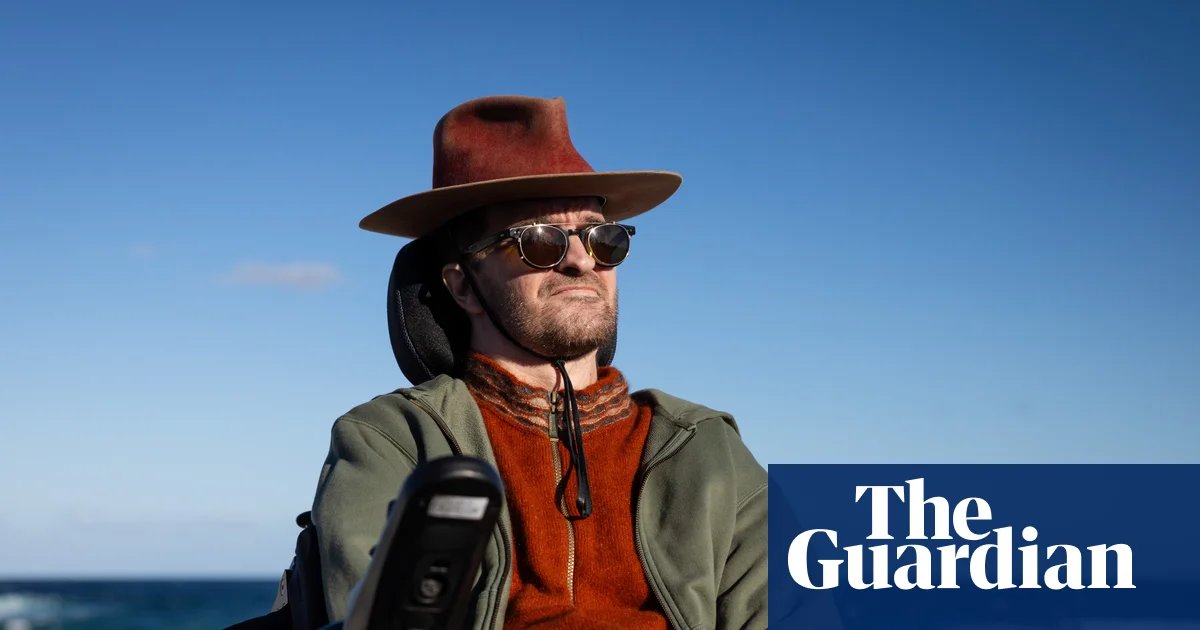
I chose to die at 44 because ALS (motor neurone disease) left me paralysed. I still loved my life, even to the last day.
It all started in December 2023, when I lost strength in my right arm, and my pinky finger was going in all directions. I went to see my GP and did physiotherapy because they thought it was a nerve blockage.
After no change, I asked for an appointment with a neurologist. It was eventually revealed that it was much more serious and in April the next year, I was diagnosed with ALS at 41 years old. That meant my muscles would eventually degenerate, leading to paralysis; it was also terminal.
It was a shock. I had to lie down for 10 minutes, and after that it was one step after another. I called my family and friends. Everyone was speechless.
The progress of ALS is unpredictable and can change over time. A few weeks after my diagnosis, I started a year-long world tour. I went everywhere – northern Europe, Burning Man in the US, the Day of the Dead in Mexico, Taiwan, Japan. It was a luxurious trip: I flew first or business class and stayed in five-star hotels. Having life and income protection insurance ended up being life-changing – it helped fund the trip.
In the last six months, I developed nerve pain in my fingers. Touching soft fabric felt like burning. My swallowing and breathing were affected. About a month ago, I started needing 24/7 care.
The day I was diagnosed, I knew my life would end with euthanasia. I didn’t want to be connected to a machine to breathe. One month ago, I decided on the date – 20 April, my 44th birthday. The reason is that I’m losing my voice. It’s important for me to use my voice to say goodbye to my loved ones.
I was expecting someone to try to talk me out of euthanasia, but no one close to me did, including more religious people. They were respectful and understood that only I know what it’s like to live with my disease.
For a long time, I’ve tried to follow two rules. The first one is to not do to others what you don’t want done to you. The second is to not try to change the things you can’t control, such as your family, your age or getting a terminal condition, and to instead focus on the things you can control – your job, where you live and how you deal with the condition.
I’ve had a very full and happy life. I’ve always done what I wanted to; I haven’t wasted time putting things off. Too many people hate their jobs and lives, and don’t change a thing because change is scary.
I grew up in Le Chesnay, France, and moved to Paris at 18. I’m the youngest of four brothers. I studied mathematics as an undergraduate, then slacked off for a few years and had pretty terrible jobs. At 26, I went back to school for my master’s degree studying internet technology. Later, I was hired by Google in Paris.
I knew I wanted to move to Sydney, so I applied to transfer to a role there, and moved at 33. I loved the weather, the proximity of the beach, the safety.
I always wanted to get married and have kids but I didn’t get the chance. Instead I made sure to have a good single man’s life: I could party all weekend, and travel a lot. At 39, I decided to be an artist and spent every evening painting. I organised an exhibition less than a year later.
These last few weeks, I spent my days pretty much the same way. There was time for myself in the morning. In the afternoon, friends visited. And at night, I had video calls with overseas friends.
The day before I died, I organised a big party. I wanted people to mingle and laugh. There were performances and a crepe stand. The theme was to dress up as something related to me – something I love, something I hate. I enjoy dark humour, so I wore a T-shirt that read, “I am faking it, stupid.”
I think about death as being “from dust, to dust”. I don’t think we have any proof of whatever comes next. I believe, as there’s no proof, there is nothing. I would be very happy to be proved wrong if there’s something great.
Life is amazing because it ends. Everybody dies. I’ve had a great life with a lot of people who love me – I’ve been really lucky.
Marc Girod died on 20 April 2026.
As told to Jane Zhang
Do you have an experience to share? Email experience@theguardian.com