








The Paradox of Accelerated Infrastructure and Stagnant Reliability
The Indian Railways network represents one of the largest and most complex logistical ecosystems in the world. As the backbone of the nation’s transport infrastructure, its modernization is synonymous with India’s broader economic development. In recent years, the Ministry of Railways has embarked on an aggressive capital expenditure program, focusing heavily on track renewal and speed augmentation. However, the data reveals a compelling business paradox: while the physical capability of the tracks to support higher speeds has increased by nearly five times since 2014, the operational reliability, measured by punctuality, remains stubbornly fixed near 77%.
This disparity highlights a fundamental challenge in large-scale infrastructure management. Building the capacity for 130 kmph or 160 kmph speeds is a civil engineering achievement, but integrating those high-speed potentials into a dense, multi-modal network requires a sophisticated orchestration of operational, signaling, and maintenance variables. For policymakers and investors observing the logistics sector, the Indian Railways experience offers a masterclass in the complexities of scaling legacy infrastructure in an emerging economy.
The Mechanics of Speed Augmentation
The strategic shift toward increasing track capacity has been systematic. Between 2014 and early 2026, the railway network underwent a massive overhaul, with approximately 54,600 km of track renewed or upgraded. The transition of track length capable of sustaining speeds of 130 kmph or above—from 5,036 km in 2014 to 24,173 km in 2026—is a testament to the prioritization of speed potential.
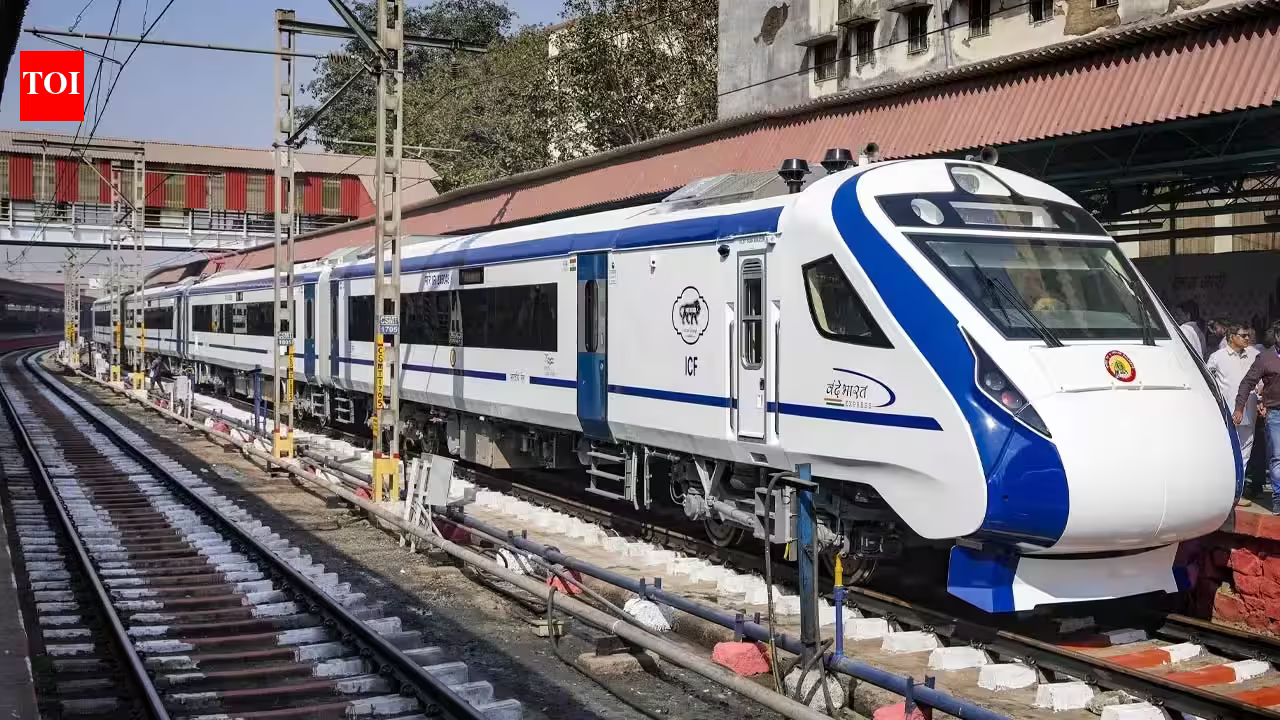
This transformation was not merely a matter of laying new steel. It involved the deployment of advanced maintenance technologies, including rail-grinding machines, mechanised track maintenance, and the integration of the web-enabled Track Management System. By utilizing thicker rails and switches alongside longer welded rail panels, the railways have effectively reduced the frequency of joints, which are traditional failure points that necessitate speed restrictions. This technical foundation is essential for supporting modern rolling stock, such as the Vande Bharat fleet, which requires superior track geometry to achieve its rated acceleration.
Operational Bottlenecks and Systemic Constraints
Despite the hardware upgrades, the punctuality of 77% underscores the limits of focusing exclusively on speed capacity. The Indian railway network is essentially a “mixed-use” system. Unlike many European or East Asian rail systems that benefit from dedicated high-speed corridors, Indian Railways must balance the schedules of high-speed passenger trains, slow-moving heavy freight, and essential suburban services on the same tracks.
This high utilization of assets creates a ripple effect. A delay in a single freight train—often due to path constraints or scheduling conflicts—can cascade across an entire corridor, delaying multiple passenger services. Furthermore, external factors such as cattle run-overs, alarm-chain pulling, and seasonal weather disruptions like dense fog necessitate an infrastructure of resilience rather than just velocity. While the deployment of 29,848 GPS-based Fog Safe Devices and modified signaling systems demonstrates a commitment to mitigating these hurdles, the network remains highly vulnerable to “systemic friction.” The high density of the network means that any technical failure or operational incident is amplified, preventing the theoretical speed gains from translating into reliable passenger experiences.
The Role of Rolling Stock in Modernization
The introduction of Vande Bharat trains represents a pivotal shift in the operational strategy of Indian Railways. By utilizing distributed power technology, these train sets offer superior acceleration and deceleration compared to traditional locomotive-hauled coaches. In a congested environment where trains must frequently navigate curves, gradients, and stations, the ability to recover lost time through rapid acceleration is a major advantage.
However, the hardware is only as effective as the environment in which it operates. The current limitation is that while the trains are designed for 160 kmph, the track capability and signaling infrastructure are not uniform across the network. Furthermore, security and safety measures, such as fencing, become critical when increasing speeds to 160 kmph or higher. Without adequate fencing, the risk of cattle casualties and unauthorized human presence on the tracks poses a safety hazard that forces operators to implement speed restrictions regardless of the train’s inherent capability. The business case for Vande Bharat, therefore, is tied inextricably to the progress of fencing projects and the ongoing multi-tracking and doubling projects designed to segregate high-speed and freight traffic.
Strategic Outlook and Future Infrastructure Goals
Looking ahead, the evolution of Indian Railways is trending toward structural segregation. The development of dedicated freight corridors and the upcoming launch of high-speed bullet train projects signal an acknowledgement that the existing legacy network has reached a saturation point regarding mixed-traffic throughput.
For the near term, the Ministry’s focus on “timetable rationalization” and scientific schedule analysis indicates a shift toward data-driven operations. By leveraging advanced IT systems to manage the 25,000 trains running daily, the goal is to optimize the “slack” in the system to improve reliability. However, substantial improvements in punctuality will likely require more than scheduling adjustments; they will require the completion of multi-tracking projects that increase the physical path availability, thereby reducing the competition for track time between freight and passengers.
In conclusion, the modernization of Indian Railways is a long-term capital-intensive transition. The jump in high-speed track capability is a significant milestone that provides the prerequisite for a faster rail network. The challenge of maintaining punctuality in a hyper-dense environment remains the next frontier for the organization. Success in the coming years will depend on how effectively the railways can transition from a “speed-at-all-costs” approach to a “reliability-through-segregation” strategy, ensuring that the infrastructure upgrades translate into tangible efficiency for the passengers and industries that rely on this vital network.
Disclaimer: This content is auto-generated for informational purposes only.
Source: Read Original News