






SAMARKAND, Uzbekistan — Rameshbabu Praggnanandhaa’s journey through the 46th Chess Olympiad was far from the clinical, high-octane performance the world has come to expect from the 21-year-old Indian grandmaster. Yet, even as he battled through a debilitating viral fever that swept through the playing hall, the Chennai native proved why he remains the cornerstone of Indian chess.
Returning from the Olympiad with a silver-and-bronze haul, the prodigy spoke exclusively about the grit required to navigate a tournament where physical stamina became just as critical as opening theory.
Fever, Fatigue, and Fighting Through It
For much of the Indian contingent, the Samarkand event became a test of physiological endurance. As the tournament progressed, a viral fever began to circulate among the players, leaving many, including Praggnanandhaa, struggling to maintain their peak energy levels.
“The last few days I was having some cold and a little fever as well,” Praggnanandhaa admitted. “I wasn’t high on energy towards the end of the tournament. But it kind of got better after the tournament ended.”
Despite the challenging circumstances, the young master was quick to deflect any criticism regarding the organizational logistics. While the opening day saw minor logistical hiccups, he praised the collaboration between the All India Chess Federation (AICF) and the Uzbek Chess Federation, noting that the provision of familiar, team-specific meals was a significant boon.
When asked about the illness, he suggested it was simply an unfortunate, uncontrollable viral sweep. “It’s rare for these things to catch up with me during a tournament,” he noted. “I don’t experiment, I stick to my comfort food, and I take precautions. But sometimes, these things are simply out of your control.”
A Personal Campaign That Read Better Than the Scoreline
Statistically, Praggnanandhaa’s 6.5/10 scoreline represents a solid, if not dominant, output. However, his captain, Srinath Narayanan, argued that the numbers failed to capture the true narrative of his play. Throughout the event, Pragg was rarely in danger; rather, he was the one consistently putting pressure on his opponents.
“For me, I think I played well,” said Praggnanandhaa. “The quality was there. Most of the games I was pushing, creating chances.”
His own assessment echoed his captain’s observations. Aside from brief, fleeting moments against Anish Giri and Richard Rapport, the Indian Board 1 maintained a level of poise that forced his opponents onto the defensive. He expressed a rare moment of self-critique regarding missed opportunities—specifically a winning position against Spain that slipped through his fingers—but remained philosophical about the volatility of elite chess. “Sometimes you convert these things effortlessly, but sometimes you miss. These things happen in sports.”
Where the Gold Went Missing
The disappointment of settling for silver, following the high of India’s previous gold-medal performance, was palpable, but Praggnanandhaa remains pragmatic about the team’s trajectory. He identified the high-stakes clash against Uzbekistan as the tournament’s pivot point.
“The match against Uzbekistan was the critical one,” he explained. “We are all young, all strong, and we will face each other in many Olympiads to come. It was always going to be the final.”
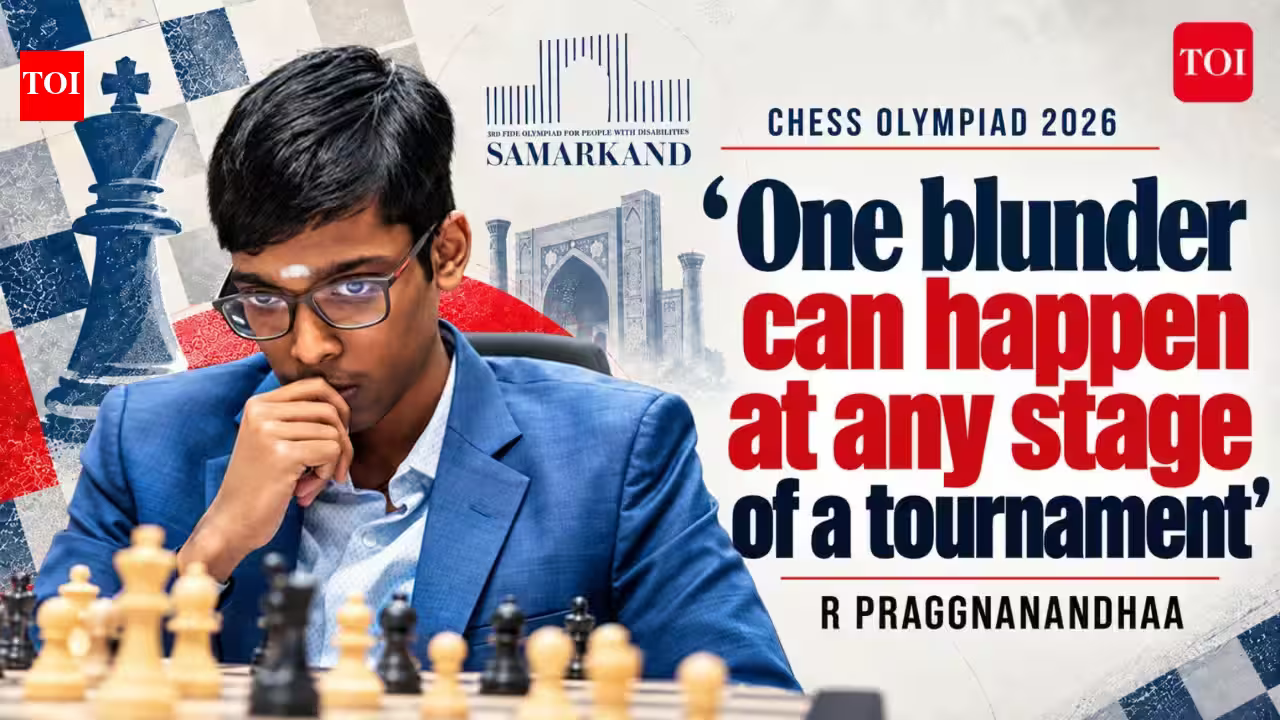
Reflecting on the infamous queen blunder that cost Nihal Sarin his game and ultimately the match, Pragg refused to dwell on individual mistakes. Instead, he emphasized the psychological resilience of the squad. “One blunder can happen at any stage to anyone. It’s unfortunate it happened when it did, but we stood as a team. We recovered.” He credited unconventional methods, such as lighthearted Padel sessions between rounds, for keeping the team’s morale buoyed during the darkest hours of the competition.
Candidates in the Rearview, Clutch Chess Ahead
The Olympiad comes roughly five months after Praggnanandhaa’s campaign in the 2026 Candidates Tournament in Cyprus, where he fell short of securing a World Title shot. While that loss served as a difficult learning curve, it has clearly catalyzed a period of intense, focused growth.
“The Candidates was a disappointment,” he admitted candidly. “But after that, I felt my play has been good. I’ve been playing how I want to play, and I’ve been enjoying the games. It’s showing in the results.”
Having already cemented his status as the first Indian to win the Grand Chess Tour and the Norway Chess title, Pragg is not one to linger on past heartbreaks. His schedule remains grueling and ambitious; he is already pivoting toward the upcoming Clutch Chess event in the United States, followed by the Total Chess World Championship Tour pilot in Budapest.
For a player who has already redefined the ceiling for Indian chess, the fever-interrupted finish in Samarkand is merely a footnote in a larger, unfolding narrative. As he recovers and refines his preparation, one thing remains clear: Praggnanandhaa is not just participating in the global elite—he is aggressively carving his place at the very top.
Disclaimer: This content is auto-generated for informational purposes only.
Source: Read Original News