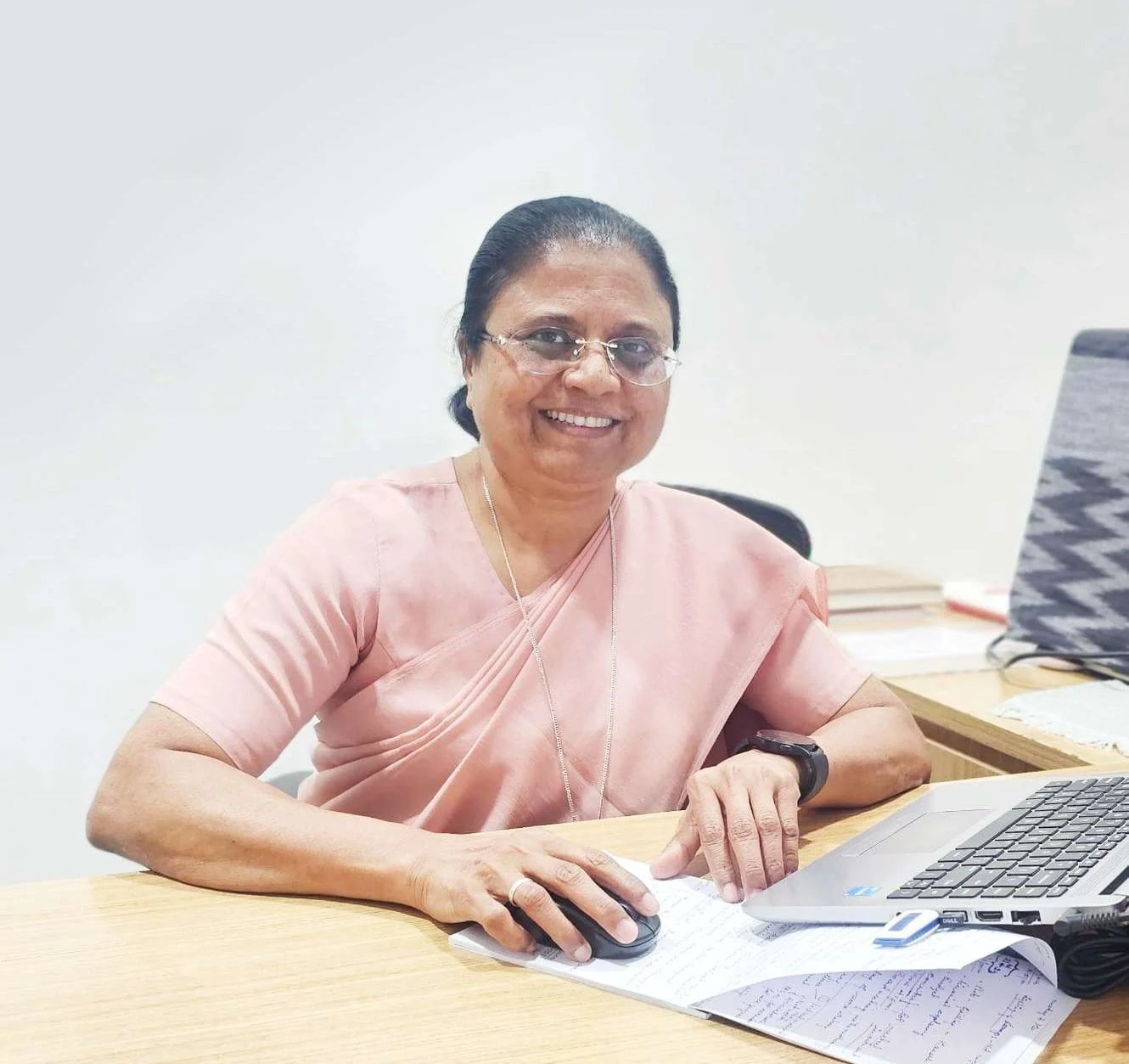
Sr Helen Mary Anthony is a member of the Congregation of the Sisters of St Anne, Bangalore.
Courtesy picture
‘Our main goal is to serve in the underserved areas. The Church’s preferential option has always been to extend good medical attention to low-income people.’
Sr Helen Mary Anthony took up the post of director general of the Catholic Hospital Association of India (CHAI) on 1 May, the first women to hold the post decades after Venerable Mary Glowrey founded the association in 1943.
From 40 centres, the CHAI has grown to more than 3,500 member institutions, forming India’s largest non-government healthcare network, catering to more than 21 million people annually.
Sr Anthony, formerly the CHAI’s associate director general, said: “I see this elevation not as a personal achievement but as a responsibility entrusted to me at a critical moment for healthcare in India. I would like to continue the legacy of our founder.”
She said that the Church, following in Jesus’ footsteps, has always been associated with the healing ministry. Anthony is also the national treasurer of the Sister Doctors Forum of India, which supports women Religious in the medical ministry.
Though Christians make up just 2.5 per cent of the 1.4 billion population of India, the Church is the second largest healthcare provider after the government. The CHAI has five medical colleges, 35 nursing schools, 200 major hospitals and 400 over-100-bed hospitals besides hundreds of health centres across the country.
It provides primary, preventive, promotive and curative care services. Its institutions adopt differential pricing, free or subsidised care, charity funds, community insurance models and government scheme convergence. Anthony said many hospitals cross-subsidise care so that no one is denied treatment due to their inability to pay.
“Our main goal is to serve in the underserved areas. Although, providing access to quality health care is quite a challenge, the Church’s preferential option has always been to extend good medical attention to low-income people, especially those in interiors, and remote areas,” said the 63-year-old, a member of the Congregation of the Sisters of St Anne, Bangalore.
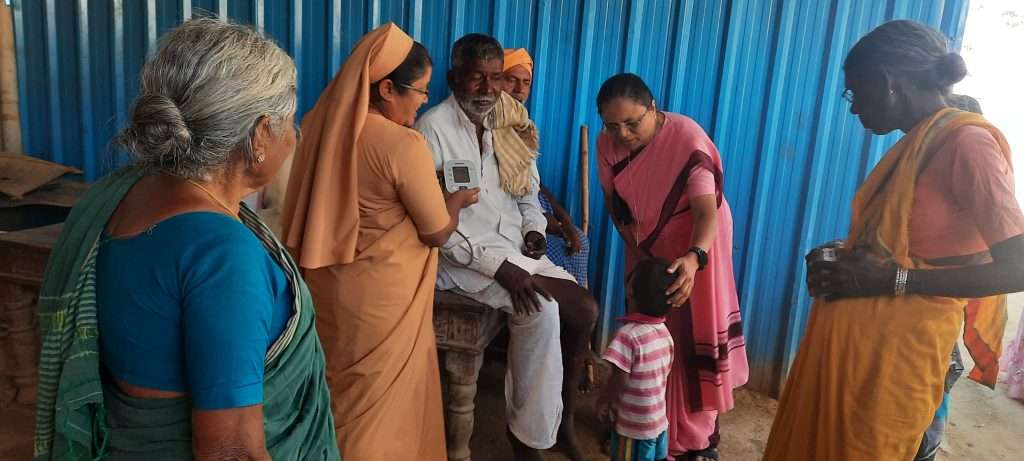
Mission-driven healthcare is particularly important in India, where per capita income is around US$2,700 and more than a billion live below the poverty line. With healthcare running on profit, poor and rural people are often excluded. The more than 25,000 nuns and 1,000 sister doctors in the CHAI network mostly work in remote and inaccessible areas, catering to the poorest of the poor.
The outgoing director general Fr Mathew Abraham said a woman’s leadership was essential with so many women associated with the CHAI’s work.
Besides her strong clinical background as a gynaecologist, he said Anthony has worked in leadership positions in her congregation as provincial superior and general councillor, and currently functions as provincial councillor and SM apostolate coordinator.
Sr Anthony said her immediate priority was to strengthen mission-driven healthcare, ensure sustainability of Church-run institutions and deepen collaboration across the CHAI’s network, with a particular focus on women and children, mental health, geriatric and palliative care.
“We are now more concentrating on mental health, which is very, very important for all sectors, from child to the middle age and to the geriatric,” she said.
Stay updated — add us as a preferred news source on Google: