








UC Berkeley Professor Sounds Alarm: Students Up to Eight Years Behind in Math, Blames Admissions Shift
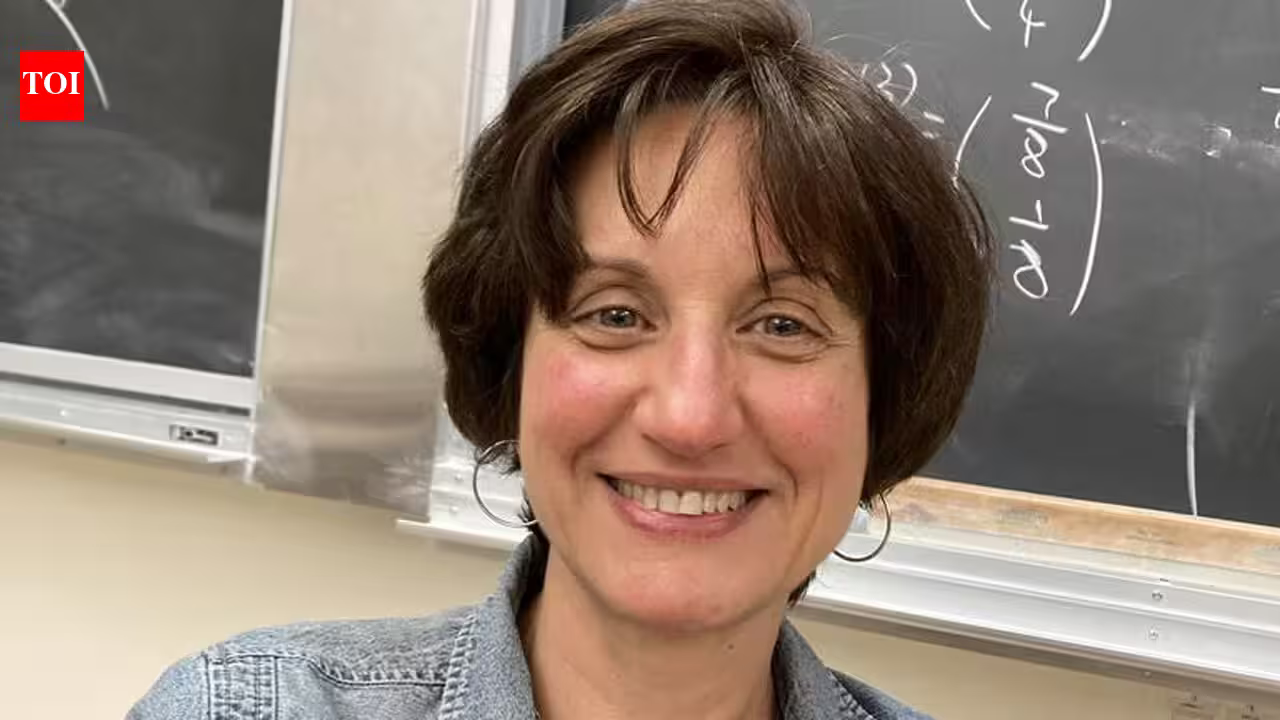
Berkeley, CA – A stark warning about the declining academic preparedness of students at one of the United States’ most prestigious public universities has been issued by a prominent mathematics professor at the University of California, Berkeley. Zvezdelina Stankova, a veteran mathematics professor, claims that an increasing number of calculus students are arriving with foundational knowledge gaps so severe they extend well below college-level mathematics, prompting her to dedicate valuable class and office-hour time to elementary concepts.
In a recent opinion piece published by the San Francisco Standard, Professor Stankova articulated her concerns, which have since been widely reported, including by the New York Post. Her most alarming assertion is that some students are "five to eight years behind in mathematics," struggling with fundamental skills such as fractions and basic algebra. She notes that office hours, traditionally reserved for advanced topics like integrals, are now often consumed by remedial instruction on these basic building blocks of mathematics.
Professor Stankova, who earned her PhD from Harvard after growing up in communist Bulgaria and has a long-standing commitment to promoting mathematics education through initiatives like the Berkeley Math Circle and various student competitions, emphasizes that her criticism extends beyond individual student deficiencies. She points directly to changes in the university’s admissions process as a significant contributing factor to this widening gap in academic readiness.
Diagnostic Data Reveals Dramatic Decline in Calculus Preparedness
Stankova highlights a troubling trend revealed by diagnostic testing administered to students entering Calculus I. Prior to 2020, a significant 71% of students were assessed as "ready or nearly ready" for calculus. During the period between 2018 and 2020, a mere 0.14% of those tested were found to be below a basic algebra level.
However, a dramatic shift occurred following the disruption of the pandemic era and the subsequent suspension of standardized testing requirements. Between 2021 and 2023, the proportion of students deemed "ready or nearly ready" for calculus plummeted to just 44%. Even more concerning, by the 2022-23 academic year, over one-third of calculus students were reportedly grappling with severe mathematics deficits, with a score of zero being the most common outcome on the diagnostic assessment.
The Standardized Testing Debate and UC Berkeley’s Stance
UC Berkeley initially phased out standardized testing in admissions during the pandemic, citing concerns about disruption and equity. Following legal action, the university opted to remain "test-blind" through 2025. Professor Stankova argues that this policy has directly led to increasingly stratified classrooms, with a stark division between students prepared for advanced mathematics and those requiring substantial remedial support.
Despite its highly selective nature, with an acceptance rate of approximately 10.5% (as reported by the New York Post), Berkeley’s current admissions trajectory contrasts sharply with that of other elite U.S. universities. Institutions such as Harvard, MIT, Stanford, and Yale, which also temporarily suspended testing requirements during the pandemic, have since reinstated them.
Stankova notes that UC Berkeley has "moved in the opposite direction," with a new admissions policy not anticipated to be implemented until fall 2028. "Students don’t have that kind of time: They attend college once," she passionately stated, underscoring the urgency of the situation for current and prospective students.
As of the New York Post‘s report, UC Berkeley had not yet provided a comment regarding Professor Stankova’s assertions. The unfolding debate highlights a critical challenge facing higher education in the post-pandemic landscape: ensuring students possess the fundamental academic skills necessary to thrive in rigorous university environments, particularly in demanding fields like mathematics.