







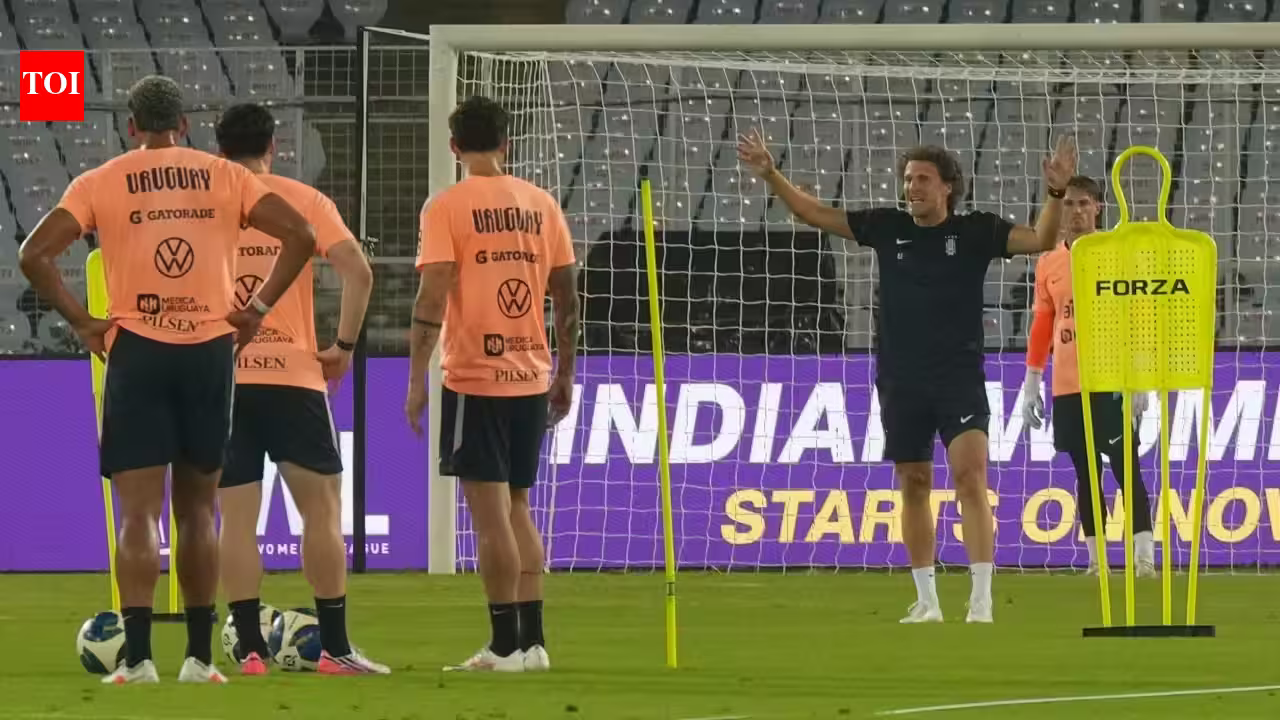
KOLKATA — The sight of that familiar, flowing blonde mane secured by a simple white hairband is one etched into the annals of football history. To many, it remains the defining image of the 2010 FIFA World Cup, where a relentless Diego Forlan fired Uruguay into the global spotlight as the tournament’s joint-top scorer. On Monday, that same iconic silhouette appeared on the training pitches of Kolkata—though the context has shifted dramatically.
Forlan, now 47, has returned to Indian soil not as a star recruit for the Indian Super League, but as the man tasked with steadying a sinking ship. As the interim manager of the Uruguay national team, the former Manchester United and Atletico Madrid striker faces the daunting challenge of restoring pride to a footballing nation currently grappling with the aftermath of a disastrous World Cup campaign.
A Legacy in Transition
Stepping into the void left by the departure of Marcelo Bielsa, Forlan inherits a dressing room reeling from internal strife and public disappointment. The recent World Cup in North America proved to be a humbling experience for the two-time champions, who failed to register a single win in a group featuring Cape Verde and Saudi Arabia. Reports of tactical discord between the players and Bielsa culminated in a humiliating exit, leading the Uruguayan Football Association (AUF) to take the rare, stinging measure of forcing the squad to travel home on commercial flights as a disciplinary reprimand.
Forlan, however, is a man who understands the cyclical nature of the beautiful game. Speaking ahead of Tuesday’s FIFA friendly against India at the iconic Salt Lake Stadium, he spoke with the measured composure of a veteran campaigner.
“When I was a player, and now being a manager, you need to understand that you’re going to win and you’re going to lose,” Forlan told reporters. “When you win, you are not the best. And when you lose, you are not the worst. This is the balance you must have.”
Addressing the team’s recent failures, he refused to let the headlines define his squad. “For a national team like Uruguay, with the players we have, it’s not good [to exit in the group stage]. We understand that. But we know it’s football and things happen. Just because we didn’t qualify, we aren’t going to say they aren’t good players.”
The Philosophy of a Global Traveler
Forlan’s managerial philosophy is rooted in a lifetime of cultural and tactical osmosis. With a career that took him from the grueling intensity of the Premier League to the technical landscapes of Spain, Japan, Hong Kong, and his brief, memorable stint with Mumbai City FC in India, Forlan has curated a unique understanding of the sport.
“As a human being, you’re always learning,” he reflected. “I had the opportunity to play in different continents and in great clubs. I learned from great teammates and great coaches. I really enjoyed football when I was playing, and I really enjoy now watching and being a manager. I want my team to play well; we have talented players, and I know we have the possibility to play as a cohesive unit.”
Crucially, Forlan is distancing himself from the traditional, often rigid archetypes associated with South American football. He advocates for a fluid approach—one that adapts to the opponent, the environment, and the shifting tactical demands of modern football.
Respecting the Opposition
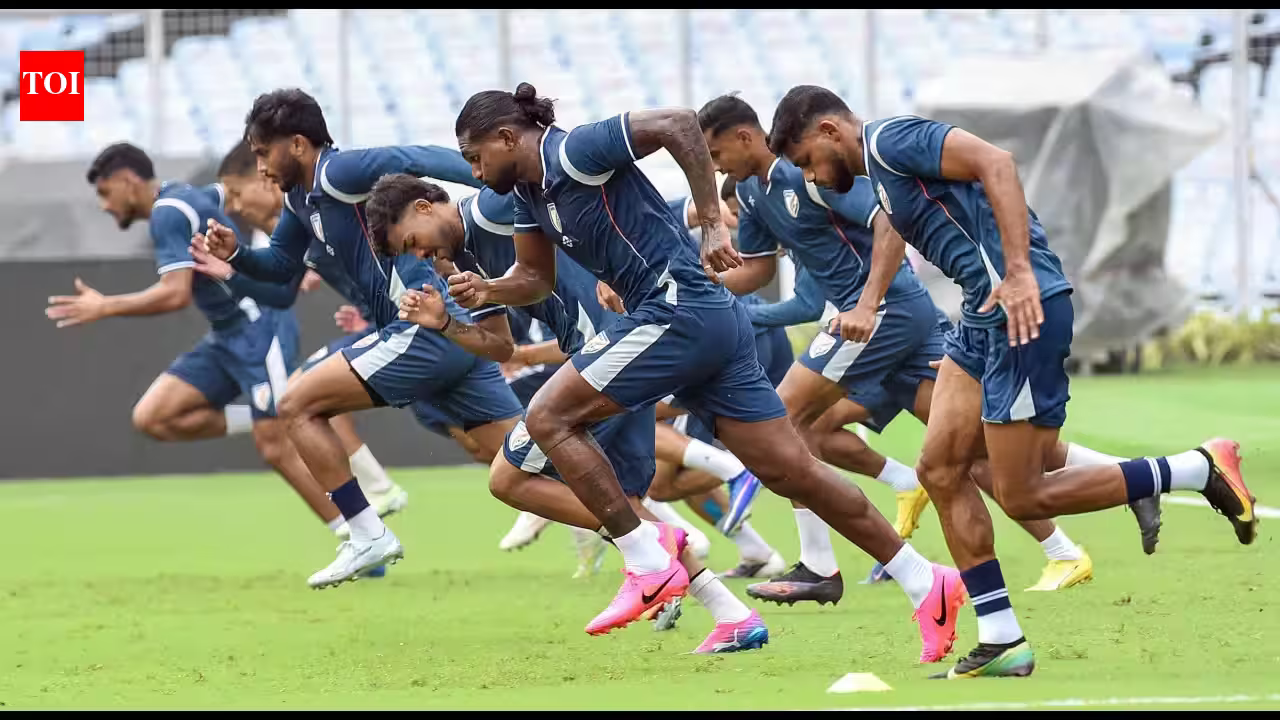
While the gulf in FIFA rankings between Uruguay and India is substantial, Forlan enters the Salt Lake Stadium encounter with a professional caution that defines his approach. Having kept a watchful eye on India’s recent performances against Panama and Brazil, he warned his squad against complacency.
“India has some really good players. They know what to do,” Forlan noted. “There were some really nice combinations in their recent games. If you give them time and space, they can damage you. You have to respect everybody.”
The logistical challenges of the Indian climate also remain at the forefront of his mind. Recognizing the stark contrast between the conditions here and the environments of their recent friendlies in Japan and South Korea, the Uruguayan delegation arrived early to acclimatize to the humidity.
“That’s why we came early. It was good for us to adapt to this weather,” he added. “It is different than what we faced recently. We know it’s going to be a difficult game.”
As the floodlights illuminate the Salt Lake Stadium on Tuesday, all eyes will be on the man in the white hairband. Whether as a player or a tactician, Forlan’s presence in Kolkata remains a marquee event. For a nation looking for a fresh start, the appointment of a legend who understands the heartbeat of world football may be exactly the spark required to reignite Uruguay’s flame. For now, however, the mission is singular: focus on the task at hand and steer the ship back into calm waters.
Disclaimer: This content is auto-generated for informational purposes only.
Source: Read Original News