








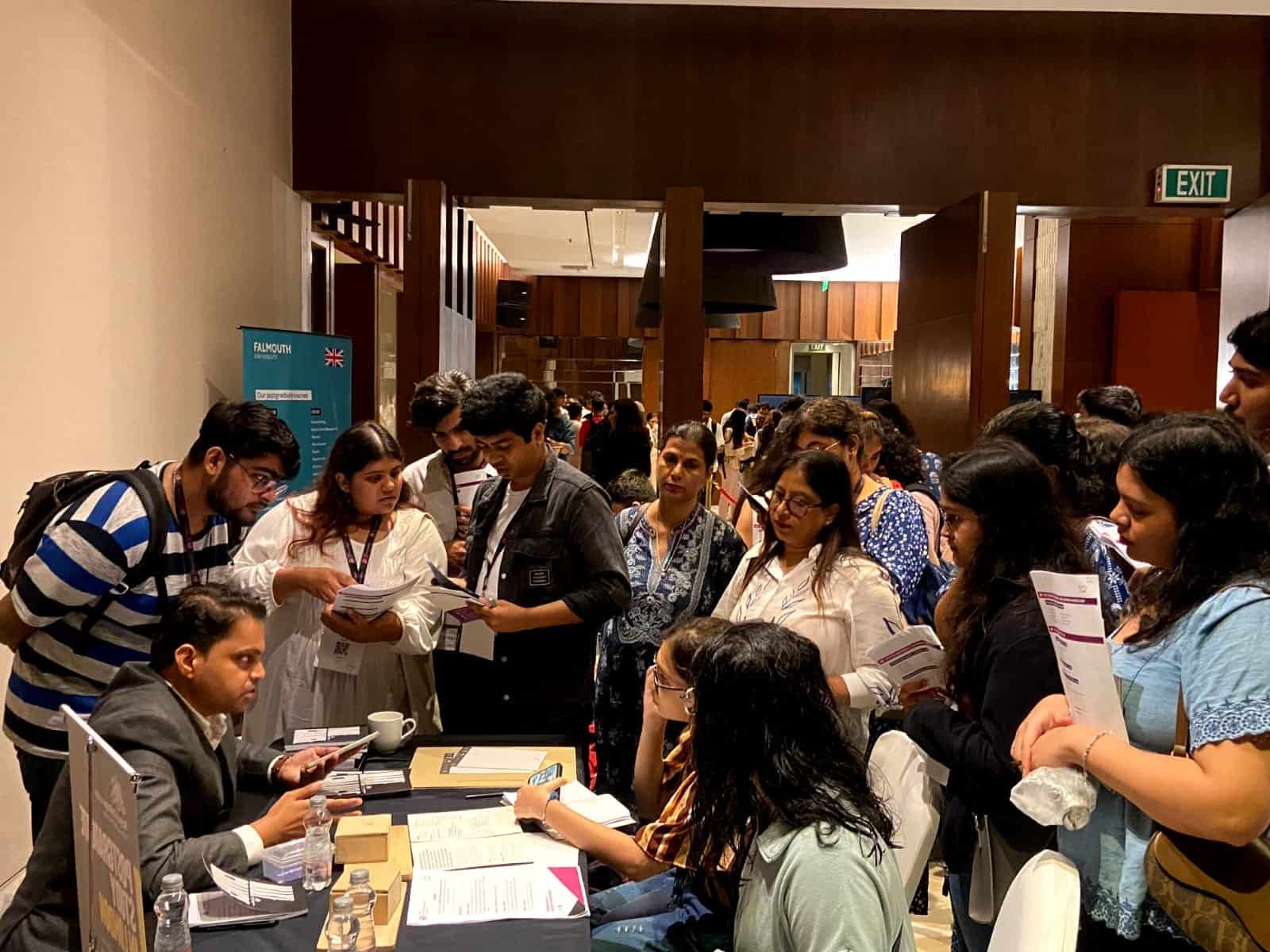
A significant majority of Indian study-abroad aspirants, specifically over four out of five, express a clear intention to return to their home country after completing their international education. This insight, drawn from new research, challenges the conventional assumption that pursuing an overseas degree is intrinsically linked to plans for permanent emigration. The third Student Global Mobility Index, conducted by Oxford International, reveals that 81% of surveyed applicants fully anticipate returning to India following the conclusion of their academic programs. An additional 15% indicated that "applying for a job" would be their subsequent step, though the research did not clarify whether these employment opportunities were sought within India or abroad.
This comprehensive index amalgamated 17,925 core responses with approximately 2,400 supplementary responses delving into various aspects such as course preferences, family backgrounds, information sources utilized, and post-graduation plans. While it is acknowledged that students’ intentions may evolve once they commence their studies and careers in a foreign country, these findings suggest a discernible shift in the perspective of Indian applicants. They increasingly appear to view international education as a valuable period for academic and professional enrichment and exposure, rather than as a definitive precursor to establishing a life overseas.
A particularly noteworthy change is observed in the impetus behind the decision to study abroad. The proportion of students who describe themselves as self-motivated has seen a consistent increase, rising from 29% in the 2023/24 academic year to 34% in 2024/25, and further to an impressive 49% for 2025/26. Conversely, the influence of family as the primary driver for studying abroad has diminished over the same period, falling from 59% to 37% and then to 36%. Self-motivation was found to be most prevalent among students from northern and southern regions of India, while familial influence remained a stronger factor in the western and central parts of the country. Furthermore, older applicants displayed a greater propensity for independent decision-making compared to their younger counterparts.
The research also highlighted the significant first-generation characteristic of India’s demand for overseas education, with nearly nine out of ten respondents (88%) set to be the first in their families to pursue studies abroad. Postgraduate education emerged as the dominant area of interest, with 70% of respondents applying for such courses. Business and management disciplines overwhelmingly captured the most subject interest, accounting for 75%, followed by health and medicine at 8%, sciences at 2%, and engineering at a modest 1%.
Digital platforms have become indispensable in how students navigate their educational choices. Google proved instrumental for 39% of respondents in discovering institutions, just slightly surpassing education agents at 35%. Moreover, Google was identified as the most trusted source of information by 56% of respondents. Other trusted sources included university events (20%), Instagram (9%), artificial intelligence tools (6%), and YouTube (5%).
Despite the considerable financial implications and political considerations surrounding international education, a notable 51% of students reported having no concerns about studying overseas. Among those who did express apprehension, weather was the most frequently cited concern (27%), followed by homesickness (26%), and the challenge of adapting to a new culture (23%). Accommodation and food were each mentioned by 20% of respondents, while travel, communication, teaching methods, and time differences garnered fewer concerns. Interestingly, only 6% identified fees as a concern, with 4% citing finding part-time work, 3% safety and security, and 2% currency conversion. However, this particular finding does not necessarily indicate a diminished role for affordability in destination selection, as prior sector research consistently demonstrates that costs, borrowing, and anticipated employment outcomes remain pivotal in the decision-making processes of Indian families. Women were also found to be more likely than men to express apprehensions about studying abroad, and younger applicants generally exhibited greater concern than older students.
These findings emerge amidst a broader recalibration in Indian outbound student mobility. Data from the Ministry of External Affairs indicates a 5.7% decrease in Indian enrollments at overseas universities and tertiary institutions in 2025, with approximately 1.254 million students, a reduction of about 76,000 students, following three consecutive years of growth. Although India continues to be a primary source of international students globally, the confluence of rising tuition and living expenses, a weaker rupee, and more stringent immigration policies has compelled applicants to focus more intently on employability prospects, post-study work rights, and the potential return on their educational investment.
Furthermore, students are increasingly exploring options beyond the traditionally popular destinations of the US, UK, Canada, and Australia. Industry leaders have reported a growing interest in various countries across Europe, East Asia, and Southeast Asia. The proportion of applicants considering multiple countries is estimated to have risen significantly, from 10–15% to 35–40%. Supporting this trend, recent search data from Keystone Education Group provides further evidence of this diversification. Among Indian students, interest in studying within India itself surged by 94%, while searches for the US and Australia declined by 37% and 42% respectively. Interest in the UK, however, remained relatively stable, showing a modest increase of 2%.
Mohit Gambir, the managing director of Oxford International India, emphasized the evolving nature of the international education journey. He stated that students are now placing greater importance on the quality of their academic experience and teaching methodologies. Gambir further highlighted that student concerns regarding adaptation to new environments underscore the critical need for institutions to extend their support beyond the admissions process, providing comprehensive assistance throughout the entire student journey. He concluded by stressing the importance of understanding both students’ academic values and the challenges they encounter to create an international education experience that is both academically enriching and adequately supportive.
These findings are particularly relevant amid ongoing discussions about India’s potential to retain more students through "internationalisation at home." Policymakers and leaders within the education sector are advocating for strategies such as establishing international branch campuses and fostering deeper international partnerships. These initiatives aim to provide students with access to global education opportunities without requiring them to relocate overseas. According to previous reports by The PIE News, more than 15 international universities are projected to offer degrees in India by the end of 2026. If these plans materialize, they could significantly broaden domestic options for students seeking an international qualification, thereby mitigating some of the financial burdens and immigration uncertainties typically associated with studying abroad.