







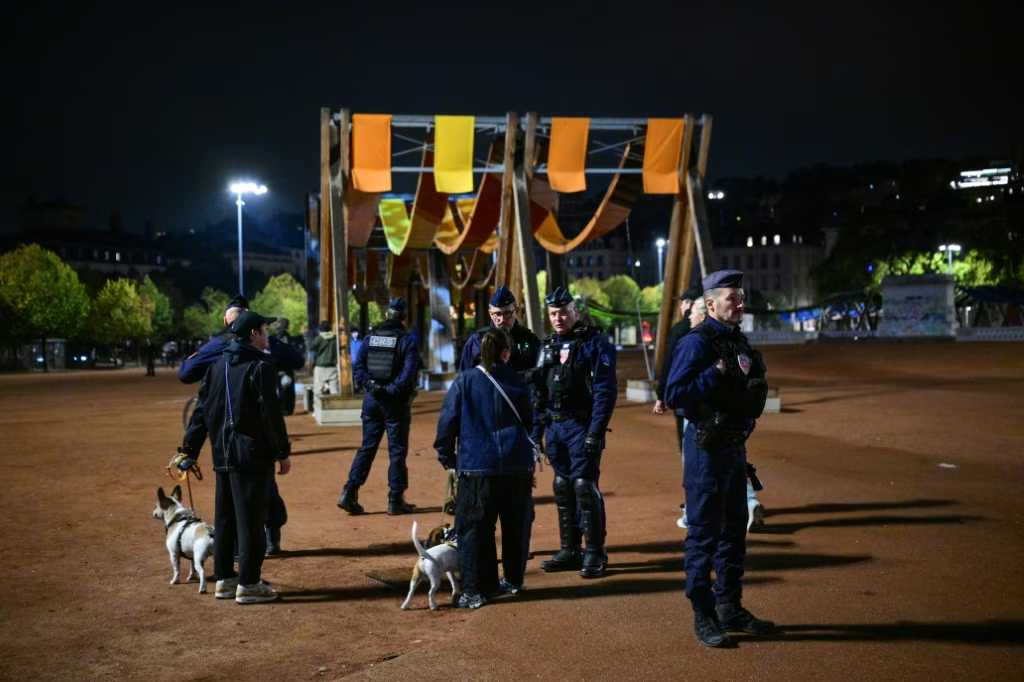
PARIS — French Prime Minister Sebastien Lecornu vowed a “massive” police deployment for the coming weekend on Tuesday, scrambling to regain control after the country was rocked by some of the most violent rioting in recent history. Facing an increasingly hostile parliament, the Prime Minister acknowledged that the state’s initial security response had been inadequate and promised a far more aggressive stance to prevent a repeat of last weekend’s chaos.
The riots, which erupted on the fringes of nationwide cost-of-living protests, saw mobs looting high-end stores, setting public buildings ablaze, and clashing violently with security forces. The intensity of the unrest, which occurred just six months before the presidential election, has drawn international alarm, prompting travel advisories from global powers including the United States, Germany, and China.
Lecornu laid the blame on “ultra-left radical groups,” accusing them of orchestrating an “insurrectionary plan” to destabilize the nation. As authorities braced for renewed protests, partial curfews have been implemented in major cities, including Paris, Bordeaux, and Nice. In Marseille, a specific curfew for minors will be in effect through Friday. In the capital, police have issued a temporary ban on the transport of petrol or gas canisters, a direct response to the widespread arson attacks that marred the city center last week.
The atmosphere in Paris has taken on a surreal, martial quality. Residents in heavily affected districts, such as Les Halles, reported the constant, oppressive hum of police helicopters patrolling overhead, with searchlights sweeping across squares like the Place de la Republique. “It’s that thing you see on TV, in all the good war films,” said local resident Sylvain Courant.
The political fallout has been swift. Interior Minister Laurent Nunez offered his resignation on Sunday after admitting that security forces had “lost control” of the streets, though President Emmanuel Macron—who is currently on a diplomatic tour in the Gulf—refused the resignation. Meanwhile, justice officials are taking a hardline approach to restore order; Justice Minister Gerald Darmanin confirmed that nearly 150 people have been jailed, with some defendants facing prison time despite having no prior criminal records.
The crisis has intensified pressure on the Macron administration, which is already grappling with record-high public debt and a surge in public anger over inflation. Opposition figures, most notably far-right presidential candidate Marine Le Pen, have labeled the riots a “wake-up call” that exposes a “profound crisis” of authority within the government.
As France teeters on the edge, the economic impact is mounting. Investors have begun a sell-off of French debt amid fears of instability, and the government has been forced to announce a package of interest-free loans to assist the thousands of businesses looted or destroyed during the unrest. While other European nations have experienced smaller demonstrations over rising prices, the scale of France’s crisis remains unique, leaving the government in a desperate race against time to restore order before the next wave of protests begins.
Disclaimer: This content is auto-generated for informational purposes only.
Source: Read Original News