





China Launches Shenzhou-24: Pakistani Astronaut Joins Tiangong Space Station Mission
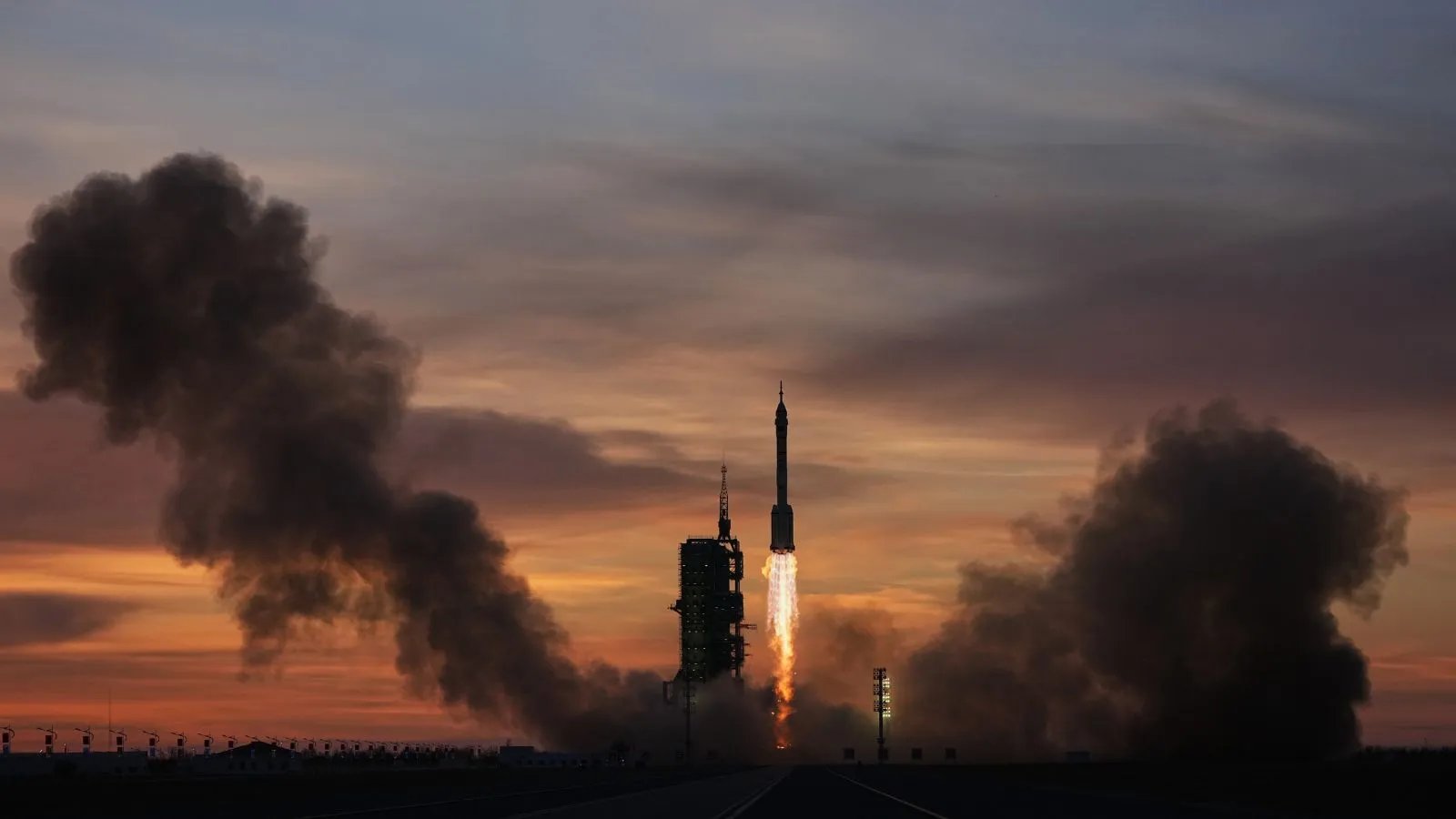
In a landmark moment for regional space cooperation, China successfully launched the Shenzhou-24 spacecraft on Wednesday, marking the first time a foreign astronaut has joined a crewed mission to the Tiangong space station. The mission, which lifted off from the Jiuquan Satellite Launch Center in the Gobi Desert, carried 40-year-old Pakistani astronaut Muhammad Zeeshan Ali, signaling a new chapter in Beijing’s growing space partnerships.
The vessel, propelled by a Long March-2F rocket, reached its intended orbit shortly after departure. The Beijing Aerospace Control Centre declared the liftoff a “complete success,” confirming that the spacecraft successfully separated from the launch vehicle as planned.
A Historic Joint Endeavor
Muhammad Zeeshan Ali, serving as a payload specialist, is joined by mission commander Tang Hongbo (51) and flight engineer Wu Yi (39). While Tang is an experienced astronaut—noted as the first person to visit the Tiangong station three times—this mission represents the maiden spaceflight for both Ali and Wu.
The collaboration stems from a bilateral agreement signed between China and Pakistan in February 2025. Following the successful launch, Chinese President Xi Jinping reiterated his long-term vision, stating that developing the space industry and establishing China as a dominant space power remains an “eternal dream.”
In Pakistan, the launch was met with widespread celebration. Citizens watched the televised broadcast in large groups, while officials, including Planning Minister Ahsan Iqbal, were present at the launch site. Iqbal expressed gratitude to the Chinese leadership, noting his hope that this mission would serve as a catalyst for deeper scientific and technological cooperation between the two nations.
Scientific Objectives in Orbit
The Shenzhou-24 mission is ambitious, with the crew scheduled to conduct over 90 scientific experiments. During his brief stay, Ali will focus on specialized research, including a study on how space radiation and microgravity impact the growth of quinoa seeds, as well as an examination of bacterial photosynthesis.
Broadly, the mission aims to advance knowledge in aerospace medicine, combustion science, and life sciences. A primary area of interest for the crew is the study of vascular aging in space, a project intended to help researchers develop better treatments for age-related health issues on Earth.
Bridging Cultures and Frontiers
Addressing the unique nature of this multinational crew, Commander Tang noted that the team had spent significant time overcoming language and cultural barriers to ensure seamless operations. Ali, demonstrating his commitment to the partnership, impressed observers during a pre-launch press conference by quoting a classical Chinese poem, signifying a desire to “climb higher to see farther.”
Ali’s presence on the Tiangong station is expected to be short, as he is slated to return to Earth after approximately one week. Meanwhile, Tang and Wu will remain at the station for a six-month tenure, working alongside the existing crew to continue long-term physiological studies regarding how the human body adapts to extended periods in microgravity.
As the mission progresses, officials from both nations have hinted that this is merely the beginning, with discussions already looking toward future joint ventures that could potentially include lunar missions or explorations of Mars.
Disclaimer: This content is auto-generated for informational purposes only.
Source: Read Original News