







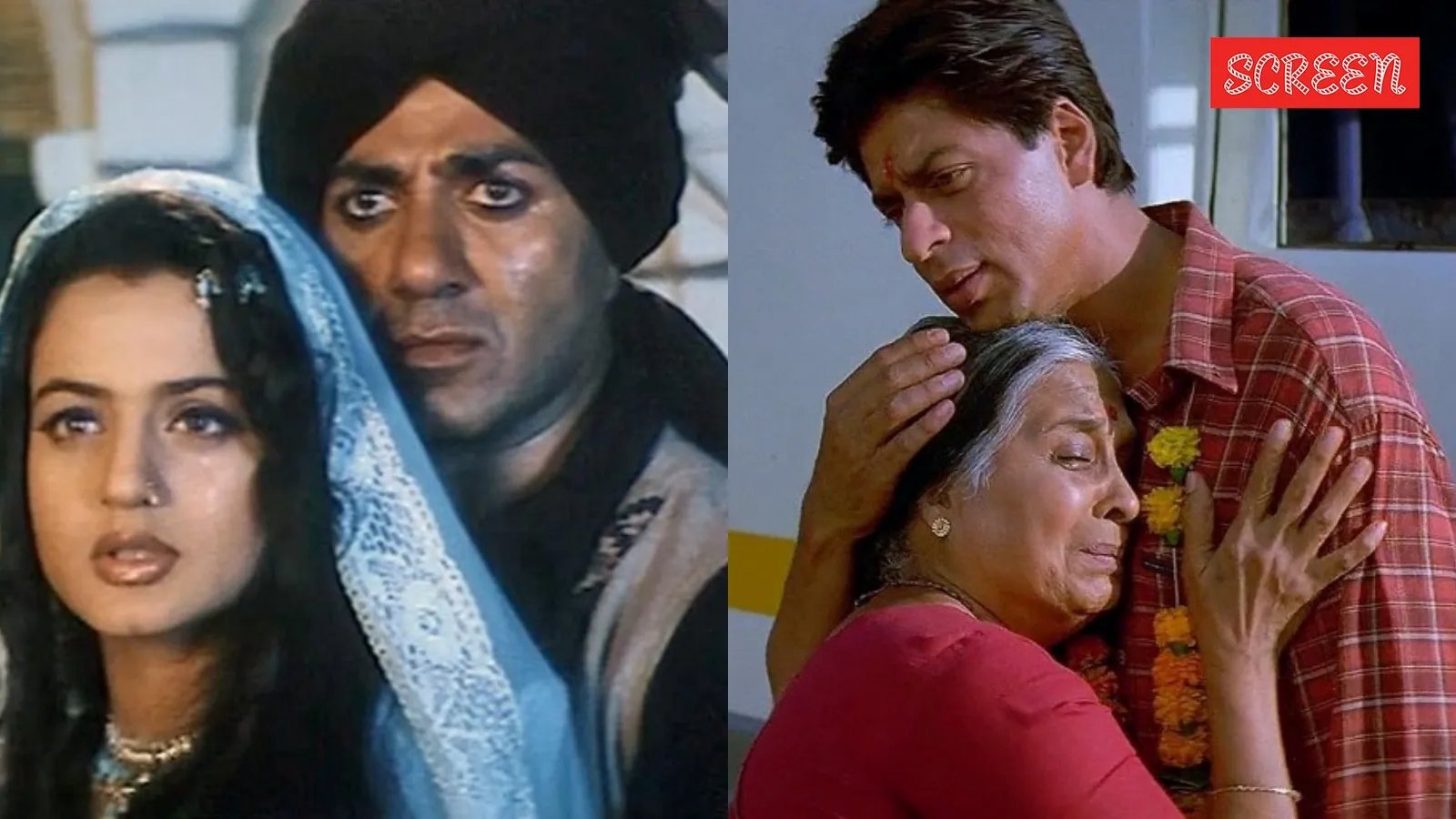
When Tara Singh dramatically uproots a handpump, cinematic audiences erupt in applause, a visceral outpouring of emotion. In stark contrast, a much quieter film might portray Mohan Bhargava silently observing a village’s struggle for electricity, his decision to stay a thoughtful, undramatic act of commitment. This dichotomy perfectly encapsulates the varied interpretations of patriotism within Hindi cinema.
For every boisterous declaration of national pride, epitomized by films like Gadar (2001) with its fervent border-crossing narrative, there exists a contemplative counterpart such as Swades (2004), which prioritizes building bridges within the nation rather than overtly confronting external forces. Neither approach is inherently flawed, yet it prompts a fascinating inquiry: why do some cinematic portrayals of national affection linger in our consciousness long after the credits roll, while others remain confined to the theatre experience?
By the time Swades emerged, the war film genre had already deeply ingrained the idea that national devotion required a military uniform to be credible. Swades, however, subtly challenged this notion. It never permitted Mohan Bhargava to deliver a grand speech about the nation; indeed, he wasn’t even seeking one. His return to India, motivated by a desire to reconnect with his childhood caregiver, unexpectedly leads him to a village grappling with a lack of electricity. His eventual decision to remain is not born of a dramatic revelation, but a quiet commitment to action. The film abstains from asking, “Are you proud of India?” Instead, it poses a more profound and challenging question: “What are you willing to do for it?” This understated inquiry offers no simple answers, prompting introspection rather than immediate gratification.
A similar philosophical thread runs through Newton (2017), set in a Naxal-affected forest. Here, a diligent clerk steadfastly champions the electoral process, even when surrounded by individuals who have lost faith in the system. This film’s patriotism is not about flag-waving, but about an unwavering belief in the fundamental mechanisms of democracy and the imperative for them to function. Even Lagaan (2001), despite its seemingly boisterous facade—complete with musical numbers, a sneering colonial antagonist, and an epic runtime—is driven by something far more nuanced than simple anti-British sentiment. Bhuvan’s primary motivation isn’t hatred of the colonizers, but the crushing burden of an unbearable tax that his community cannot afford. While the cricket match provides the dramatic spectacle, the true narrative unfolds in the villagers’ arduous journey. Divided by caste and religion, they slowly and unglamorously learn to unite, transcending their differences without resorting to overt sermonizing.
In Lakshya (2004), Karan Shergill is initially portrayed as an aimless young man, uncertain of his path in life. His transformation into a soldier is inextricably linked to his evolution into a responsible adult. This film doesn’t explicitly state Karan’s love for India; instead, it illustrates a young man’s discovery of purpose, discipline, and accountability. Patriotism, in this context, becomes an intrinsic part of the maturation process. Decades earlier, Haqeeqat (1964) offered a raw, unvarnished depiction of war, eschewing the triumphalist narrative. Its soldiers are depicted as frightened, exhausted, and beaten down, yet it is precisely this vulnerability that imbues their courage with profound meaning and resonance.
Films like Raazi (2018) delve into the profound human cost of national service. The narrative is less about a woman successfully completing a mission, and more about the enduring psychological toll that mission exacts upon her, long after its conclusion. Sardar Udham (2021) deliberately refrains from sensationalizing the Jallianwala Bagh massacre or portraying Udham Singh’s act of revenge as a mere triumph. Instead, it meticulously crafts a painful memory and a tragic act of vengeance, scene by deliberate scene. Perhaps the most challenging portrayal comes from Garm Hava (1974), a deeply patriotic film that largely eschews conventional displays of nationalism. It explores the plight of a Muslim family in the aftermath of Partition, grappling with the agonizing question of whether the country they have always called home still has a place for them. The film argues that loving a nation does not necessitate ignoring its injustices; sometimes, patriotism manifests as profound heartbreak when a country fails to live up to its own ideals. In doing so, Garm Hava redefines patriotism not as an inherited slogan, but as an individual’s enduring commitment to their homeland—a bond continuously chosen, even when the nation provides every reason to disengage.
Other films have actively reframed who is permitted to embody patriotism. Chak De! India (2007) finds it in a fractured hockey team, where the national flag only truly gains significance once regional animosities have given way to genuine camaraderie among the women on the field. A Wednesday (2008) boldly places patriotism in the hands of an angry, ordinary citizen, posing an uncomfortable question about the consequences when an individual’s faith in the system erodes. Rang De Basanti (2006) presents this argument most directly. Its characters begin as cynical, distracted, and largely indifferent to a country they have quietly written off. The film’s central contention is that loving a nation is not about passively accepting its flaws, but actively refusing to let it remain broken. The anger that eventually surfaces is not a betrayal of this love, but its most potent and genuine expression.
In Ikkis (2026), the story of Second Lieutenant Arun Khetarpal could easily have been a conventional war film. Instead, it dedicates significant screen time to exploring Khetarpal as a person—his friendships, ambitions, and the impatience of a 21-year-old—before delving into his role as a martyr. A soldier is not born a symbol; he is first someone’s son. The more a film conveys this human dimension, the more profoundly his ultimate sacrifice resonates with the audience.
It would be facile to conclude that the quieter, more introspective films are inherently superior. Such a judgment would be incomplete. Films like Gadar, Uri, Border, and Kesari did not achieve massive box office success purely by chance. Gadar, released in 2001, three years after the Kargil conflict, tapped into a palpable national sentiment towards Pakistan. To judge it solely on its lack of restraint would be to miss the crucial context of its impact. Uri, similarly, offered audiences a cathartic experience that Swades never attempted: two hours of feeling that the nation could respond decisively and triumphantly. People seek this emotional release in cinema, and there is nothing disingenuous about films that deliver it.
Even the seemingly “quiet” films are not entirely devoid of emotional peaks. Chak De! India culminates in a thrilling hockey final and the resounding national anthem—a grand, unapologetic crescendo. This doesn’t negate the two hours of meticulous character development that preceded it. The true distinction was never about the ultimate decibel level of a film, but rather the emotional and intellectual journey it compels the audience to undertake before reaching that climax.
The more honest interpretation of this cinematic divide is not that quiet films endure longer than loud ones. Gadar, for instance, remains widely quoted, frequently broadcast on Independence Day, and deeply embedded in public memory. The real differentiator is not whether a film sticks, but what it leaves behind once it does. A catchy phrase like “How’s the josh?” endures as a simple, repeatable expression, easily shouted at a cricket match, demanding nothing further from the listener. Films like Swades and Garm Hava, however, do not leave us with a mere quote. They leave us with an unresolved question—a profound inquiry into whether we have done enough, and the true cost of “home” for others. A catchphrase dissipates the moment it is uttered; a question of this magnitude, however, continues to resonate, reappearing in our thoughts long after the cinematic experience has concluded.
Patriotism that brooks no doubt risks becoming indistinguishable from propaganda. Conversely, a patriotism that acknowledges anger, grief, and disappointment feels akin to a genuine relationship—a bond to which one continually returns, precisely because it is never truly settled. Ultimately, the more impactful film is not necessarily the one that shouts the loudest, but the one whose profound questions and complex emotions linger, making it impossible to simply walk away unchanged.