






South Australia’s innovation and industrial landscapes are shifting rapidly as the state capitalizes on a wave of new research, infrastructure, and regional development initiatives. From the cutting edge of national security technology to the circular economy of sustainable energy, the state is positioning itself as a hub for both high-tech manufacturing and regional resilience.
## Strengthening Defense and Electronic Warfare
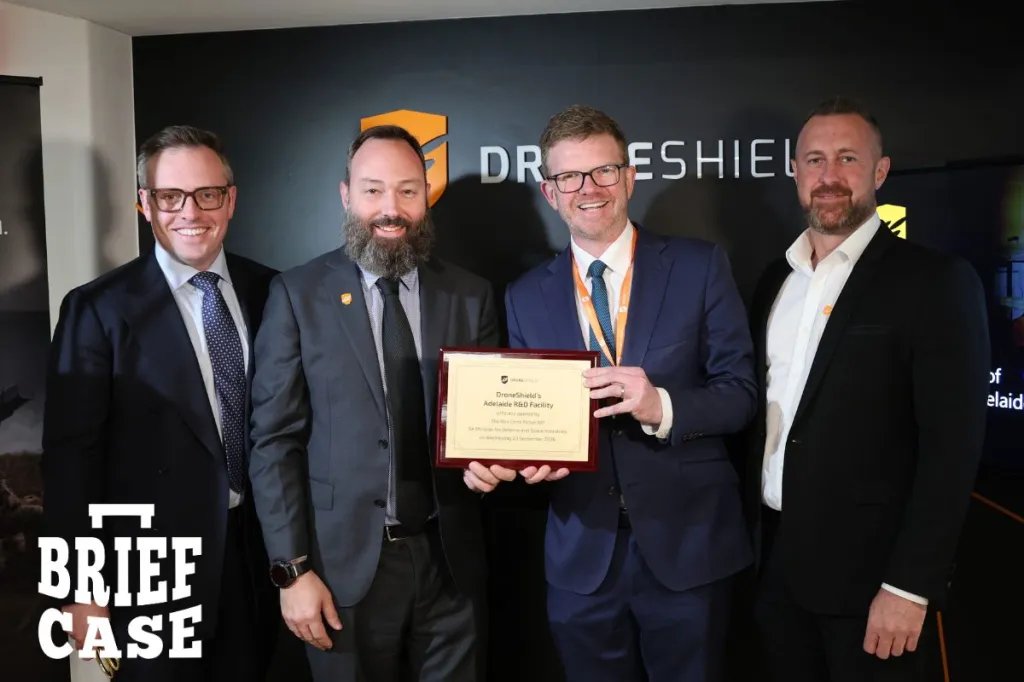
The innovation precinct at Lot Fourteen continues to expand its footprint as a critical engine for the state’s economy. DroneShield, a specialist in counter-drone and electronic warfare solutions, has officially launched a new research and development hub within the precinct. This facility is set to bolster South Australia’s defense sector by creating approximately 20 specialized engineering roles.
These new positions are tasked with advancing the development of sophisticated technologies designed to detect and neutralize unmanned aerial systems—a critical area of growth in modern defense strategy. Lot Fourteen, which now serves as a base for more than 160 diverse organizations, including multinational tech giants and research institutions, has become a key indicator of South Australia’s growing influence in the sector. Minister for Defence and Space Industries Chris Picton noted that the state has successfully doubled the economic impact of its defense industry over the last five years, largely due to the increasing concentration of high-growth companies choosing to establish roots in the region.
## Circular Tech: Giving EV Batteries a Second Life
At the Tonsley Innovation District, Flinders University’s $19 million “Factory of the Future” is proving to be a cornerstone for collaborative industrial research. One of the standout projects currently under development involves a partnership between researchers, Mitsubishi Motors Australia, and ResourceCo to address the growing challenge of electric vehicle (EV) battery disposal.
The team is exploring commercially viable methods to repurpose aging EV batteries that no longer meet the performance requirements of vehicles. Instead of reaching a landfill, these units are being engineered to serve as energy storage solutions for farms, residential homes, and remote, off-grid communities. By repurposing these batteries for applications such as water pumping, lighting, and general power storage, the initiative aims to drastically reduce reliance on carbon-heavy diesel generators. This project represents a significant step forward in Australia’s push toward a circular economy, demonstrating how academic research and private industry can combine to scale sustainable, next-generation technologies.
## Regional Growth and Infrastructure Investment
Investment activity is also surging beyond the metropolitan borders, particularly in Murray Bridge, where recent commercial real estate trends signal long-term investor confidence. The Sturt Centre, a key office asset, was recently acquired for $7.5 million, reflecting strong demand for regional properties underpinned by secure, government-linked tenancies.
This sale arrives in the shadow of the massive $7.5 billion Gifford Hill satellite city project, a development slated to introduce over 17,000 new homes to the region. As the largest singular development project in South Australia since the 1950s, Gifford Hill represents a transformative shift in the state’s urban planning. To support this influx of regional populations, the government is also trialing modular housing solutions. Through a $3.35 million investment via Renewal SA, the state is testing off-site construction methods to accelerate the delivery of high-quality, affordable housing for essential workers, including nurses and teachers, ensuring that regional growth is met with the necessary social infrastructure.
As these sectors converge—from defense-tech expansion at Lot Fourteen to sustainable battery initiatives at the Factory of the Future—South Australia is carving out a reputation as a testing ground for integrated industrial and social progress. Whether through the lens of national security or sustainable housing, the state’s current trajectory suggests a concerted effort to balance technological advancement with practical, community-focused outcomes.
Disclaimer: This content is auto-generated for informational purposes only.
Source: Read Original News