







Beyond the Smash: The Unsung Heroes Bridging Cultures at the BWF World Championships
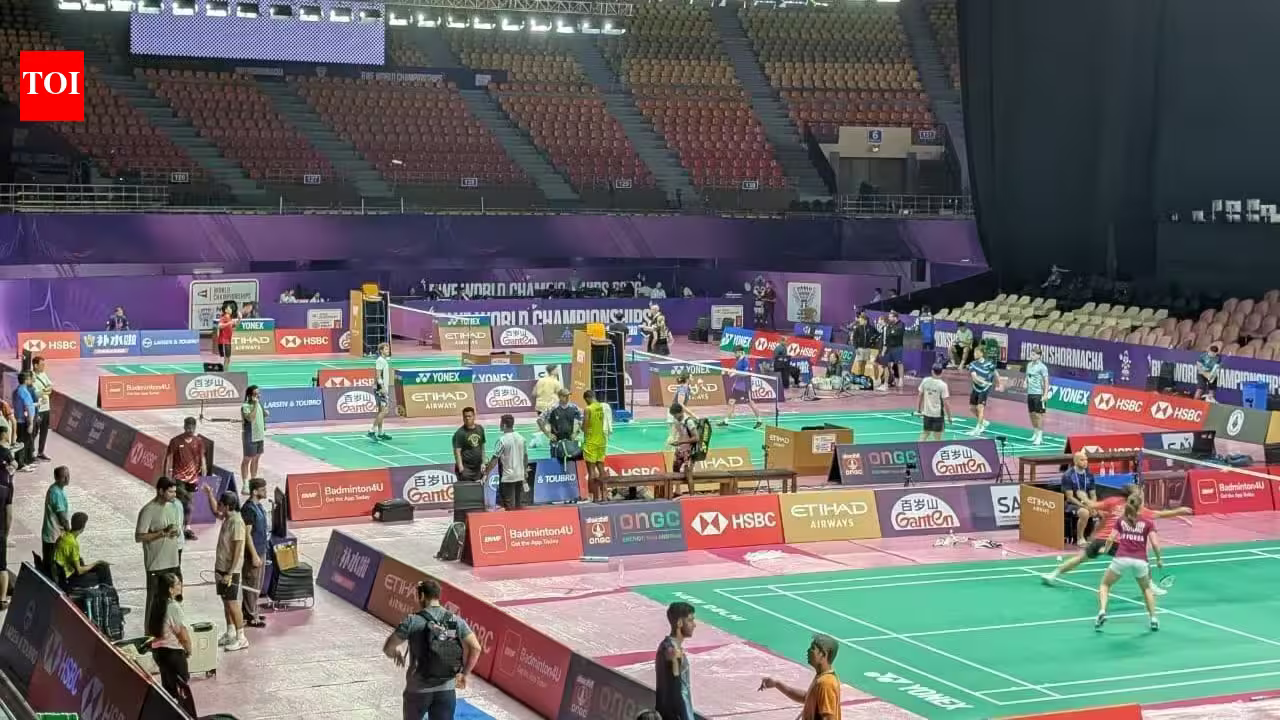
At the recently concluded BWF World Championships in New Delhi, the intensity on the court was matched only by the high-stakes precision required off it. While the world’s elite shuttlers fought for every point, a group of young interpreters worked in the shadows, bearing the immense responsibility of ensuring that the essence of every statement remained intact during the transition between Mandarin, Japanese, Korean, and English.
The 30th edition of the global tournament, held at the Indira Gandhi Indoor Stadium, proved that in elite sports, communication is as critical as technique. A single mistranslated phrase, in a high-pressure environment, has the potential to distort a player’s sentiment or, in more volatile circumstances, trigger unintended controversy.
The Weight of Every Word
For Chaavi Raj, a third-year PhD student in Chinese Studies at Jawaharlal Nehru University (JNU), the reality of the role hit home when local hero Ayush Shetty pulled off a stunning opening-round upset against World No. 1 Shi Yu Qi.
“There was a lot of pressure. There were so many media houses present. China lost. It was a big upset,” Raj recalled. For the 29-year-old, who hails from Bihar’s Sitamarhi district, transitioning from translating for ministries and businesses to the rapid-fire world of sports media was a steep learning curve.
Mandarin, he notes, is a unique challenge. “Like India, where there are multiple dialects, Chinese also changes with region, context and tone,” Raj explains. “It is a pictographic, tonal language. If the tone changes, the meaning changes. It is very easy to forget.”
From Pop Culture to the Podium
The Badminton Association of India (BAI) and the BWF collectively employed a team of skilled linguists, many of whom found their way to the profession through a shared love for the cultures they now represent.
For interpreters like Sahin Parween and Nandini, the journey began with childhood fascinations. Parween’s interest in Japanese was sparked by anime staples like Doraemon and Shin-chan, while Nandini’s path to Korean was paved by the global wave of K-pop and K-dramas.
“When we found out the tournament was happening, we searched what it was about,” says Nandini, a third-year student of Korean Language and Culture. “We prepared for the vocabulary and the questions the media could ask. Still, there was some nervousness.”
The role is not only intellectually demanding but also emotionally taxing. These interpreters often find themselves translating for the very athletes they idolize. “We are also their fans,” Nandini admits. “Sometimes we blank out because we are busy processing that we are seeing them in real life. But at the end of the day, we are learning.”
The Precision of Preparation
In an era where diplomatic sensitivities remain high, these linguists leave nothing to chance. Raj, who specializes in China-US relations, utilizes a rigorous preparation process that includes analyzing archival footage of players and employing AI tools to identify frequently repeated vocabulary.
“We take the help of AI. We give prompts asking the tool to go through the videos and suggest which words are repeated most often,” Raj explains, gesturing to a notebook filled with meticulously written Hanzi. “In such a big event, you cannot take a chance.”
As the tournament concludes and the cameras move on, these interpreters often remain invisible to the public eye. Yet, every headline and soundbite produced at the World Championships relies on their work. In a sport defined by the millimetres of a shuttlecock’s trajectory, they play their own game of fine margins—ensuring that between the player and the world, nothing is ever lost in translation.