






The Strategic Shift Toward Indigenous High-Speed Rail
The landscape of Indian transportation is currently undergoing a structural transformation that mirrors the nation’s broader industrial aspirations. At the center of this transition is the development of an indigenous high-speed rail network. Recent announcements by the Ministry of Railways confirm that the first body shell of India’s proprietary bullet train has successfully moved to the testing phase, marking a significant milestone in the country’s engineering evolution. This progress signifies more than just a reduction in transit times; it represents a fundamental move toward technological sovereignty in the high-stakes sector of rail infrastructure.
Historically, high-speed rail technology has been the domain of a few select nations, primarily Japan, Germany, and China. India’s approach, characterized by a fusion of international partnerships and domestic manufacturing capabilities, is designed to leapfrog traditional development cycles. By focusing on indigenous fabrication, the Indian railway ecosystem is reducing its long-term reliance on imported rolling stock, which is expected to lower maintenance costs and strengthen the domestic supply chain. The directive to develop trains capable of 280 kmph, with a vision for future iterations reaching 350 kmph, aligns with the national goal of fostering an ‘Atmanirbhar Bharat’—a self-reliant India.
Economic and Logistical Implications of High-Speed Corridors
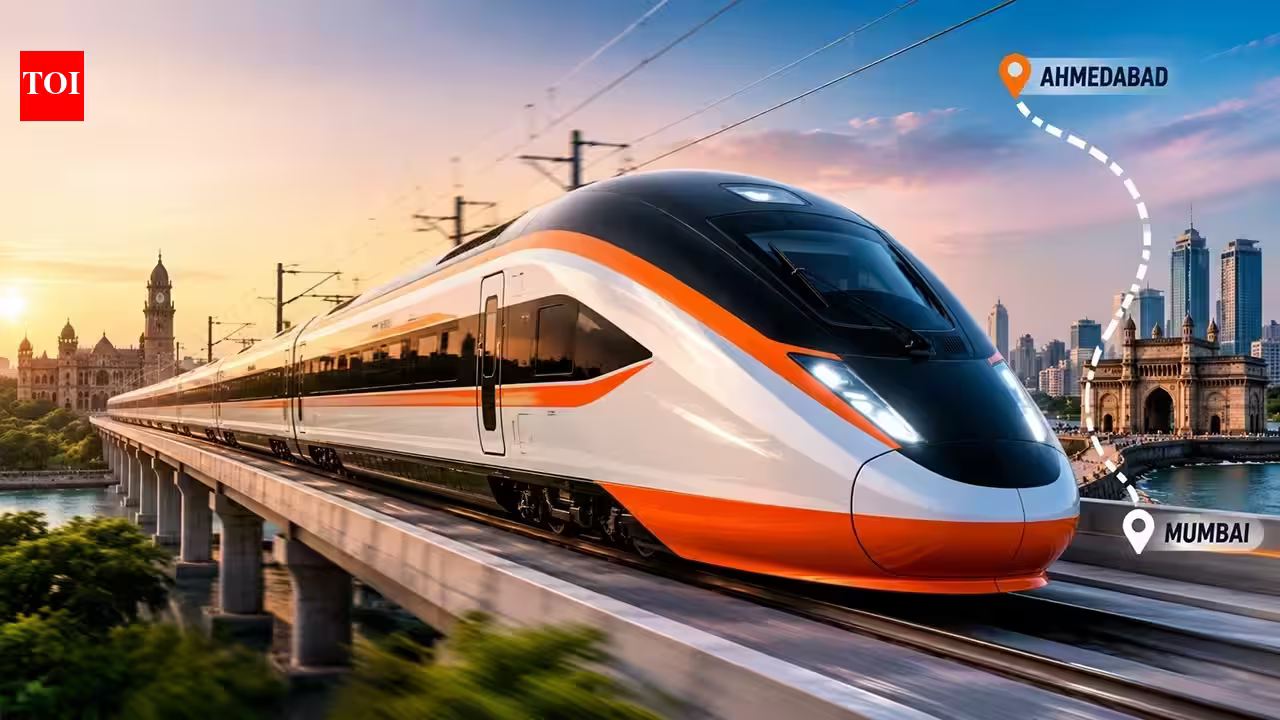
The introduction of bullet trains between major economic hubs, such as the Mumbai-Ahmedabad corridor, serves as a catalyst for regional economic integration. By reducing the travel time between city pairs like Vadodara and Mumbai to approximately 90 minutes, the government is essentially expanding the potential radius for business operations, labor mobility, and tourism. In the context of India’s rapidly urbanizing economy, connectivity is a primary determinant of regional competitiveness. Efficient rail links allow for the decentralization of commercial activity, as businesses can leverage the lower costs of peripheral cities while remaining within commuting distance of major financial headquarters.
From a logistics perspective, the railway infrastructure program is multidimensional. While passenger comfort and speed occupy the headlines, the modernization of operating and reservation systems, coupled with the development of specialized wagons for freight, addresses the systemic bottlenecks that have historically plagued Indian logistics. The diversification of wagon designs—including those optimized for commodities like salt—illustrates a granular approach to increasing freight efficiency. When integrated with high-speed passenger routes, this holistic overhaul of the railway network is projected to lower the overall logistics cost, a critical requirement for enhancing the competitiveness of Indian manufacturing on the global stage.
Technical Challenges and Indigenous Engineering Excellence
Designing a bullet train for the Indian subcontinent requires a departure from conventional international engineering standards. Most high-speed trains currently in service globally are optimized for temperate or cold climates. In contrast, Indian rolling stock must be resilient against extreme heat, high levels of airborne dust, and monsoon-related humidity. These environmental variables necessitate bespoke cooling systems, specialized filtration, and robust materials science applications.
The Integral Coach Factory (ICF) in Chennai and partners like BEML Limited are at the forefront of addressing these engineering demands. The decision to use high-grade stainless steel for the body frames reflects a requirement for both structural integrity and corrosion resistance in varied environments. Furthermore, the ‘squeeze test’—a standard procedure to verify the structural strength of a rail vehicle under heavy longitudinal load—is a critical validation phase. Successful completion of these tests will provide the empirical data required for the Research Designs and Standards Organisation (RDSO) to certify these trains for commercial use. By setting up the ‘Aditya’ High-Speed Rail Complex in Bengaluru, the country is establishing a dedicated facility that bridges the gap between laboratory research and large-scale industrial manufacturing, ensuring that the technology is not only designed but also sustainably produced within the country.
Future-Proofing Infrastructure for a Growing Economy
The commitment to modernizing the railway network is underscored by the scope of recent projects, including the completion of iconic structures like the Chenab Bridge and the inclusion of remote regions like Mizoram into the national rail map. These developments provide the necessary backbone for a modern economy. As the first indigenous high-speed trainsets move toward their planned debut in 2027, the focus is shifting toward scalability. The modular design of the initial eight-coach trainsets allows for future expansion, ensuring that the system can be scaled to meet increasing passenger demand without requiring a total redesign of the core architecture.
Moreover, the modernization of old construction protocols and the digitizing of operating systems are long-overdue systemic shifts. For decades, the Indian railway network operated under outdated administrative and technological constraints. The current drive to reform these protocols ensures that maintenance, signaling, and traffic management become data-driven functions rather than manual, legacy-dependent tasks. This transition is essential to ensure that when high-speed trains are deployed, they operate within a network that can handle the complexities of ultra-fast traffic management.
The Long-Term Industrial Vision
The rollout of the indigenous bullet train is a symbolic and functional turning point for Indian engineering. Beyond the immediate benefit of faster travel, the project acts as an industrial incubator. The expertise gained through the design and manufacture of high-speed propulsion, advanced braking systems, and aerodynamic chassis will likely trickle down into the development of semi-high-speed Vande Bharat trains and other mass transit solutions.
As India positions itself as a global hub for manufacturing and services, the efficiency of its internal transport network will become an increasingly critical factor. By 2027, if the proposed timelines are met, the successful operation of these trains will validate the decision to prioritize indigenous development over mere turnkey imports. The project reflects a broader shift in Indian corporate and government strategy: move from being a consumer of imported technology to becoming a developer and exporter of high-end engineering solutions. This trajectory not only elevates the status of Indian Railways as a global benchmark but also ensures that the nation is prepared to handle the demands of a population that is becoming more mobile, more urban, and more connected than ever before. The modernization journey is complex and high-risk, but it is a necessary investment for a nation striving to align its infrastructure with its geopolitical and economic ambitions.
Disclaimer: This content is auto-generated for informational purposes only.
Source: Read Original News