







Expanding Access to Autonomous Agent Capabilities
Google has officially transitioned its “tasks” feature—formerly known as Spark—from a restricted offering reserved for AI Pro subscribers to a core component of the standard Gemini experience. This move marks a significant shift in how personal AI assistants function, transitioning from passive conversational tools into proactive, autonomous agents capable of executing multi-step workflows. By integrating this capability into the free tier, Google is positioning Gemini as a universal utility rather than a luxury research tool.
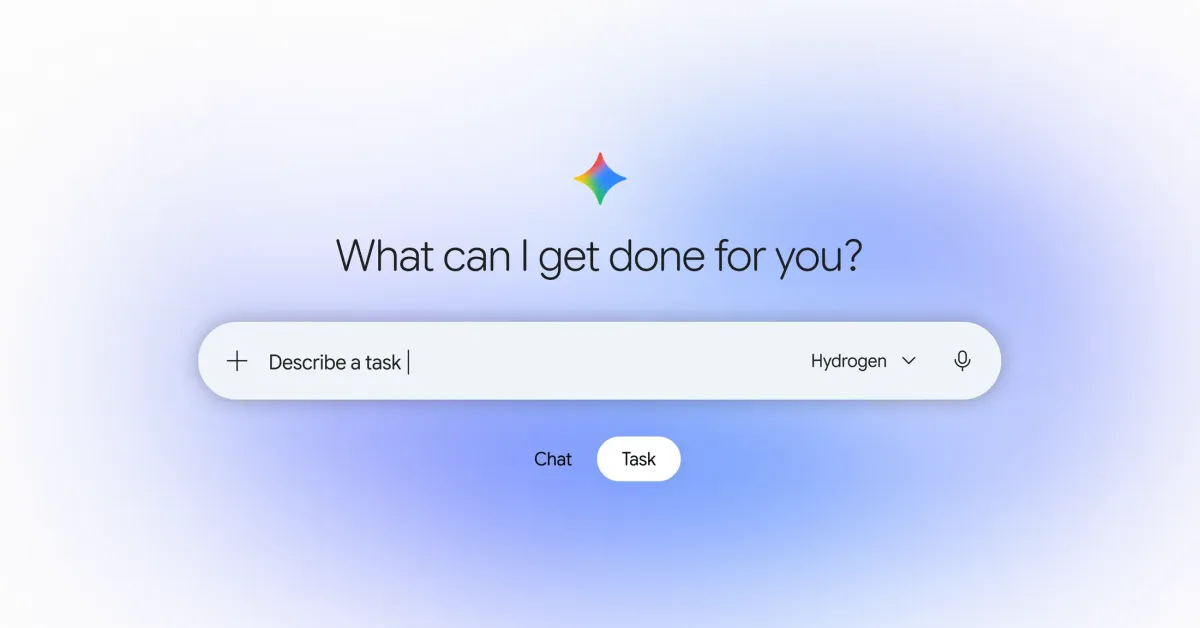
Users accessing the Gemini app on mobile devices or via web browsers will now see a interface toggle between “Chat” and “Task.” While “Chat” maintains the standard large language model interaction, “Task” triggers a specialized environment designed for agency. This separation is intentional, allowing the system to shift from a generative text engine to an operational framework that can navigate complex data environments on behalf of the user.
Technical Architecture and Execution
At the core of the new task-based experience is the Hydrogen model, the latest iteration of Google’s AI architecture. Unlike a standard chatbot that operates on a request-response basis, the task agent is built to handle extended sequences of actions. It interacts directly with a user’s Google ecosystem, including Gmail, Google Calendar, Password Manager, and Google Pay.
The security architecture behind these operations is a notable technical achievement. When a user initiates a task, the process runs within a hardware-isolated virtual machine. This sandbox environment ensures that the AI’s execution logic is walled off from other system processes. Furthermore, the system incorporates defensive layers to mitigate prompt injection risks, ensuring that malicious or unintended inputs cannot manipulate the agent into performing unauthorized actions. When the agent browses the web to fulfill a request, it uses Google Safe Browsing protocols to verify the integrity of external data sources before acting upon them.
Practical Applications in Daily Life
The utility of this feature lies in its ability to synthesize data across disjointed digital platforms. For instance, in a scenario involving utility bill management, the agent can be granted permission to access a user’s email for PDF statements and link to a utility portal via the Google Password Manager. It then analyzes the temporal patterns of energy consumption, such as identifying a heat pump cycle that coincides with peak electricity pricing.
Similarly, the retail experience has been re-engineered through integration with the Google Shopping Graph. Users can delegate the entire procurement process—from product research and comparison based on specific wattage or aesthetic requirements, to the application of discount codes and final payment checkout—to the agent. By streamlining these workflows, the objective is to reduce the cognitive load and time investment required for routine administrative and financial tasks.
Safety, Transparency, and User Control
Recognizing the risks associated with granting an AI autonomy over financial and personal data, Google has implemented several guardrails. The system is designed to identify ambiguity; if an instruction is unclear, the agent will pause and issue a clarifying question rather than executing a potentially incorrect action. Purchases remain under human oversight, requiring manual confirmation before any transaction is finalized.
This “human-in-the-loop” design philosophy ensures that the agent serves as an extension of the user’s intent rather than an independent decision-maker. By leveraging data that resides within the Google ecosystem, the system avoids the privacy concerns associated with third-party data transmission, keeping sensitive files, passwords, and payment information within a single, secure environment.
Global Rollout and Strategic Impact
The rollout of these task capabilities is not universal but covers a broad range of high-priority markets, including the United States, Japan, Korea, Canada, Australia, and India. This phased approach allows for localized testing and refinement of the agent’s performance across different cultural and administrative contexts.
The broader impact of this update is the democratization of AI agency. Previously, the ability to automate tasks via AI was often sequestered behind subscription barriers or limited to enterprise developers. By bringing this functionality to the consumer level, Google is setting a new standard for what constitutes a personal digital assistant. The transition from chatbots that simply “talk” to agents that “do” represents the next major milestone in the development of personal computing, potentially altering how individuals interact with their own digital assets and administrative responsibilities on a daily basis. As the Hydrogen model continues to evolve, the scope of these tasks is expected to expand, further blurring the lines between user-initiated commands and automated digital management.
Disclaimer: This content is auto-generated for informational purposes only.
Source: Read Original News