







The atmosphere at the Esports World Cup (EWC) in Paris was electric, a stark contrast to the quiet halls traditionally associated with chess. Imagine giant screens broadcasting every move, pulsating music, expert commentary, and a throng of screaming fans, all wearing noise-canceling headphones to fully immerse themselves in the digital spectacle. This vibrant setting at the Paris Expo Porte de Versailles provided the backdrop for the EWC chess championship, where traditional board games are increasingly finding a dynamic new home within the burgeoning esports scene.
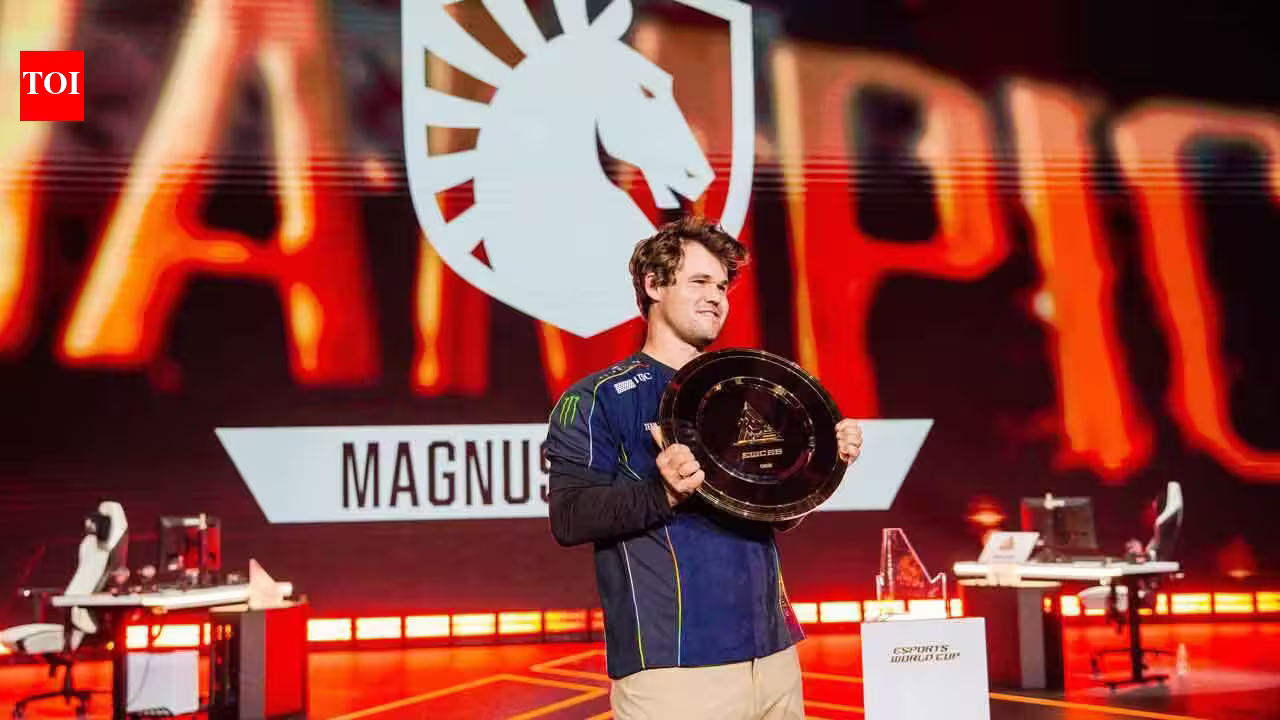
Among the captivated audience was Lucas, attending with his family, including his 11-year-old son, Marius, a budding chess enthusiast who had only been playing for about a year. Their visit was made unforgettable when Marius secured a prized autograph from the reigning champion, Magnus Carlsen. Carlsen, a name synonymous with chess brilliance, successfully defended his EWC Chess title, triumphing over 19-year-old Denis Lazavik with a convincing 2-0 victory in the grand final. This undefeated run earned Carlsen a substantial USD 250,000 prize and 1000 Club Championship points for Team Liquid, while Lazavik took home USD 190,000 and 750 points. The third-place match saw Hikaru Nakamura secure USD 145,000 after a tumultuous encounter against Alireza Firouzja, who finished fourth with USD 100,000.
India also made a significant mark at the tournament, with two players, Arjun Erigaisi and Nihal Sarin, reaching the quarterfinals. Each earned USD 72,500 for their impressive performances, with Arjun narrowly losing to Nakamura in an Armageddon tie-breaker and Nihal falling to the eventual champion, Carlsen. M Pranesh secured ninth place with USD 52,500, and Aravindh Chithambaram, who qualified via DreamHack Atlanta, collected USD 23,000. These results highlight the growing international appeal and competitive depth within the professional chess circuit.
For the organizers of the EWC, the five-day event transcended merely crowning a new champion. It was a crucial litmus test for chess’s integration into an esports environment, sharing the stage with titles like VALORANT, League of Legends, Dota 2, Rocket League, and Fortnite. Carlsen himself eloquently articulated the seamless synergy between chess and esports, emphasizing that the online evolution of chess, which began with the advent of the internet in 1995, paved the way for this “happy marriage.” He believes this format is something chess has been “waiting for a while,” signifying a natural progression rather than a forced adaptation. Carlsen further clarified that the competitive chess showcased at the EWC is a distinct, fast-paced variant, different from traditional chess, embracing its identity as an esport.
The transformation extends beyond the game format. The arena setting, with its vibrant crowd and elaborate stage design, offers a novel experience for players and spectators alike. Carlsen, accustomed to more serene environments, appreciates the “fun experience” and the demanding yet fair nature of this accelerated format. Despite the theatrical elements, the core essence of the game remains: players calculating their next move under intense pressure.
Arkus Fredriksson, a veteran advocate for chess as an esport, shared his elation, describing the realization of “a dream come true” to finally witness chess in arenas with screaming fans. While earlier attempts to blend chess and esports existed, none matched the production quality, scale, or immersive experience offered by the EWC. He noted the innovation of incorporating live commentary within the venue, coupled with noise-canceling headphones for players, enhancing the overall spectacle.
Morten Holst, Director of Games Partnerships at the Esports Foundation, emphasized that the EWC’s goal isn’t to alter the fundamental rules of chess but to enrich the viewing experience. Recognizing the vast existing online community of chess enthusiasts who play, watch, and compete digitally, following streamers and online tournaments, Holst sees the EWC as a natural extension. He highlighted features like heart-rate monitors, which visually convey the immense pressure players endure, adding another layer of engagement for the audience. The presentation of players has also evolved dramatically, moving away from formal entrances to grand, theatrical processions complete with fog, blaring music, and dramatic face-offs, akin to a UFC event. This dramatic flair, however, quickly gives way to intense concentration on the board, with cameras capturing every subtle reaction, every foot tap, revealing the hidden intensity beneath a calm exterior.
Fredriksson observed that the EWC also fosters player development beyond the board. Many chess players, traditionally focused solely on the game, often lack a significant social media presence. The involvement of esports teams, with their established fan bases and content creation capabilities, is helping these players build their profiles and expand their reach. This symbiotic relationship introduces new fans to chess and, conversely, chess fans to the broader esports ecosystem, creating a powerful ripple effect.
However, the event wasn’t without its technical challenges. A significant hiccup occurred during the third-place match between Nakamura and Firouzja, where multiple disconnections disrupted play. Initially, Nakamura attributed the issue to Chess.com, only to later retract his comments upon learning the problem originated from the EWC’s systems, affecting other events as well. This incident served as a reminder that even in a highly digitized environment, technology is not infallible, and the seamless functioning of servers and connections remains paramount for a smooth competitive experience.
Despite this setback, the organizers remain optimistic about chess’s future within the EWC. Fabien Scheuermann, Chief Games Officer at the Esports Foundation, framed chess as an exemplary model for esports integration, citing its strong viewership, attendance, and established professional ecosystem. Beyond prize money, Scheuermann emphasized the EWC’s commitment to the professionalization of chess. The Club Championship structure, where players are signed by professional organizations and receive salaries, provides financial stability, reducing their dependence solely on prize winnings. This initiative, which saw over 30 players signed to esports teams after the first year of the EWC, is transforming chess from a solo endeavor into a viable professional career path. Holst envisions the EWC as a catalyst within a year-round digital chess calendar, creating sustained opportunities for players at all levels. As the EWC enters its second year with chess, the experiment in bridging traditional strategy with modern esports spectacle continues, showcasing a game that, despite its ancient roots, is finding a dynamic new rhythm on the global esports stage.