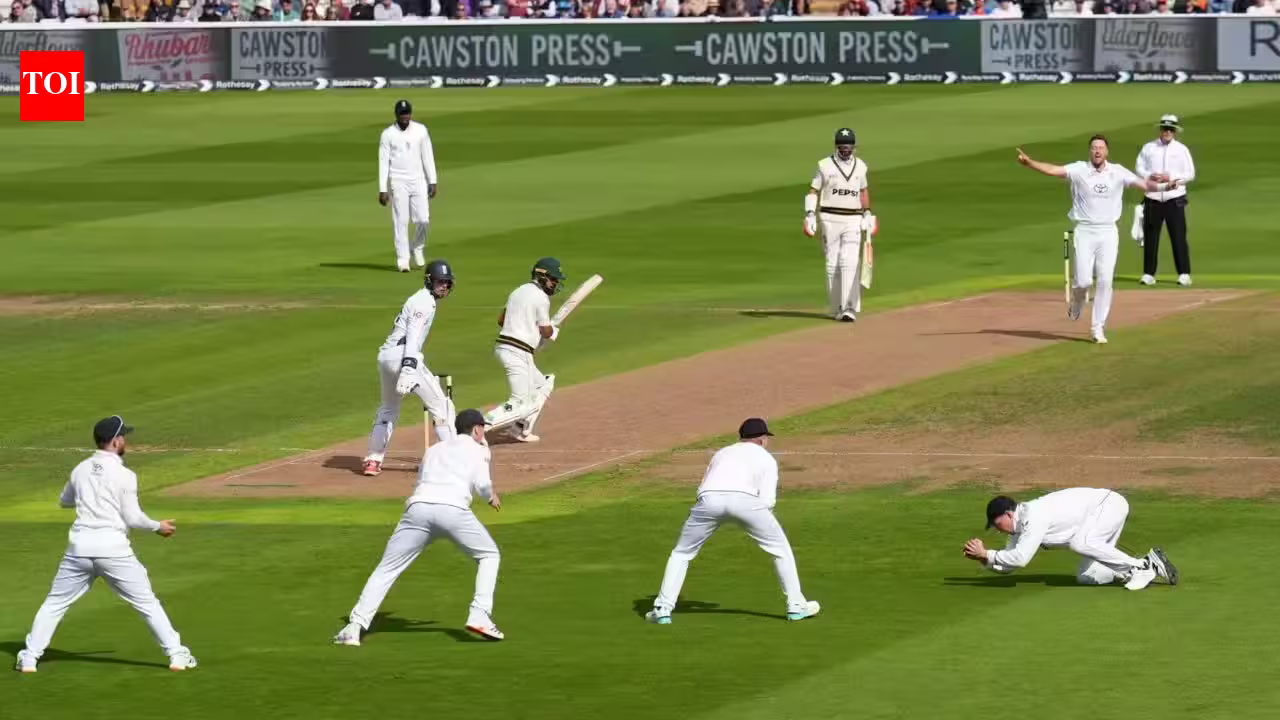










STAGGERING statistics have laid bare the extent of Pakistan’s deepening crisis in their ongoing Test series against England. In a comparison that has sent shockwaves through the cricketing fraternity, it has emerged that the entire Pakistan batting lineup is currently lagging behind the individual output of India’s Shubman Gill during his tour of England last year.
After completing two full Test matches and the opening innings of the third Test at Edgbaston, the Pakistan team has mustered a combined total of just 743 runs. To put that figure into perspective, Shubman Gill accumulated 754 runs during his five-Test series on English soil last year. Pakistan currently finds themselves just 11 runs short of matching the single-handed efforts of the Indian batsman—a metric that serves as a damning indictment of the tourists’ inability to build substantial partnerships or sustain any form of momentum.
A Turmoil That Transcends the Pitch
The statistical embarrassment comes on the back of a week of unprecedented administrative upheaval. Following a series of humiliating defeats at Headingley and Lord’s, the Pakistan Cricket Board (PCB) took the drastic step of gutting the squad and the coaching staff. With seven players axed and the backroom staff overhauled, the atmosphere surrounding the team has been one of extreme volatility.
Despite the chaotic lead-up to the Edgbaston Test, captain Babar Azam attempted to project a sense of normalcy when questioned at the toss. “Not difficult,” Babar said, when asked about the pressure of leading a side in such a state of flux. “Yes, after that we had a couple of changes, but I think a good opportunity to new boys, and yes we are trying to do our best in this match.”
However, whatever “best” was intended by the Pakistan leadership, the reality on the field told a different story. The first session in Birmingham served as a brutal reminder that the fundamental flaws plaguing the team’s batting—technical deficiencies, poor shot selection, and a fragile temperament—remain unaddressed.
Edgbaston Collapse: An All-Too-Familiar Script
Sent into bat under overcast English skies, Pakistan’s batting unit crumbled with alarming speed. The tone was set early by Ollie Robinson, who claimed his 100th Test wicket by trapping opener Saim Ayub lbw for a duck. The collapse proved contagious. Jofra Archer swiftly accounted for debutant Azan Awais, while Robinson returned to claim the wicket of Abdullah Shafique.
The woes continued as Shan Masood attempted a misguided cross-bat stroke, finding a fielder at mid-wicket off the bowling of Archer. When Josh Tongue entered the fray, he systematically dismantled the middle order, removing Babar Azam before lunch and cleaning up debutants Ghazi Ghori and Imran Randhawa shortly after.
The lone bright spot for the visitors was Saud Shakeel, who followed up his fighting 97 at Lord’s with a team-high 43. Yet, even his resistance was short-lived, as Tongue eventually breached his defense with a sharp inswinging delivery. By the time the final wicket fell, Pakistan had been dismissed for a paltry 133, a total that effectively surrendered the initiative before England had even picked up a bat.
England’s Dominance and Robinson’s Milestone
While Pakistan’s batting unit struggled for fluency, the hosts operated with clinical efficiency. England’s bowling attack was led by a relentless Robinson, who finished with figures of 3-15 from 11 overs. His achievement of moving to 102 Test wickets cements his status as one of the most effective bowlers in the modern game; his current Test bowling average of 19.1 remains the best among all post-war bowlers with more than 100 dismissals.
England’s subsequent batting performance further highlighted the disparity between the two sides. Despite Mohammad Ali removing Ben Duckett and Mohammad Abbas accounting for Jordan Cox, significant contributions from Emilio Gay and Harry Brook guided the hosts to 156-4 by the close of play. Even with Joe Root falling lbw for the 10th time in 13 innings, England secured a 23-run lead, comfortably positioning themselves to dictate the remainder of the match.
The “Gill” Benchmark: A Stark Reality Check
The most haunting narrative of this series remains the comparison with Shubman Gill. While cricket is a team game, the fact that a collective effort of eleven men across three separate innings cannot match the individual grit shown by a single player in a separate series speaks volumes. It highlights a lack of application and a failure of the top order to perform under English conditions.
As the PCB looks to move forward from this disastrous stretch, the numbers will serve as a stark reminder of how far they have fallen. For Pakistan, the remainder of the Edgbaston Test is not just about competing for a result; it is about restoring a modicum of pride in a shirt that has, over the last few weeks, seen its reputation diminished by a series of performances that belong nowhere near the international stage.
Disclaimer: This content is auto-generated for informational purposes only.
Source: Read Original News