






Nagoya/Jind: The quiet village of Sangatpura in Haryana was shaken from its morning routine on Tuesday by the crackle of a battered keypad phone. For Sudesh Devi, 48, the news did not arrive via a sleek smartphone or a high-definition broadcast, but through a simple, startling phone call from a stranger. “Neeru gold jeeti hai, Asiad mein,” the voice on the other end declared.
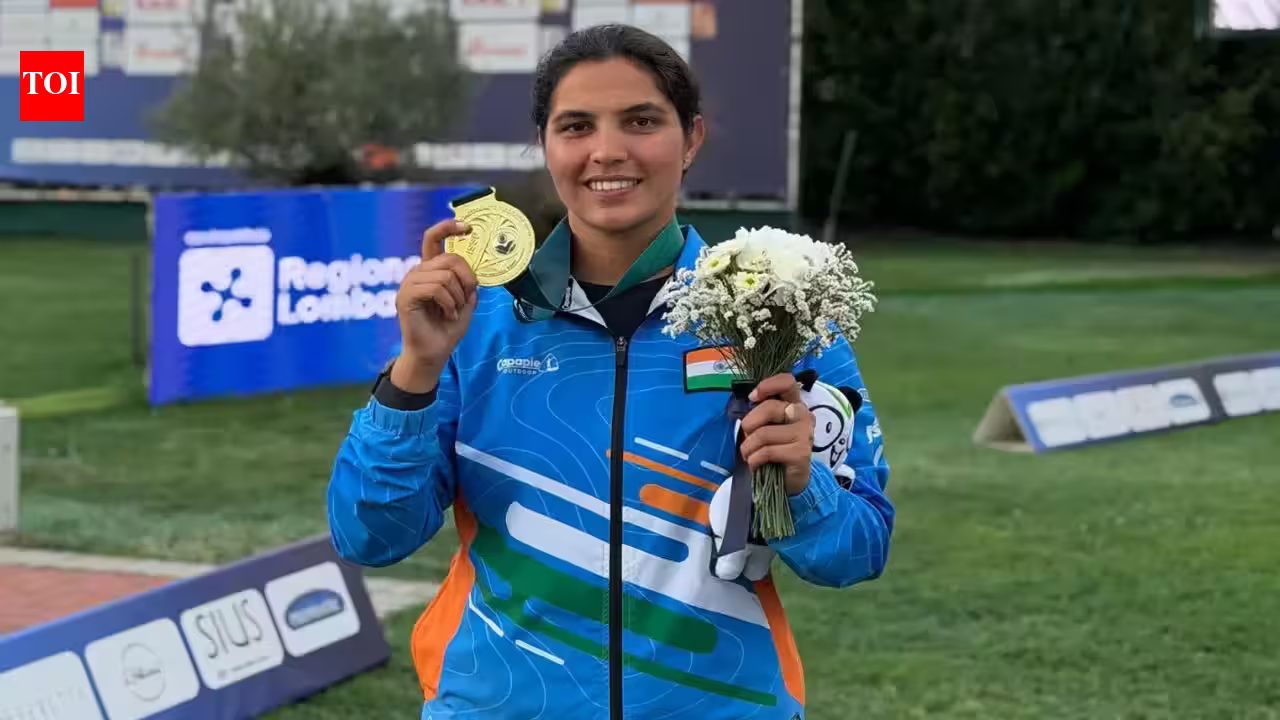
In that singular moment, standing near her modest one-room home with her BPL card in hand, the world shifted for the mother of the newest star in Indian sports. While she struggled to process the gravity of the achievement, across the continent in Nagoya, Japan, her daughter, Neeru Dhanda, was etching her name into history. On a rain-swept, high-altitude shooting range, Dhanda secured the individual trap gold medal, becoming the first Indian woman to do so and ending a 46-year gold drought for the country in the event, dating back to the legendary Randhir Singh in 1978.
A Miraculous Recovery
The magnitude of Dhanda’s victory cannot be overstated, especially when viewed through the lens of her harrowing fortnight. Less than two weeks before the Asian Games, Dhanda was confined to a hospital bed in Bhopal, battling a severe case of suspected H1N1 flu. Confined to a liquid diet for five days and physically unable to train for over three weeks, her participation in the Games looked like an impossibility.
“Even if there is a storm, look it in the eye,” Dhanda reportedly told herself as rain began to pelt the range during the final. She proved to be as resilient as her preparation was unconventional. Guided by her personal coach, Mansher Singh, and bolstered by a “grind it out” directive from national coach Peter Wilson, Dhanda displayed a mental fortitude that defied her recent physical exhaustion. She did not just compete; she dominated, providing India with its first shooting gold of the current Games, silencing doubts that had plagued her throughout her recovery.
From Pond-Side Tests to Continental Glory
Dhanda’s ascent to the podium is a quintessential tale of grit, one that traces its roots back to the dusty banks of a local talaab (pond) in Haryana. Her introduction to the sport was as informal as it was fateful; encouraged by her uncle to shoot a small sheet of tin with an old country double-barrel gun, Dhanda passed her first test with flying colors.
The ambition was fanned by her cousin, Lakshay Sheoran, a silver medalist in trap at the 2018 Asian Games. Recognizing the fire in her, the family pivoted to support her, despite having no background in the sport and limited financial means. By 2019, Dhanda had made the bold move to the Madhya Pradesh Shooting Academy, where the prospect of training with professional equipment proved too enticing to pass up. Her father, Suresh Dhanda, 56, reflects on those early days with immense pride, noting that the family often struggled to keep her dream alive, relying on the generosity and support of their relatives to ensure she had the rifles and ammunition required to hone her craft.
The Unwavering Faith of a Mother
Behind the high-tech precision of the trap range and the roar of the crowd lies the story of Sudesh Devi, who worked tirelessly to provide for her daughter. To fund Neeru’s sporting dreams, Devi took up the demanding task of selling buffalo milk, ensuring that poverty did not become a terminal obstacle for her daughter’s aspirations.
Speaking from her home, where news of the gold medal drew a tide of congratulatory visitors, Devi’s joy was visceral. “You are telling me it is indeed gold? My Neeru has won gold?” she asked, before letting out a jubilant cheer. Her support for her daughter has been a cornerstone of Neeru’s career, especially in the context of the region’s traditional landscape.
Dhanda, who has purposefully delayed marriage to focus on her objective of providing a better life for her parents, has always been clear about her mission. “She had promised me that she would first build a good house for the family and start her own family only after fulfilling that promise,” Devi said. “After today’s victory, it feels as if all our dreams have come true.”
A Symbol for Modern Haryana
Neeru Dhanda’s triumph serves as a powerful testament to the changing tides in rural India. Hailing from a region often associated with traditional constraints, she has emerged as a beacon of progress and defiance. Her mother’s pride reflects a changing mindset: “If God had given me another daughter, I would have welcomed her too. Today, daughters are proving that they can be at the forefront of everything.”
As Dhanda prepares for the celebrations that surely await her upon her return to Sangatpura, the weight of the gold medal around her neck represents more than just a sporting victory. It represents a promise kept, a family’s sacrifice vindicated, and a daughter’s unwavering belief that, even when faced with the storm, one must simply refuse to look down.
Disclaimer: This content is auto-generated for informational purposes only.
Source: Read Original News