








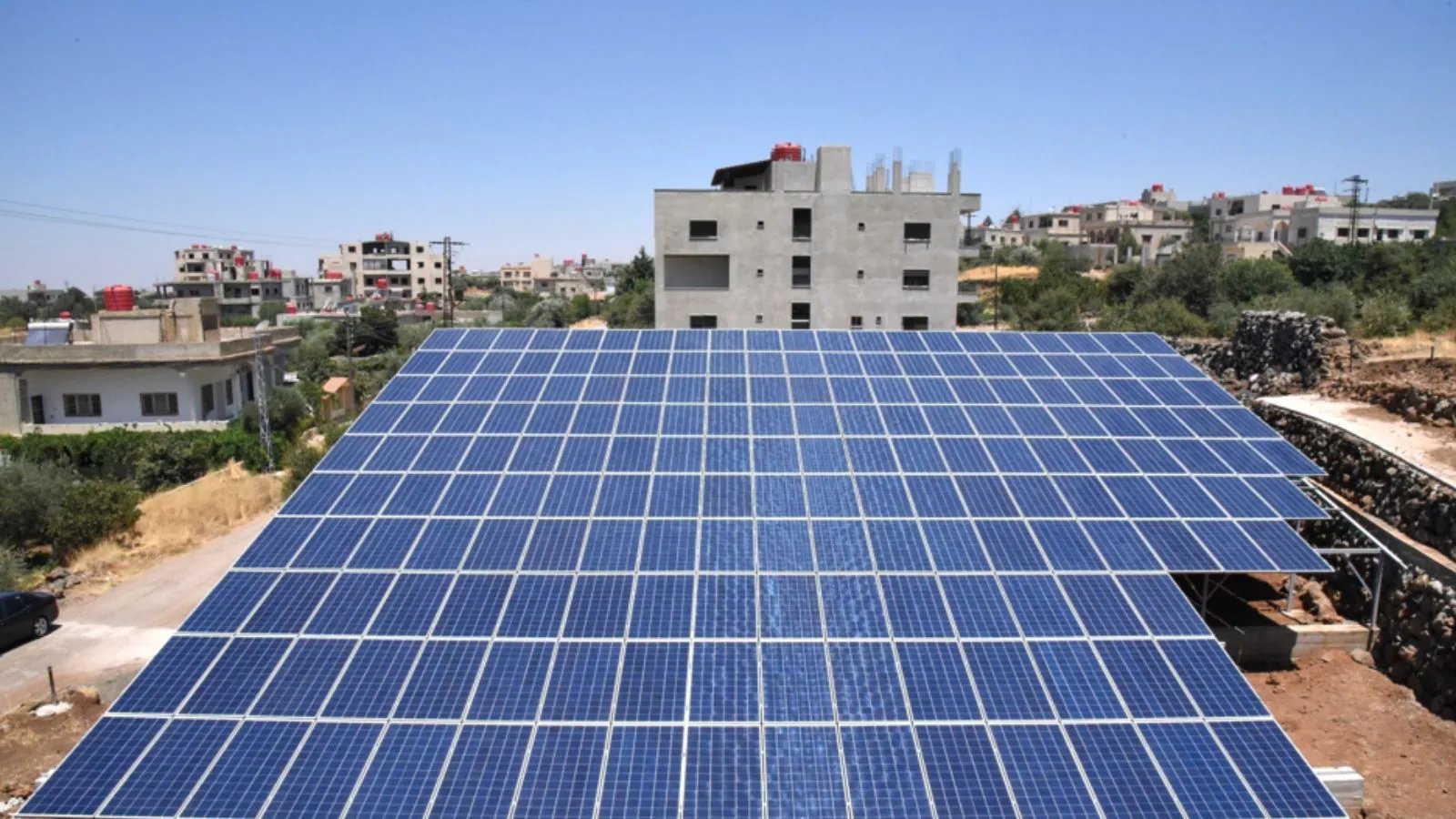
India’s aggressive push to dominate the global renewable energy landscape is entering a critical new phase. While the nation has successfully scaled its manufacturing of solar modules—boasting a capacity of over 213 GW—the government is now turning its attention to the “missing link” in its industrial chain: polysilicon. By incentivizing domestic production of this vital raw material, New Delhi aims to break its reliance on China and create a fully integrated, self-sustaining solar ecosystem.
## Closing the Upstream Gap
Polysilicon serves as the foundational building block for the entire solar value chain. It is processed into ingots and wafers, which are then fashioned into the solar cells found in panels. Despite India’s rapid advancements in assembly and cell production, the upstream segment—the manufacturing of the raw silicon itself—has remained a vacuum. Currently, Indian manufacturers are heavily dependent on imports to keep their factories running.
To address this, the Ministry of New and Renewable Energy (MNRE) is drafting a new Production-Linked Incentive (PLI) scheme. While the specific fiscal details are still under wraps, the ambition is clear: the government is targeting at least 30 GW of domestic polysilicon capacity by 2030. Industry experts, such as Vinay Thadani, Director and CEO of GREW Solar, suggest that building this domestic backbone is essential for long-term resilience, noting that true competitiveness requires not just import substitution, but also operational scale, technological sophistication, and efficient energy sourcing.
## The Role of Advanced Tech and Industrial Scaling
Achieving this goal is a capital-intensive undertaking. According to MNRE Secretary Santosh Kumar Sarangi, establishing the necessary infrastructure, including plants for both polysilicon and metallurgical-grade silicon, requires an estimated investment of roughly Rs 850 crore per gigawatt.
Beyond just pouring capital into construction, the tech industry is increasingly leveraging data analytics to optimize these manufacturing cycles. As companies look to integrate AI into their workflows, data-driven platforms are being used to monitor supply chain fluctuations and predict demand spikes in the renewable sector. Tools like automated quality control systems and predictive maintenance algorithms—often powered by cloud-based AI infrastructure—are becoming standard for companies aiming to reach the high-efficiency standards required for global solar competition.
## Beyond Modules: A Fully Integrated Future
The government’s current strategy represents a departure from earlier policies that focused primarily on downstream module assembly. By targeting the entire spectrum from polysilicon to ingots and wafers, India is positioning itself to be less vulnerable to the price volatility and supply chain disruptions often associated with global trade.
This move is part of a broader, time-bound roadmap. India has set a target to achieve at least 80 GW of domestic ingot and wafer manufacturing capacity by mid-2028. This vertical integration is not merely an industrial project; it is a strategic maneuver to ensure that India’s green energy transition is not stalled by international market pressures.
For the domestic tech workforce, this shift creates new avenues for growth. As solar manufacturing matures into a high-tech sector, it creates an increasing demand for specialized roles in automation, materials science, and digital supply chain management. Just as the broader tech industry is seeing a rise in demand for data analytics skills to navigate complex digital transformations, the renewable sector is quickly becoming a primary destination for engineers and analysts aiming to solve the complex logistical challenges of a transitioning energy economy. By anchoring the supply chain at home, India is essentially building a “Silicon Strategy” that mirrors its efforts in the semiconductor and software industries—prioritizing local capability to secure national growth.
Disclaimer: This content is auto-generated for informational purposes only.
Source: Read Original News