




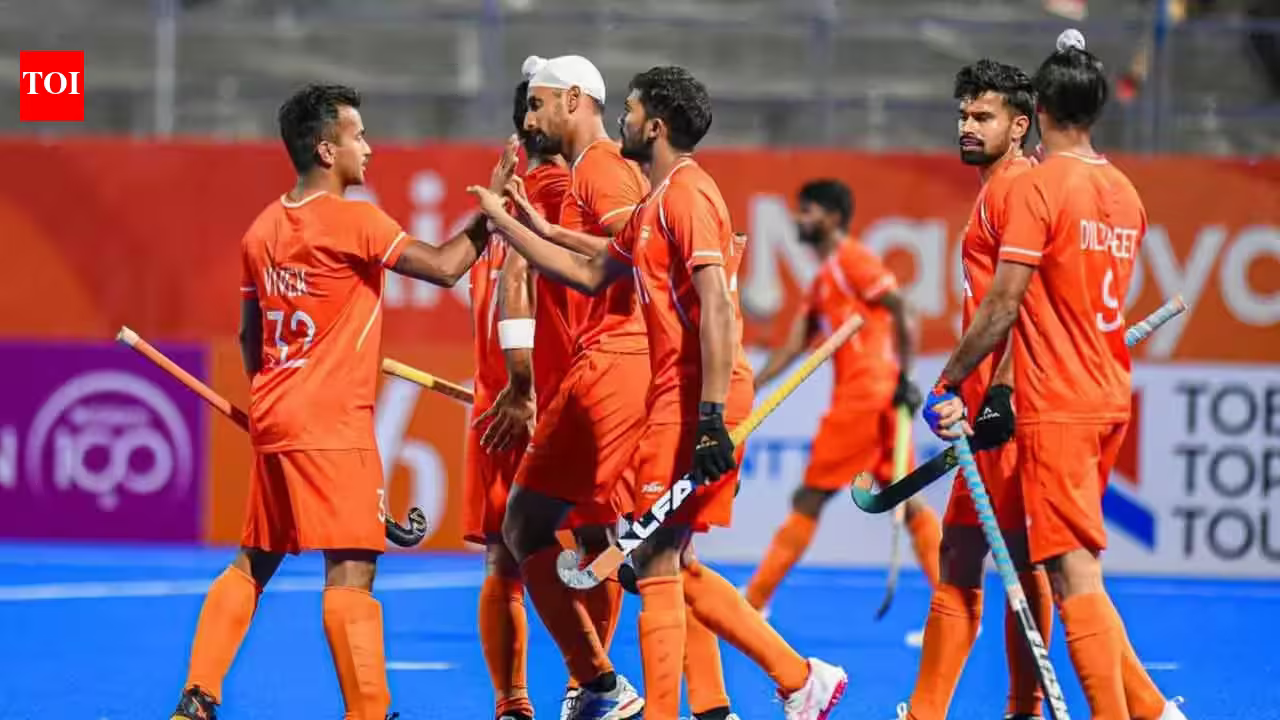


HISTORIC STAKES await the Indian men’s hockey team as they prepare to step onto the turf this Saturday, staring down the possibility of etching their names into the annals of sporting immortality. Standing between the defending champions and a golden legacy is a formidable Malaysian side, with both nations vying for the ultimate prize: the Asian Games gold medal and the coveted, direct qualification ticket to the 2028 Los Angeles Olympics.
For India, this isn’t merely about another medal; it is about shattering a long-standing psychological barrier. Despite India’s rich hockey heritage and dominance on the continental stage, they have never successfully defended their Asian Games gold. A victory this weekend would mark the first time in the nation’s history that the squad has secured back-to-back titles at the Games, signaling a golden era for Indian hockey under the current regime.
A Narrow Escape: The Semifinal Scare
The road to the final has been anything but serene. India’s path was nearly derailed in a chaotic and nerve-wracking semifinal clash against arch-rivals Pakistan on Thursday. For three quarters, it appeared the script had already been written: India surged to a commanding 3-0 lead, showcasing the fluid, high-octane hockey that has become their hallmark. However, complacency, the perennial enemy of elite sport, crept into their ranks.
Pakistan, sensing an opening, mounted a ferocious comeback that left the Indian defense scrambling. Within minutes, what was once a comfortable cushion vanished, as the scoreboard leveled at 3-3. The tension in the stadium was palpable; the match teetered on a knife’s edge, with the ghost of a penalty shootout—a lottery no coach wants to face—looming large.
It took a moment of pure individual brilliance and ice-cold composure from Abhishek to rescue the campaign. With the clock ticking down to the final minute of regulation time, Abhishek pounced on a loose ball to net the decisive winner, snatching a 4-3 victory from the jaws of a potential exit.
While the win was celebrated, the coaching staff will be dissecting the film with a critical eye. Beyond the defensive lapse, the team’s inability to capitalize on penalty-corner opportunities proved costly. In the high-pressure environment of a final, such inefficiency could be the difference between a podium topper and a silver-medal disappointment.
Malaysia: The Silent Predators
While India rode a roller-coaster of emotions to reach the summit, their opponents, Malaysia, have been the definition of clinical consistency. The Malaysians enter the gold-medal clash with an unblemished record, having emerged victorious in all five of their tournament outings. Their journey to the final was punctuated by a hard-fought 2-1 victory over South Korea in the semifinals—a game that proved Malaysia’s capacity to absorb pressure and respond with strategic intent.
This will mark Malaysia’s second appearance in the Asian Games final within the last three editions. Their confidence is at an all-time high, and their tactical discipline has been a nightmare for opponents. Unlike the Indian team, which often relies on bursts of high-intensity attacking hockey, Malaysia has demonstrated a patient, structured approach that emphasizes defensive stability and quick counter-attacks. They are a team that thrives when the pressure is at its peak, and they will look to exploit any lingering fatigue or tactical rigidity in the Indian ranks.
The Crucial Factors for Gold
With a recovery window of less than 48 hours between the semifinal and the final, physical conditioning will be as important as tactical preparation. The Indian squad must regain their composure and sharpen their focus; there is no room for the lapse in concentration that allowed Pakistan back into the game.
Head coach and leadership personnel are expected to emphasize three key pillars for the final: patience, set-piece accuracy, and defensive cohesion.
- Set-Piece Efficiency: India cannot afford to squander penalty corners. Against a disciplined Malaysian defense, these opportunities are the most reliable path to goal. Finding the back of the net from these situations will be paramount to keeping the pressure on the opposition.
- Mental Fortitude: The weight of history—specifically the desire to defend the gold—is a heavy burden. The team must treat this as any other match, ignoring the narrative of the 2028 Olympic qualification until the final whistle blows.
- Midfield Control: Malaysia’s ability to transition from defense to attack is their greatest weapon. India’s midfield must prioritize controlling the tempo of the game, denying Malaysia the space they need to launch their dangerous counter-attacks.
As the two teams prepare to face off, the narrative is clear. India has the talent and the momentum, but they face a Malaysian team that is hungry, disciplined, and unbeaten. Whether India can solidify their status as the kings of Asian hockey or if Malaysia will play the role of giant-slayers remains to be seen. One thing is certain: come Saturday, the turf will witness a battle for the ages where every pass, every tackle, and every penalty corner could change the course of history.
Disclaimer: This content is auto-generated for informational purposes only.
Source: Read Original News