





As the 2026 midterm elections enter their final, high-stakes phase, political analysts and campaign insiders are noting a significant shift in national sentiment—a development now widely characterized as a “blue environment.” This shift is increasingly reflected in the financial strategies of the Republican party, which has been forced to dedicate significant resources to defending seats in regions previously considered safely within the GOP’s domain.
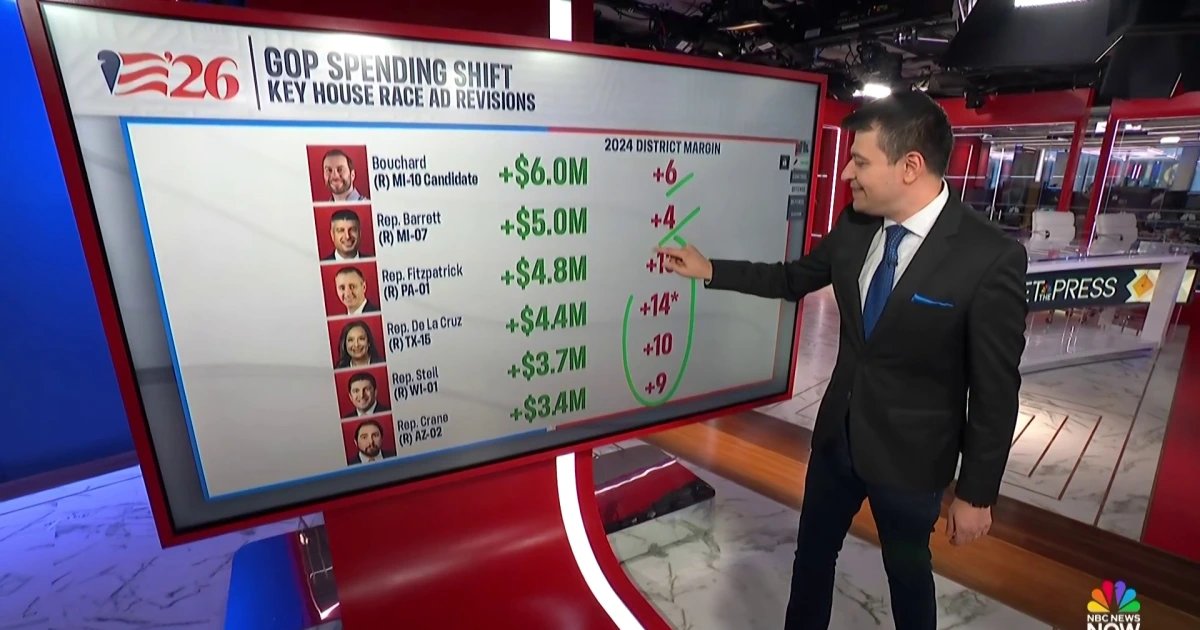
According to recent reports, the Republican Party is playing defense in deep-red states, an strategic pivot that has left many political observers questioning the strength of the party’s incumbent candidates. NBC News senior national political reporter Sahil Kapur noted that the movement of campaign cash toward these historically secure areas suggests that party leadership acknowledges a tangible shift in voter enthusiasm and political momentum.
The atmosphere surrounding these elections is being compounded by persistent economic headwinds. Recent data indicates that prices for both businesses and consumers are surging, creating a complex landscape for candidates on both sides of the aisle. During a recent episode of Meet the Press NOW, a panel featuring journalists Jon Allen, Ryan Nobles, and Allie Canal discussed how former President Donald Trump is attempting to navigate this economic frustration on the campaign trail. Despite these efforts, the persistence of inflation and the rising cost of living remain dominant issues, particularly for rural communities and agricultural sectors that feel increasingly ignored by national discourse.
Democratic challengers are seizing on this climate, aiming to frame incumbent Republicans as out of touch with the needs of their constituents. In Pennsylvania, the challenge against Rep. Brian Fitzpatrick has centered on this narrative, with opponents arguing that his perceived moderation is a veneer that masks a lack of alignment with the urgent economic anxieties of his district. Similar dynamics are playing out in Texas, where Democratic momentum has reportedly placed Republican incumbents in an unaccustomed defensive posture, forcing them to spend heavily to protect their legislative standing.
The broader political environment is also being shaped by unconventional campaign tactics and the intervention of high-profile figures. While some candidates are attempting to strike a “delicate balance” regarding their association with Trump’s policies, others are grappling with the limitations of candidate appearances in states where the national message may not resonate as effectively as expected.
As both parties enter the final sprint to Election Day, the “blue environment” narrative underscores a broader trend of volatility. With rural voters signaling deep frustration over economic conditions and national parties reallocating resources to hold their ground, the outcome in key districts will likely serve as a definitive litmus test for the country’s direction. Whether the current momentum favoring Democratic candidates is enough to overcome the structural advantages often held by incumbents remains the central question for the final weeks of the 2026 cycle.
Disclaimer: This content is auto-generated for informational purposes only.
Source: Read Original News