







India Pledges Streamlined Processes and Deeper Value Chain Integration to Supercharge FDI
TOKYO – Union Minister for Commerce and Industry Piyush Goyal has signaled a renewed government push to accelerate Foreign Direct Investment (FDI) inflows, emphasizing a commitment to administrative ease and deeper integration within domestic industrial value chains.
Speaking during a visit to Japan, the minister underscored that the government is actively seeking industry feedback to remove bureaucratic bottlenecks. “We are open to ideas; whatever industry demands… there is tremendous scope to improve process, procedure, and policy,” Goyal stated. He noted that the primary goal is to provide investors with the confidence that their capital will translate into productive activity with greater speed and efficiency.
Simplifying the Regulatory Landscape
A core pillar of the government’s new strategy involves modernizing regulatory frameworks. Minister Goyal highlighted the need for more efficient Know Your Customer (KYC) norms and the implementation of mutual recognition agreements with international regulators. By aligning standards across borders, the government hopes to simplify approvals and reduce the compliance burden for multinational firms operating in India.
Beyond merely attracting headline investment figures, the government is shifting its focus toward the entire manufacturing ecosystem. Goyal emphasized that India aims to move beyond simple assembly to foster “downstream indigenisation.”
Using the paints industry as a case study, the minister noted that India imports approximately $1 billion worth of titanium dioxide annually—a key input the government is eager to see manufactured locally. This logic extends to the high-tech sector as well, where India is looking to expand its footprint from semiconductor design and testing into the production of specialized gases, chemicals, and equipment. “Our effort is to go deep dive, becoming self-reliant, and also creating more jobs,” he added.
Trade Strategy and Economic Outlook
Addressing the nation’s FDI ambitions, the minister pitched India’s growing network of Free Trade Agreements (FTAs) as a strategic launchpad for global markets. Negotiations for new pacts—ranging from Israel and Chile to Canada and the South African Customs Union—are currently underway.
However, when asked about the Comprehensive and Progressive Agreement for Trans-Pacific Partnership (CPTPP), Goyal maintained a cautious stance, stating that the government has not yet formally considered joining the 11-nation trading bloc.
Despite global economic headwinds, the outlook for the Indian economy remains bullish. Citing a 15% increase in exports during the first quarter, the minister expressed confidence that upcoming data will confirm India’s status as a resilient, fast-growing economy. “My own sense is the first quarter will once again give very good results,” Goyal said, noting that India continues to outpace other large economies in growth metrics.
Addressing Bilateral Ties
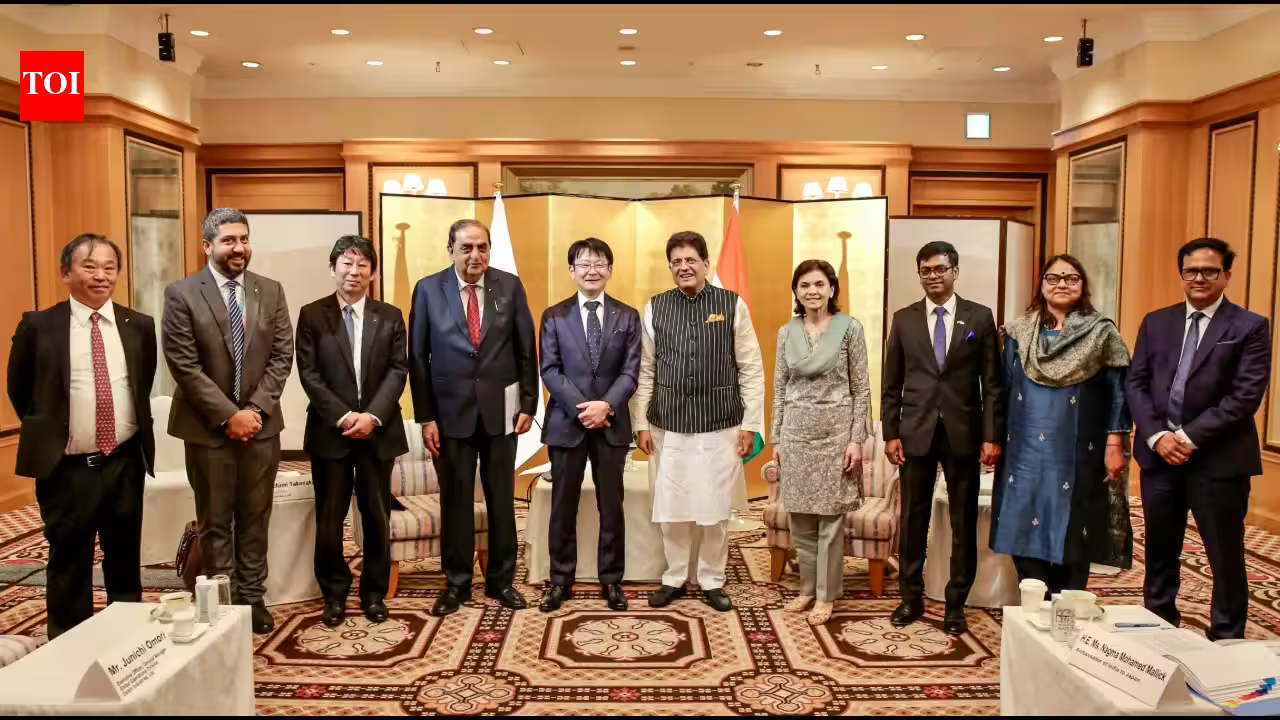
During his engagement with Japanese stakeholders, the minister addressed specific industrial concerns, including a request from Tokyo regarding the restoration of benefits for a chemical critical to the semiconductor supply chain. The benefit, which had been withdrawn due to past misuse, is currently under review to ensure it can be reinstated with better safeguards, reflecting the government’s balanced approach to fostering industry growth while maintaining fiscal and regulatory oversight.