






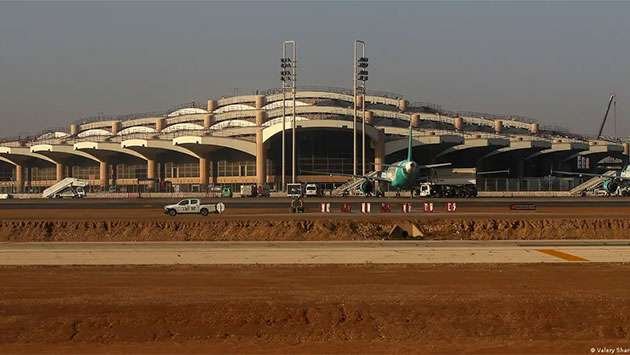
SANAA — Yemen’s Houthi rebels issued a chilling ultimatum on Sunday, warning international travelers and commercial airlines to steer clear of airports across Saudi Arabia. The threat comes less than 24 hours after a sophisticated ballistic missile strike targeted Riyadh’s King Khalid International Airport, an escalation that has rattled global aviation authorities and intensified the ongoing regional conflict.
In a televised statement, the Houthi-controlled military spokesperson warned that all Saudi airports, as well as those used by the Saudi-led coalition, are now considered “legitimate military targets.” The rebels claimed that the barrage—which saw a Burkan-2H missile intercepted by Saudi air defenses near the capital on Saturday—was a direct response to what they termed “the crimes of the Saudi-American aggression” against the Yemeni population.
“We advise airlines and passengers to avoid these airports, as they are no longer safe,” the statement read, signaling a shift in tactics that places civilian infrastructure at the center of the cross-border conflict. While the Saudi authorities confirmed that debris from the intercepted missile fell near the airport without causing significant casualties or disrupting flight operations, the psychological impact of the attack has been profound.
The Saudi-led coalition, which has been fighting to restore the internationally recognized government of Yemen since 2015, condemned the attack as a “dangerous escalation” and accused Iran of supplying the advanced missile technology used by the Houthi insurgents. Tehran has consistently denied providing direct military aid to the rebels, despite mounting evidence presented by Saudi and Western intelligence agencies regarding the origin of the munitions.
For the regional aviation sector, the warning creates a logistical nightmare. Many major international carriers currently utilize Saudi hubs as transit points for routes connecting Europe, Asia, and the Middle East. Security analysts suggest that while the Houthis may lack the precision to consistently strike major terminals, the mere threat of such attacks necessitates enhanced security protocols, potential flight rerouting, and increased insurance premiums for carriers operating within the Arabian Peninsula.
In response to the threat, the Saudi coalition has tightened its blockade of Yemeni ports and airports, claiming it is a necessary measure to stem the flow of illicit arms into the country. Humanitarian organizations, however, have raised urgent concerns, warning that any further restriction on entry points will exacerbate what is already described as the world’s worst man-made humanitarian crisis. With millions of Yemenis on the brink of famine and suffering from a widespread cholera epidemic, the international community remains divided on how to address the volatile security situation without further endangering the lives of non-combatants.
As tensions reach a boiling point, Saudi officials have vowed a robust response, while the rebels maintain they will continue their campaign of missile fire until the coalition lifts its blockade and halts its aerial bombardment of Yemeni territory.
Disclaimer: This content is auto-generated for informational purposes only.
Source: Read Original News