






New Delhi Under Siege: Protests Persist as Government Faces Mounting Dissent
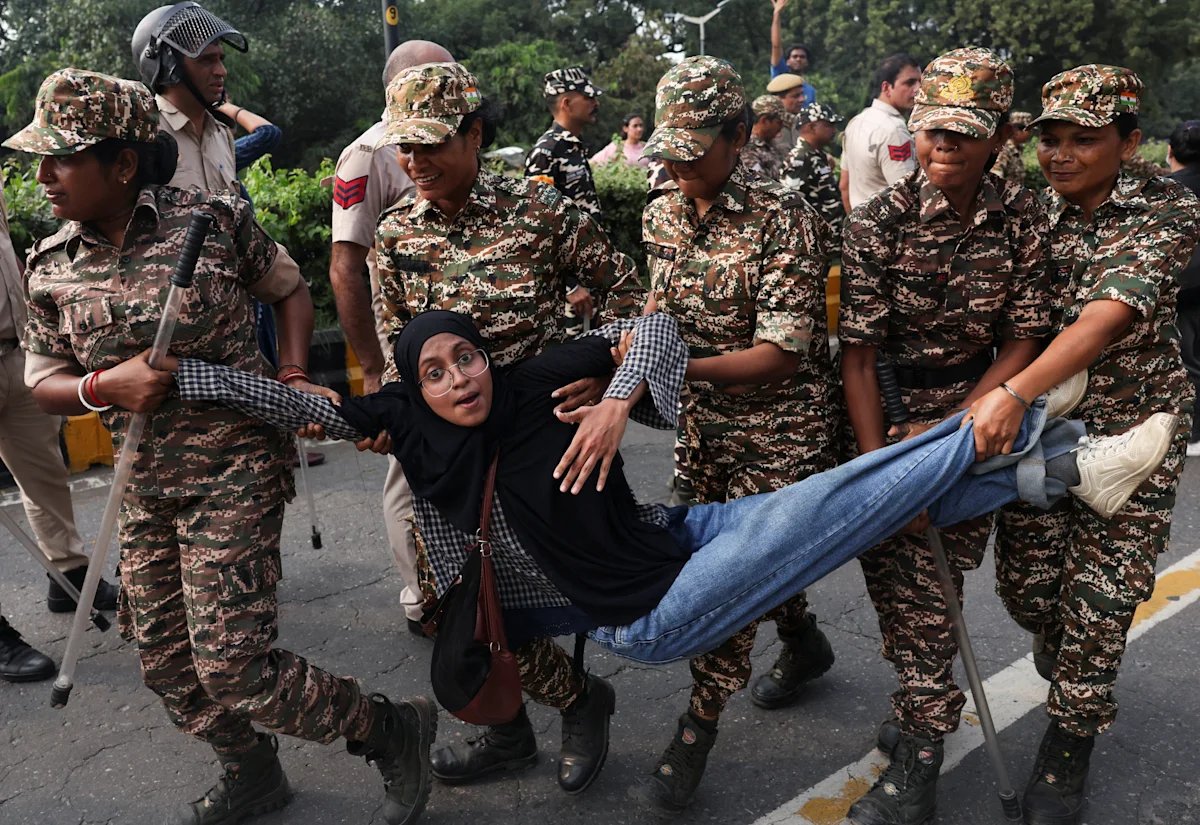
New Delhi remained in a state of high tension on Sunday as a fresh wave of protests broke out, following a massive, government-led crackdown on demonstrators the previous day. Thousands of citizens, including prominent members of the “Cockroach” youth movement and top-tier opposition politicians, were detained in a security operation that transformed the capital into a virtual fortress.
Although the Supreme Court eventually intervened to declare the mass detentions illegal, leading to the release of many protesters by Sunday, the political climate remains volatile. Abhijeet Dipke, leader of the Cockroach Janta Party (CJP), emerged from custody with a scathing critique of the administration, labeling Prime Minister Narendra Modi a “bully” and a “coward” in a widely circulated post on social media.
The Core of the Conflict: Voter List Integrity
The demonstrations are centered on demands for the immediate resignation of Chief Election Commissioner Gyanesh Kumar. Activists allege that a recent, sweeping revision of voter rolls has been manipulated to favor the ruling Bharatiya Janata Party (BJP). According to the protesters, millions of voters—particularly within the Muslim community—have been systematically purged from the records. These allegations gained significant traction following an investigative report by the Indian Express, which suggested that internal dissent had occurred within the Election Commission itself regarding Kumar’s controversial decisions.
The government maintains that the removals were a standard administrative process, citing the deletion of duplicate records, deceased individuals, and those who have relocated. However, the explanation has done little to placate the growing number of citizens who view the electoral process as compromised.
A City Under Lockdown
The state’s response to the protests has been described by observers as unprecedented. To prevent activists from reaching the designated site at Jantar Mantar, authorities deployed over 30,000 security personnel across New Delhi. Major roads were barricaded with concrete, public transit lines were halted, and mobile internet services were disabled in several neighborhoods to disrupt the ability of youth groups to organize.
In a dramatic display of the intensity of the crackdown, CJP leaders were intercepted and detained by police directly from an airplane upon their arrival in the capital. Other notable figures, including activist Neha Bora and YouTuber Dhruv Rathee, were also taken into custody, alongside several high-profile opposition leaders. Despite the heavy-handed tactics, reports emerged of smaller, scattered protests continuing, even as police moved to detain journalists covering the unrest.
Global Concern and Institutional Backlash
The international community has begun to take notice of the situation. The United Nations Human Rights Office expressed deep concern over the mass arrests, urging the Indian government to respect the right to peaceful assembly and engage in meaningful dialogue. Similar warnings were issued by rights organizations like Amnesty International and Human Rights Watch, both of which warned of rising authoritarianism in the country.
The Indian government dismissed these international concerns as “misplaced” and an infringement on its internal sovereignty. Domestically, the BJP has labeled the protesters as “anarchic elements” attempting to manufacture instability.
As the INDIA Bloc, the primary opposition alliance, gears up for further protests scheduled for Monday, analysts warn that the government’s refusal to engage with the grievances of the youth may lead to prolonged unrest. Political commentators have drawn parallels to historical periods of turmoil, noting that the combination of severe crackdowns and deep-seated public anger often creates a cycle of chaos that is difficult for any administration to contain. For now, the streets of New Delhi remain a battleground for the future of Indian democracy.
Disclaimer: This content is auto-generated for informational purposes only.
Source: Read Original News