









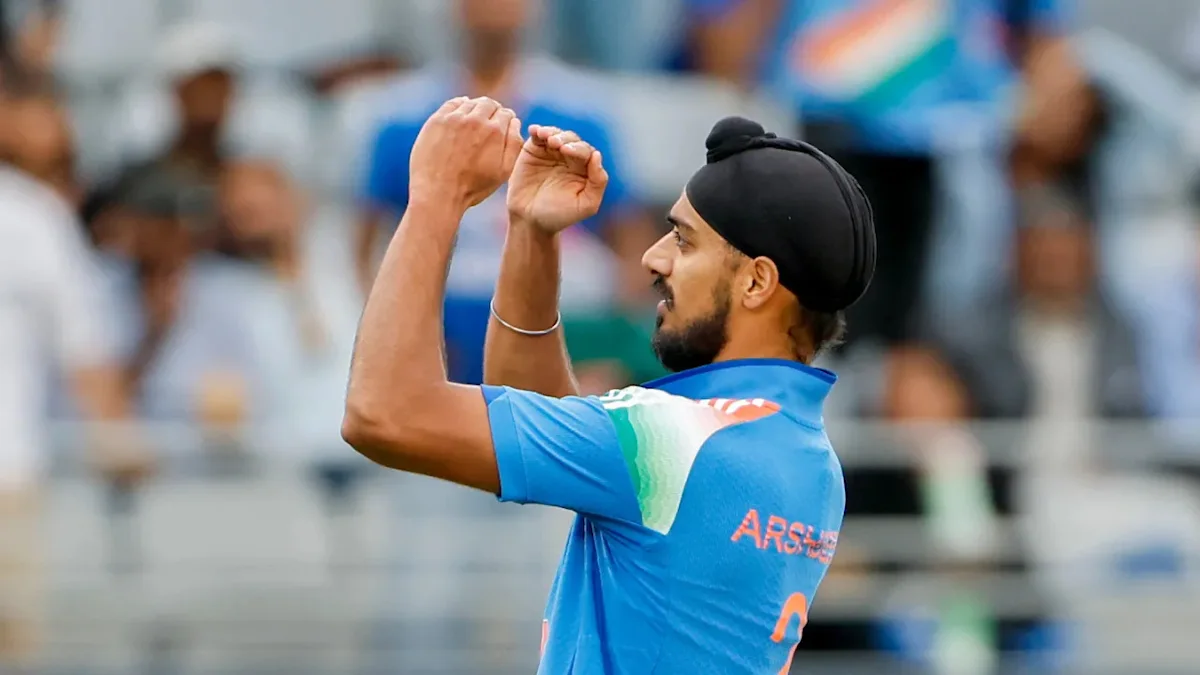
Will Mohammed Siraj Replace Arshdeep Singh? India’s Selection Dilemma Ahead of 3rd ODI in Hamilton
As the Indian cricket team prepares for the third ODI against New Zealand at Seddon Park, they find themselves in a commanding position. With a 2-0 lead in the five-match series, the Men in Blue have managed to navigate tricky weather conditions and challenging pitches with clinical precision. However, the comfortable series lead has sparked a debate regarding team composition and player rotation as the squad looks toward long-term goals, specifically the upcoming World Cup.
The spotlight currently rests on the bowling department, specifically whether Mohammed Siraj will break into the playing XI at the expense of Arshdeep Singh.
The Case for Continuity
India’s dominant run in the series has been built on an exceptional bowling performance. In the rain-affected second encounter in Wellington, the tourists stifled the Black Caps, bowling them out for a mere 134. Gurnoor Brar emerged as the standout performer with a career-best spell of 4 for 30, well supported by Auqib Nabi, Anshul Kamboj, and Axar Patel.
Given the success of the current unit, many experts argue that the team management should resist the urge to tinker with the winning formula. Former cricketer Ajay Jadeja, while acknowledging the potential for a swap, has warned against complacency. Referencing a previous T20I series where India’s 3-0 lead dwindled to a 3-2 finish, Jadeja suggests that stability is paramount until the series is officially secured.
The Tactical Rotation Argument
Despite the success of the current setup, there is a strategic argument for bringing in Mohammed Siraj. Jadeja noted that the potential inclusion of Siraj is not a reflection of Arshdeep Singh’s form, but rather a tactical move to experiment with the pace attack’s dynamics.
“It’s not because of performance, but to see how this attack functions without a left-arm seamer,” Jadeja explained. Introducing Siraj would provide the team management with a look at how different bowling combinations perform under pressure, ensuring that the bench remains match-ready for future assignments.
Balancing Workload and Weather
While rotation is often cited as a measure to manage player workload, the reality of this tour makes that argument less pressing. Both matches thus far have been shortened by rain, meaning the bowlers have been spared the physical toll of a full 50-over quota. Arshdeep, in particular, has remained relatively fresh, bowling only seven overs in the last match.
Furthermore, the specific conditions at Seddon Park—characterized by shorter boundaries—might actually favor a left-arm pacer like Arshdeep, whose unique angle often troubles right-handed batters. With more showers forecasted for Hamilton, the match could once again be truncated, further reducing the necessity to rest key personnel.
As India approaches the third ODI, the management faces a delicate balance: maintaining the ruthless momentum of a series-winning campaign versus the desire to test squad depth. While Siraj is undoubtedly a talent that deserves inclusion, the wisdom of changing a winning combination before the series is in the bag remains the central question for the captain and coach. For now, the safest bet for India appears to be sticking to the strategy that has brought them to the brink of a series victory.
Disclaimer: This content is auto-generated for informational purposes only.
Source: Read Original News