







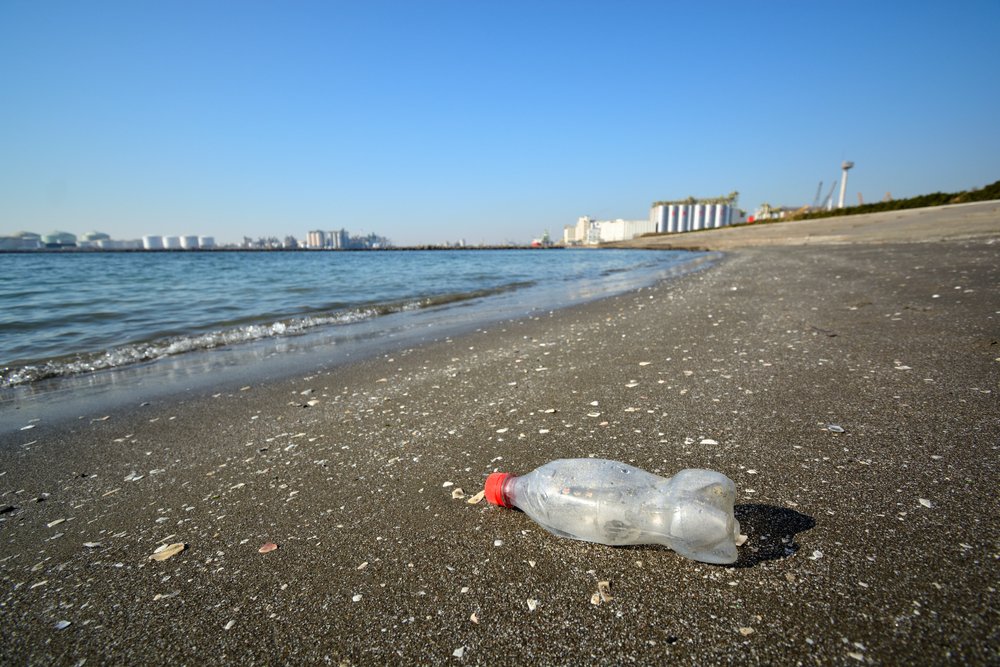
A recent study, spearheaded by Go Suzuki from the National Institute for Environmental Studies in Japan, in collaboration with the Tokyo University of Marine Science and Technology and Nagasaki University, has unearthed a concerning prevalence of various plastic additives within microplastic samples. These samples were meticulously collected from diverse marine and riverine ecosystems across Japan, including iconic locations like Tokyo Bay, the Genkai Sea, Pacific coastal waters, the waters off Hokkaido, and the Sea of Japan coastal waters.
The research team meticulously analyzed additive-derived chemicals present in both microplastics and larger plastic waste. The larger plastic debris, which encompassed items such as bags, ropes, fishing nets, and hard fragments, was recovered from coastal areas throughout Japan, as well as from a river drainage pump station situated in Tokyo. This comprehensive sampling strategy aimed to provide a broad understanding of plastic additive distribution across different aquatic environments.
The methodology employed for analyzing these samples was gas chromatography–mass spectrometry, a sophisticated technique detailed in the journal Environmental Science & Technology. This advanced analysis allowed the researchers to not only identify the specific polymer types present in the samples but also to detect a wide array of chemical additives. Among these were antioxidants, plasticizers, ultraviolet stabilizers, flame retardants, and polycyclic aromatic hydrocarbons. For focused investigation, the study honed in on three particular chemical groups, chosen for their frequent occurrence and significant implications for pollution management: Irgafos 168-related compounds, di(2-ethylhexyl) phthalate (DEHP), and hexabromocyclododecane (HBCD).
Irgafos 168, an antioxidant, plays a crucial role in mitigating the oxidative degradation of plastics like polyethylene and polypropylene. The study observed that the distribution and resulting products of its oxidation varied depending on the polymer type and particle size. Nevertheless, the consistent patterns of Irgafos 168 suggested its leaching and transformation directly from within the plastic matrix itself.
DEHP, a plasticizer, stands as the third most-produced synthetic polymer of plastic globally. Its primary function is to impart flexibility to polyvinyl chloride products, which are ubiquitous in everyday life, from plumbing cables to inflatable items and even vinyl records. This chemical was widely detected in both the larger plastic debris and microplastics – defined as plastic particles smaller than five millimeters. Alarmingly, some samples exhibited DEHP concentrations exceeding 1,000 micrograms per gram, equating to a substantial 0.1% by weight. Furthermore, concentrations of DEHP were consistently higher in floating microplastics compared to larger plastic debris collected from the seafloor, a trend observed in both polyethylene and polypropylene samples. This finding strongly suggests that DEHP present in the surrounding water, suspended particles, and organic matter can readily sorb onto microplastics from their immediate environment, thereby acting as a pathway for its dissemination.
HBCD, a brominated flame retardant, is predominantly utilized in insulating and cushioning materials, particularly expanded polystyrene used in construction. Its classification as a persistent organic pollutant is due to its extended environmental lifespan and its propensity for bioaccumulation within organisms. The study detected HBCD at concentrations ranging from 110 to 590 micrograms per gram in microplastics gathered from the Genkai Sea, Pacific coastal waters, and the Sea of Japan coastal waters. This indicates that plastic particles imbued with HBCD can serve as a secondary source of exposure within marine environments, facilitated by their mobility and widespread distribution.
The implications of these findings are profound. As plastics are subjected to the elements, they undergo degradation and fragmentation, breaking down into progressively smaller pieces. This process, while seemingly a reduction in physical size, actually increases the surface area of the plastic relative to its mass. This fundamental change significantly alters how the chemicals embedded within the plastics can be transferred into surrounding particles and, ultimately, contaminate aquatic environments. The study unequivocally demonstrates that even after fragmentation, these hazardous chemicals can continue to leach from the plastic matrices in concerning concentrations. This ongoing chemical release underscores the need for further dedicated research to precisely understand the full extent of their impact on marine ecosystems. Such knowledge is not only crucial for comprehending ecological damage but also for informing and shaping future regulations concerning plastic waste management and the mitigation of plastic pollution.