







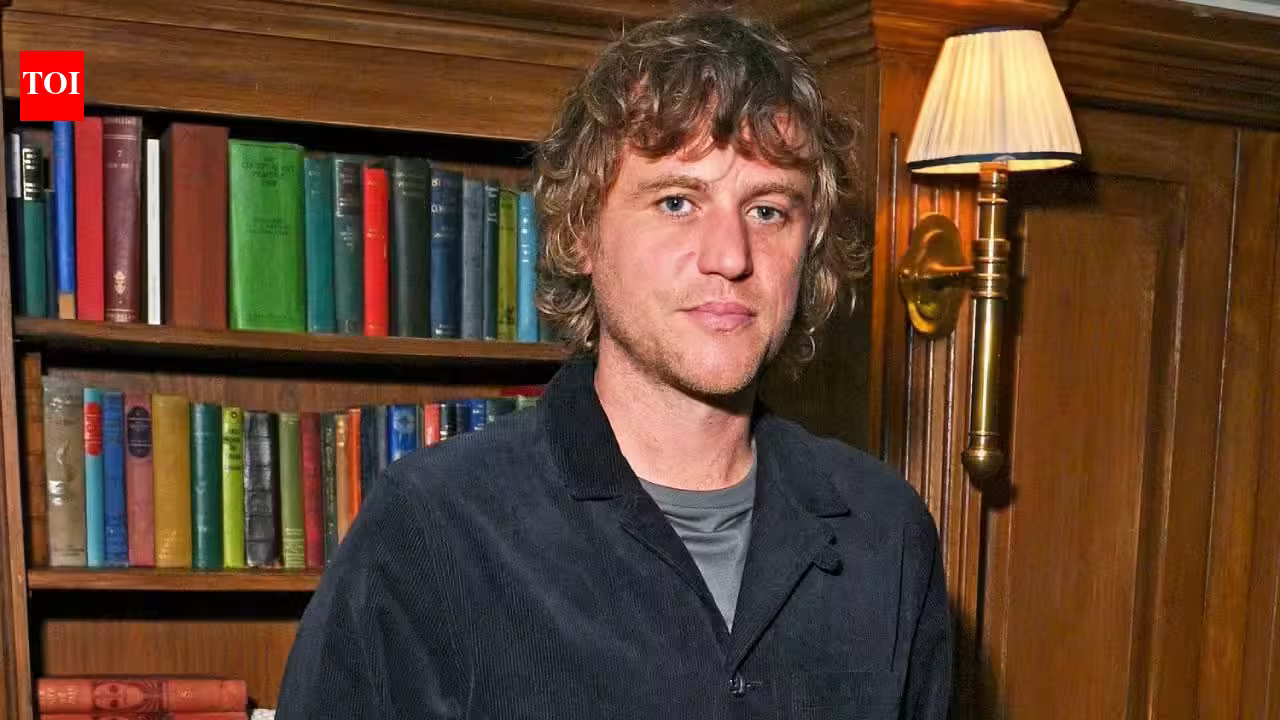
In the insular, often polished world of British acting, silence is frequently the currency of survival. For years, Johnny Flynn has carved out a respectable career, moving with ease between indie-folk stages and prestige period dramas. But recently, the 43-year-old actor broke that silence in a way that has sent ripples through the industry, trading polite interview tropes for a raw, blistering indictment of the system that helped mold him.
Speaking candidly with Radio Times, Flynn didn’t just discuss his craft; he took aim at his own formative years. Having attended the Pilgrims’ School in Winchester—a prestigious boarding institution—starting at the tender age of seven on a choral scholarship, Flynn describes the experience not as a privilege, but as a site of profound psychological injury.
A Scathing Indictment of the Boarding School System
Flynn’s recollection of his time at Pilgrims’ is visceral. When asked about his youth, the actor didn’t offer the standard, misty-eyed nostalgia often expected of boarding school alumni. Instead, he offered a condemnation. “It was quite traumatic for me,” Flynn confessed. “I think they should all be burnt to the ground. I don’t think private schools should exist.”
This isn’t merely the venting of a disgruntled former student. For Flynn, the trauma was rooted in the early, forced separation from his family, an environment that he suggests stunted his emotional development and left him grappling with invisible scars for decades. He vividly recalls the physical manifestation of his distress: “little nervous tics” that acted as the only outward signal of an internal life being systematically dismantled. It is a striking admission from a man whose career requires him to inhabit the complex, often dark psyches of others, revealing that his own journey toward stability has been far more grueling than his on-screen work might suggest.
Confronting ‘Boarding School Syndrome’
The turning point for Flynn came not on a stage or in front of a camera, but through the hard, internal labor of therapy. In a world where emotional stoicism is often prized, Flynn credits professional help with allowing him to label the malaise that had dogged him since childhood. He speaks of the discovery of “boarding school syndrome”—a term coined by psychotherapist Joy Schaverien to describe the complex of emotional issues, isolation, and relational difficulties often found in adults who were sent away to boarding schools at a young age.
“I suddenly thought, ‘God, there’s something quite painful about this.’ I learnt there was something called boarding school syndrome,” Flynn shared. The realization was cathartic. For many survivors of the system, finding the vocabulary to articulate their pain is the first step toward reclaiming their identity. Flynn appears to have navigated that path successfully, noting with a sense of quiet triumph: “And I’m good, I’m OK now.”
Stepping into the Malfoy Manor
The timing of Flynn’s public vulnerability is particularly poignant as he prepares to step into one of the most iconic villain roles in contemporary literature. HBO’s forthcoming Harry Potter series, a gargantuan task of world-building and reinterpretation, has tapped Flynn to play Lucius Malfoy. The role, famously inhabited by Jason Isaacs in the original film franchise with a cold, aristocratic menace, is a daunting inheritance.
Flynn is joined by a formidable roster of British talent in this reboot, including John Lithgow as Dumbledore, Janet McTeer as McGonagall, and Paapa Essiedu as Severus Snape. While the casting has been met with typical fervor, the show itself carries the weight of a franchise that has, over the last several years, become a lightning rod for debate.
Navigating the Rowling Controversy
No conversation about Harry Potter in 2024 is complete without addressing the shadow cast by J.K. Rowling. The author’s polarizing views on gender identity have alienated large swaths of the original fanbase, leading to persistent calls for boycotts and ethical soul-searching among the cast and crew involved in the new production.
Flynn, perhaps wary of the internet’s relentless scrutiny, chose to walk a narrow tightrope. He acknowledged the tension without letting it define his professional choices. “Of course I have feelings about that,” he stated, when pressed on the matter, “but I want to talk about the gratitude I feel at being able to do what I do.” It is a measured, diplomatic stance, one that allows him to remain focused on his work while acknowledging the reality of the discourse.
Interestingly, Flynn offered a more personal justification for taking the role that transcends the politics of the franchise: his children. He shares three kids with his wife, Beatrice Minns, and admits that the opportunity to appear in the world of Hogwarts was, at least in part, a bid to be the “cool dad.” Even for a man who has traversed the darker alleys of boarding school trauma, the universal desire to captivate one’s own children remains a powerful driver.
The Promise of a Longer Narrative Arc
While the discourse surrounding the show remains heated, there is a tangible sense of excitement about the format itself. Gary Oldman, who played the beloved Sirius Black in the original films, recently weighed in on the shift from a two-hour-plus film to an episodic television series.
Oldman’s perspective provides a roadmap for what fans might expect: a deeper, more granular immersion into the source material. “We had to cut a lot, and still we could only get the films down to, like, three hours,” Oldman told Entertainment Weekly. “I believe [the TV series is] gonna do it pretty much word-for-word, which I think, as a viewer, would be more satisfying.”
For actors like Flynn, that expanded format is a double-edged sword. It offers more room for character development, more screen time to breathe, and more opportunities to flesh out a villain as complex as Lucius Malfoy. But it also demands a more sustained, grueling schedule—a stark contrast to the childhood isolation he described, yet a far more autonomous environment.
As Johnny Flynn prepares to don the platinum wig and velvet robes of the Malfoy patriarch, he does so with a clearer sense of self than ever before. He has looked at the “trauma” of his past, named it, and moved through it. Whether his turn as Lucius will be as transformative for his career as therapy was for his life remains to be seen, but one thing is certain: he is no longer the seven-year-old boy silenced by a system. He is an actor with a voice, and he isn’t afraid to use it.
Disclaimer: This content is auto-generated for informational purposes only.
Source: Read Original News