







Technological Milestones of Tony Hawk’s Pro Skater 3
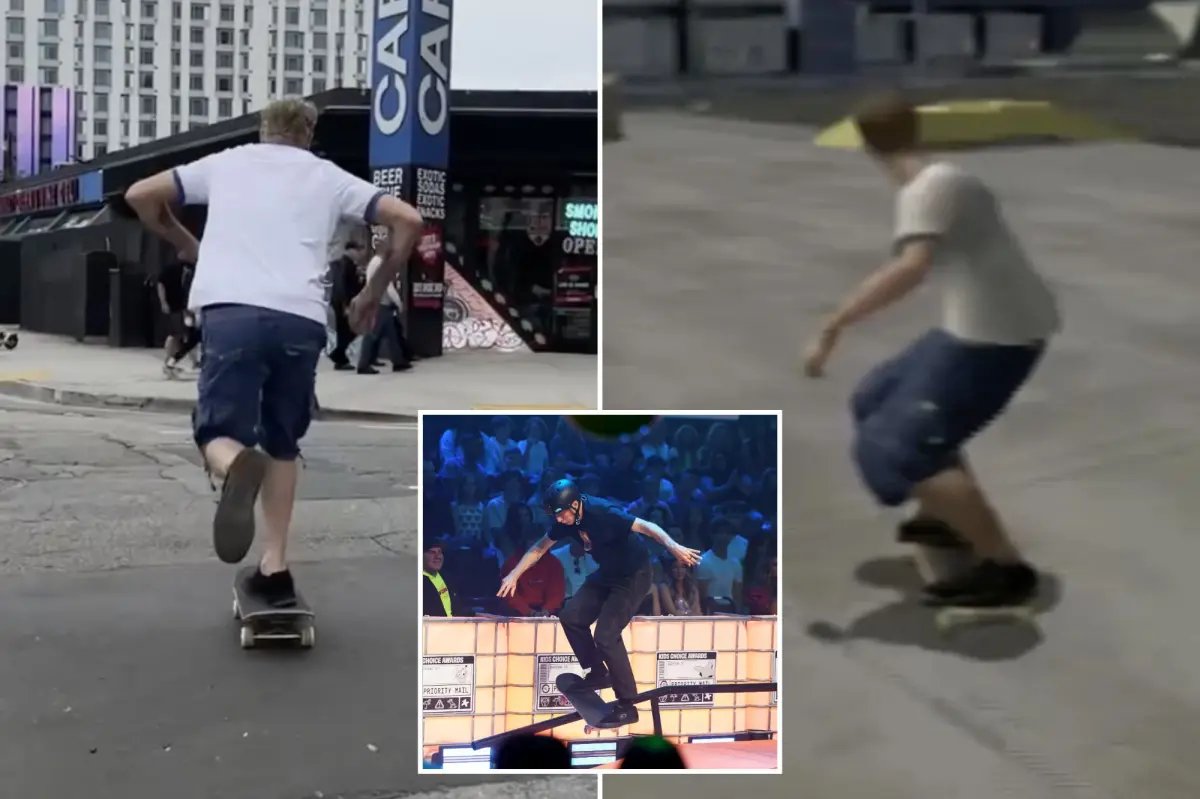
The recent public interaction involving skateboarding icon Tony Hawk at Los Angeles’ Pershing Square highlights a broader cultural intersection between the physical world and the digital legacy of one of gaming’s most significant franchises. As the industry celebrates the 25th anniversary of “Tony Hawk’s Pro Skater 3” (THPS3), it is useful to examine the technological advancements that defined the title upon its 2001 release.
THPS3 served as a watershed moment for the action-sports genre, specifically regarding its integration of online multiplayer functionality. By utilizing the PlayStation 2 Network Adapter, the game allowed players to participate in matches with users globally. This feature transformed the title from a solitary arcade-style experience into a competitive social ecosystem. The networking architecture required to synchronize real-time physics—such as grinding, rotating, and manual balancing—across various bandwidths was highly advanced for its time, setting a precedent for future sports simulation games.
The Mechanics of Innovation: The Revert
Beyond network connectivity, THPS3 introduced the “revert” mechanic, a pivotal update in game design that fundamentally altered the flow of gameplay. Before this implementation, players were largely limited to singular trick sequences within the half-pipe. The revert allowed players to transition directly from a mid-air rotation into a manual, effectively linking a vertical trick sequence with a ground-based combo.
Technically, this required a precise execution window and sophisticated hit-box detection. By enabling this fluidity, the developers provided a higher skill ceiling, allowing experienced players to sustain massive point totals through continuous interaction with the game’s physics engine. The revert became a foundational element of the series, demonstrating how a small change in movement logic can significantly increase player engagement and mechanical depth.
The Evolution of Graphics and Digital Environments
The visual fidelity of THPS3 was a hallmark of the console transition from the PlayStation to the PlayStation 2 era. The game utilized enhanced lighting models and increased polygon counts to represent skate parks and urban landscapes with unprecedented detail. The recreation of environments like Pershing Square—a location famously utilized by the development team for mapping real-world geometry—showcased how digital recreations began to mirror the complexities of urban architecture.
By modeling these spaces with architectural accuracy, developers created a bridge between real-world skateboarding culture and virtual simulation. This technical commitment to environmental design allowed players to identify real-world skate spots within the game, creating a feedback loop between the skating community and the software industry. The 2025 remake, “Tony Hawk’s Pro Skater 3 + 4,” further refined these environments using modern graphics engines, offering higher frame rates and texture fidelity that highlight how far computing power has advanced since the original title’s inception.
Physics Engines and Real-Time Feedback
The success of the Pro Skater series relies heavily on the implementation of a robust physics engine. The game provides users with immediate visual and auditory feedback regarding gravity, momentum, and impact. Every trick execution is calculated based on the speed of the character, the duration of airtime, and the precision of the input command.
This interaction requires an efficient feedback loop between the user’s controller inputs and the on-screen rendering. Even in the original 2001 release, the engine was tuned to emphasize a specific weight and responsiveness. When a player lands a maneuver, the animation system must seamlessly transition between aerial states and ground states, a complex task that the series pioneered for this genre. These internal calculations ensure that the user feels a sense of control over the character’s trajectory, which remains the core differentiator between a compelling simulation and a passive experience.
The Legacy of Hybrid Media and Digital Archiving
Tony Hawk’s attempt to film a tribute at Pershing Square serves as a contemporary reminder of how digital assets now define our perception of physical space. For a generation that grew up with the game, these public plazas are often viewed through the prism of their digital representation. As software developers move toward more complex simulations, the role of archiving these titles becomes increasingly vital to understand the history of human-computer interaction.
The 25th anniversary of THPS3 is not merely a celebration of a game, but a reflection on the rapid progress of digital recreation. From its early experimentation with online connectivity to the modern precision of its current remakes, the series tracks the evolution of real-time simulation technology. By analyzing how games bridge the gap between human athletic performance and software-based mechanics, observers gain a better understanding of how digital media informs, reflects, and occasionally clashes with the realities of the physical world. Whether it is through a security guard at a public square or a developer writing code for a new iteration, the dialogue between technology and physical experience continues to evolve.
Disclaimer: This content is auto-generated for informational purposes only.
Source: Read Original News