








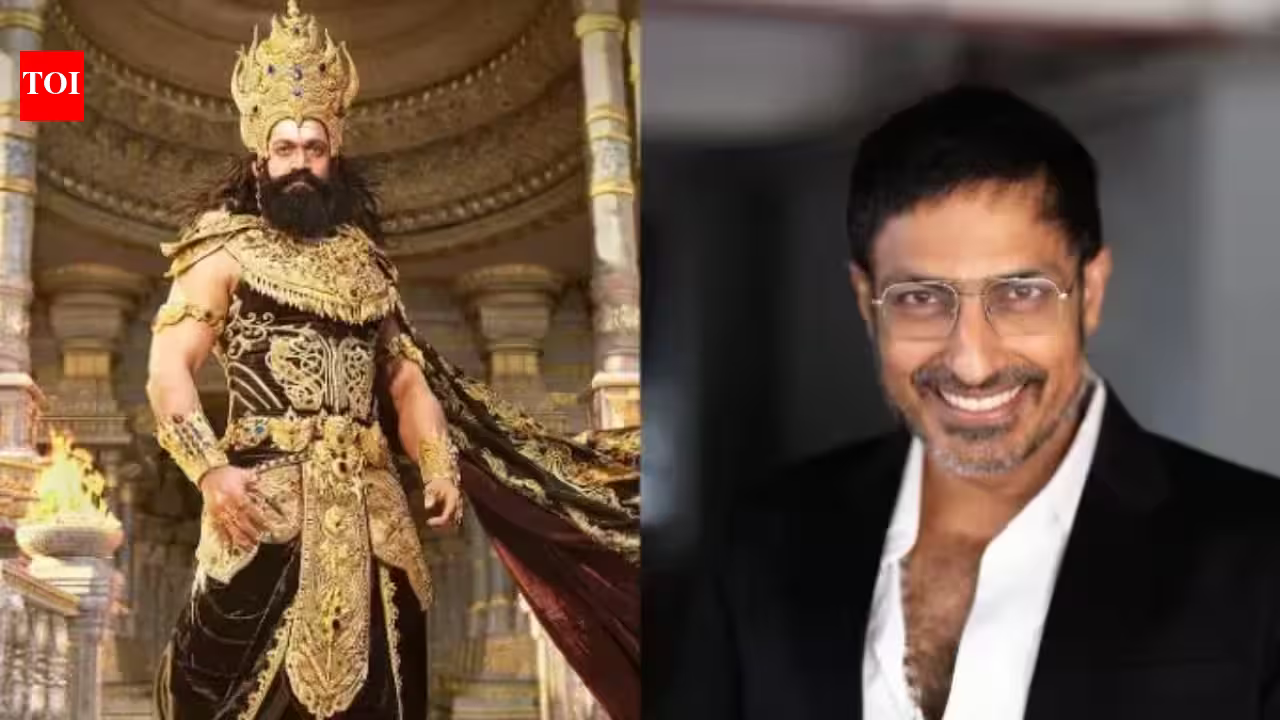
The Titan Meets the Titan: Inside Yash’s Transformation into Ravana
The air on the set of Nitesh Tiwari’s Ramayana is thick with the weight of history and the hum of massive ambition. In an industry where “epic” is a word thrown around with reckless abandon, this particular production stands as a mountain yet to be climbed. At the heart of this spectacle is a performance that has already begun to ripple through the industry grapevine: Yash, the man who redefined the South Indian blockbuster with KGF, stepping into the complex, shadowy, and monolithic shoes of Ravana.
For Harish Uthaman, who portrays Vibhishana—the conflicted brother to the King of Lanka—the experience of sharing screen space with Yash has been nothing short of a revelation. As the cameras stop rolling and the heavy armor of the demon king is shed, Uthaman finds himself witnessing a duality that is rare in the high-stakes world of pan-Indian cinema.
Harish Uthaman praises Yash’s Ravana transformation
The transformation isn’t just a matter of prosthetics or high-end production design; it is a total psychic shift. Uthaman, an actor who has built a career on nuanced, gritty portrayals, admits that witnessing Yash’s shift is startling.
“We have all seen Yash in earlier films, and we know his aura and his screen presence,” Uthaman shared in a recent conversation with Variety India. “But this was the first time I met Yash on the sets of ‘Ramayana.’ Every single time I have met him since, he comes across as such a kind human being. But when he performs as Ravan, he becomes a mighty Ravan.”
It is this metamorphosis that has the unit buzzing. The legendary King of Lanka is a character defined by immense intellect, hubris, and power, and Uthaman notes that Yash captures this “command” with an intensity that leaves fellow performers grounded. Between the painstaking attention to costumes and the weight of the dialogue delivery, the character of Ravana is being sculpted into something far more imposing than a traditional antagonist. For Uthaman, watching Yash isn’t just about observation; it’s about being pulled into the gravity of a performance that refuses to be ignored.
Actor recalls missing an opportunity to work with Yash
Every actor has a “what if” story, and for Harish Uthaman, that story involved Yash nearly a decade ago. The two were slated to cross paths on a project back in 2015-16, a period where both were carving out their respective niches in the industry. For reasons that often plague film productions, that project failed to materialize, leaving a gap in their professional trajectories that would remain unbridged for ten long years.
Fate, however, has a way of course-correcting. When the casting for Ramayana brought them together, the professional synergy felt inevitable. “In 2015-16, I was supposed to be in a film with Yash, but it didn’t happen,” Uthaman reflected. “With me being a part of ‘Ramayana’ and as his brother, I am really happy. So, I missed the opportunity to work with him in 2015-16, but I am glad it happened almost after 10 years.”
There is a poetic irony in the fact that their first major collaboration pits them as the most famous brothers in Hindu mythology—one a devout devotee of Rama and the other the ruler of Lanka. Their long-awaited arrival on set together suggests that the wait was perhaps necessary to build the gravitas that both actors now bring to their respective roles.
Harish Uthaman calls Yash a considerate co-actor
In the hierarchy of modern superstar culture, there is a recurring fear that the “mega-star” will arrive on set, hit their marks, and vanish behind an entourage, leaving little room for actual chemistry. According to Uthaman, that stereotype couldn’t be further from the truth when it comes to Yash.
Uthaman highlights that the secret to their on-screen rapport—especially given the complex emotional dynamic between Vibhishana and Ravana—lies in the collaborative process. Yash isn’t merely concerned with his own lines or his own lighting; he is, by all accounts, a listener.
“Yash has always been very kind, and in the scenes I have worked with Yash, I think he is an amazing co-actor who is extremely considerate,” Uthaman explained. “He has a discussion, or he always talks to the actors who are with him in a scene. So that is very helpful.”
This “open-floor” approach to acting is vital for a film of this magnitude. When you are dealing with characters who are archetypal figures of morality and immorality, having a lead actor who treats the performance as a group effort rather than a solo act is what transforms a standard dramatic scene into a resonant human moment.
Harish Uthaman’s recent film projects
While Ramayana is currently dominating the headlines, Harish Uthaman has been quietly turning in some of the most consistent performances in the industry. His recent track record is a testament to his versatility, moving seamlessly from the family drama Mellisai—where he played the character Guna—to the more intense action-oriented narratives.
His filmography over the past two years reads like a busy actor’s dream. From the 2025 release Ramam Raghavam, where he played the character Deva, to high-octane appearances in They Call Him OG and Pongala, Uthaman has refused to be pigeonholed. His work in Kadaisi Ulaga Por (2024) further solidified his ability to thrive in ensemble casts, holding his own against powerhouse performances.
As he prepares for the global scrutiny that will inevitably follow the release of Ramayana, Uthaman remains humble. He is a craftsman who appreciates the weight of the story he is currently telling. Whether he is playing a villain, a brother, or a hero, his focus remains on the integrity of the scene—a focus that aligns perfectly with the man currently wearing the crown of Ravana. For audiences waiting for this retelling, the chemistry between the brothers—Yash and Uthaman—might just be the emotional anchor the film needs.
Disclaimer: This content is auto-generated for informational purposes only.
Source: Read Original News