








Jammu and Kashmir has unveiled an ambitious revised State Action Plan on Climate Change (SAPCC 2.0) with a staggering price tag of Rs 50,012.70 crore. The plan, which seeks to address the region’s increasing vulnerability to environmental shifts through 2030, marks a massive escalation in scope, costing nearly eight times the Rs 6,435.2 crore indicative outlay of the original 2013-14 framework.
While the government has already secured Rs 29,517.81 crore, officials acknowledge a significant funding gap of Rs 20,494.88 crore. This remaining 41 percent of the total requirement is categorized as “expected” from future state budgets and central government schemes, leaving the long-term feasibility of the plan shrouded in uncertainty.
The financial burden is concentrated heavily within three key sectors: Housing and Urban Development (Rs 16,000.28 Cr), Jal Shakti (Rs 14,991.99 Cr), and Rural Development (Rs 9,383.60 Cr). Together, these departments account for over 80 percent of the total proposed expenditure. Conversely, sectors like Health have been allocated a mere Rs 2.78 crore, a figure critics argue is disproportionately low given the high vulnerability of certain districts to climate-linked health crises, such as high infant mortality rates in Bandipora.
The strategy, developed in collaboration with The Energy and Resources Institute (TERI), balances 55 mitigation strategies—such as solar power integration, electric mobility, and waste management—with 100 adaptation actions. Projections driving these measures are stark: temperatures in the region are expected to rise by approximately 1.5°C by 2050, alongside a 5 to 15 percent increase in rainfall, depending on emission scenarios.
To ensure accountability, Chief Secretary Atal Dulloo has directed departments to establish clear, measurable milestones. A multi-layered oversight mechanism, including a Governing Council chaired by the Chief Minister and a digital dashboard for quarterly updates, is being proposed to track progress. The plan is currently awaiting approval from both the State and National Level Steering Committees.
However, experts remain skeptical about the plan’s substance. A primary concern is that much of the “committed” funding is simply a re-labeling of existing routine departmental budgets, rather than new, climate-specific investment. Furthermore, there is a notable lack of year-wise financial phasing and clarity on the specific impact of each rupee spent toward carbon reduction.
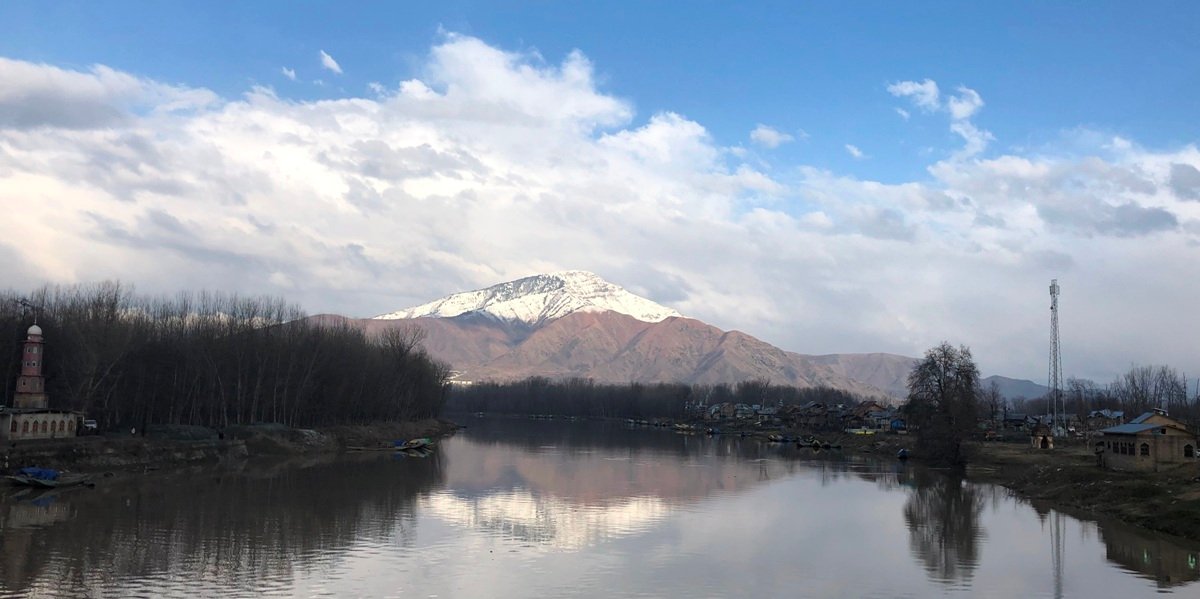
With only four years remaining until the 2030 deadline, the regional administration faces a dual challenge: closing the massive Rs 20,495 crore funding gap and moving beyond bureaucratic relabeling to implement tangible actions that address the reality of a receding snowline and a changing climate. Whether this revised roadmap can evolve from a theoretical document into a practical safeguard for the region’s fragile ecology remains the defining question for the administration.
Disclaimer: This content is auto-generated for informational purposes only.
Source: Read Original News