





Understanding the Mechanics of Total Loss Claims in India
In the complex landscape of motor insurance, the relationship between an insurer and the policyholder is governed by the fine print of the insurance contract. A recent ruling by the Maharashtra State Consumer Disputes Redressal Commission involving a high-value BMW claim has brought much-needed clarity to the interpretation of “reasonable precautions” when a vehicle is left unattended. For the Indian consumer, this case serves as a landmark reminder that insurance companies cannot arbitrarily reject claims based on technical interpretations of policy conditions, especially when those conditions do not account for the practical constraints of real-world emergencies.
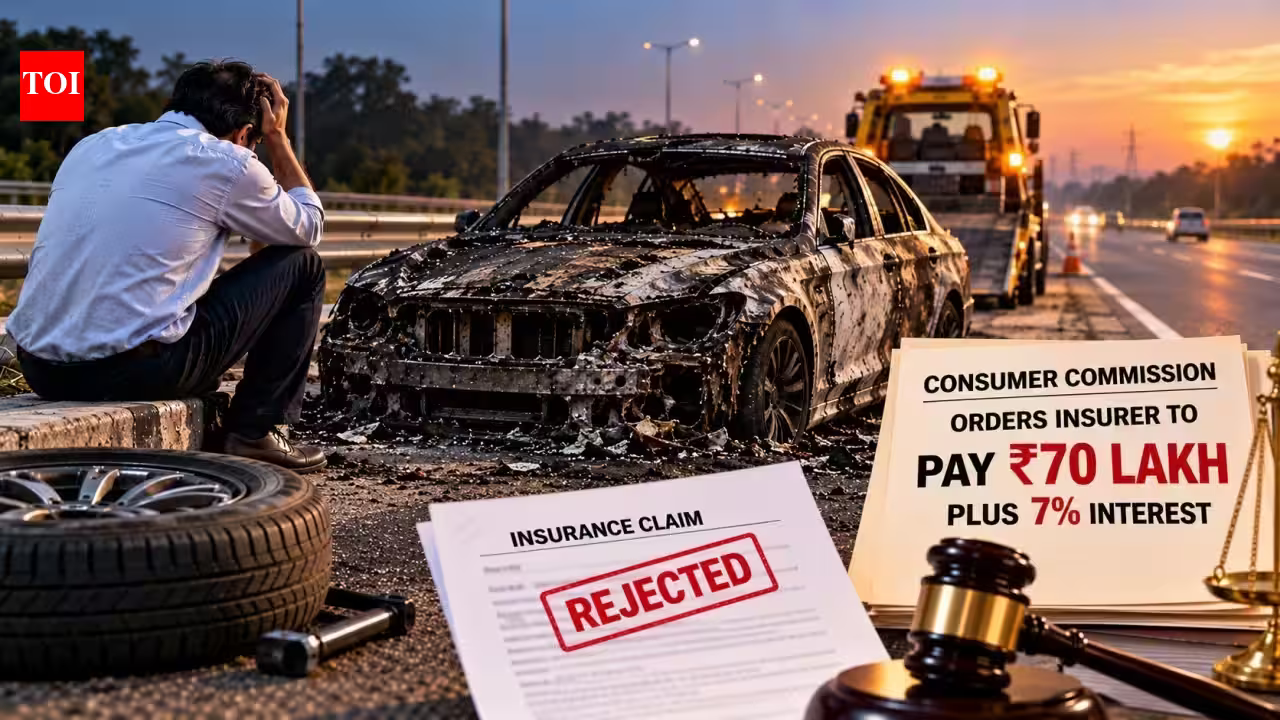
When a vehicle is rendered unusable—whether through a total engine failure, an accident, or, in this instance, a simple tyre puncture on a deserted highway—the policyholder enters a vulnerable period. Insurance policies often contain a “Condition No. 4,” which mandates that the owner must take reasonable steps to prevent further loss or damage to the insured property. In the aforementioned case, the insurer attempted to use this clause as a shield, arguing that by leaving the car on the roadside overnight, the owner had been negligent. The commission’s decision to override this argument highlights a shift toward a more pragmatic legal view: the safety of the individual supersedes the hypothetical preservation of the vehicle.
The Intersection of Policy Conditions and Practicality
The primary point of contention in this dispute was whether the act of leaving a locked vehicle on the highway constituted a breach of contract. The insurer’s stance was rigid, suggesting that the owner should have stayed with the vehicle or sought alternative transport that allowed for the car’s immediate removal. However, the commission’s analytical approach demonstrated that such an expectation ignores the environmental realities of Indian highways, particularly late at night.
Legal experts note that insurance clauses are often interpreted by courts in a way that avoids absurd results. To mandate that a car owner remain with a vehicle in an isolated location during late hours could be seen as an unreasonable expectation that places the individual at physical risk. By ruling that the act of locking the vehicle and leaving it was a sufficient “precaution,” the commission established that “reasonable care” is not synonymous with “constant surveillance.” Furthermore, the insurer failed to establish a causal link between the car being unattended and the fire that eventually consumed it. This “causal nexus” is a critical element in insurance law; unless the insurer can prove that the policyholder’s specific actions directly caused or aggravated the damage, the claim must be honored.
The Role of Insured Declared Value (IDV) and Transparency
A significant aspect of this case was the insurer’s attempt to unilaterally reduce the payout below the agreed-upon Insured Declared Value (IDV). In the Indian market, IDV is the maximum sum insured, which is essentially the current market value of the vehicle agreed upon at the time of policy inception. Insurers often use various depreciation metrics to lower the payout during the settlement process, creating a gap between the owner’s expectations and the company’s offer.
The commission’s firm directive that the insurer must pay the full IDV of Rs 70 lakh—plus interest and compensation—serves as a strong message to the industry. It reinforces that IDV is a contractual guarantee of value. If an insurer accepts a premium based on a specific IDV, they cannot retroactively adjust that value based on subjective assessments or depreciation tables once a “Total Loss” event occurs. This decision protects policyholders from the common practice of “under-settlement,” where insurers try to mitigate their own losses by challenging the very valuation they accepted when collecting the annual premium.
Strengthening the Policyholder’s Position in Claims
For many Indian vehicle owners, the insurance claim process can be intimidating, characterized by bureaucratic delays and frequent rejections. The decade-long legal battle described here underscores the persistence required to challenge large institutions. However, it also highlights the efficacy of the Consumer Redressal Commissions in balancing the power dynamics between policyholders and insurance firms.
To avoid similar scenarios, policyholders should adopt a proactive approach to documentation. In the event of a breakdown, taking photographs of the vehicle’s condition, documenting the location, and notifying local authorities (if applicable) can provide the necessary evidence to combat potential claims of negligence. As noted by industry experts, technical non-compliance should not be a gateway for an insurer to dismiss a genuine claim. If the policyholder has acted in good faith, minor lapses in procedure should not outweigh the primary purpose of the insurance policy, which is to provide financial protection against unforeseen losses.
The Future of Motor Insurance and Consumer Protection
As India’s automotive market matures, the insurance sector must evolve to be more customer-centric. The reliance on rigid, antiquated policy interpretations often leads to unnecessary litigation that consumes both the time and resources of the consumer and the state judicial system. This case acts as a precedent that discourages insurers from using “breach of condition” clauses as a default mechanism for claim repudiation.
Looking ahead, insurers are likely to become more cautious about rejecting claims without substantial proof of malicious intent or gross negligence. For the consumer, the takeaway is clear: while it is vital to follow the terms of the insurance policy, the law provides robust protections against the unfair denial of claims. When a vehicle suffers a catastrophic loss, the owner is entitled to the full protection they paid for, provided their actions were reasonable under the circumstances. The Rs 70 lakh settlement, combined with the additional awards for mental agony and legal costs, represents a significant victory for consumer rights and sets a clear standard for the industry’s professional conduct. As competition in the Indian insurance sector grows, companies that prioritize fair settlement practices and transparency will likely emerge as the preferred choice for discerning policyholders, moving the industry toward a more equitable future.
Disclaimer: This content is auto-generated for informational purposes only.
Source: Read Original News