









Founder of World’s Most Indebted Developer Sentenced to Life in Prison for Fraud and Bribery
Shenzhen, China – Hui Ka Yan, the 67-year-old founder of the once-staggering China Evergrande Group, has been sentenced to life in prison for fraud and bribery, marking a dramatic downfall for a man who once stood as Asia’s richest. The conviction, handed down by a court in the southern city of Shenzhen on Thursday, comes five years after his real estate empire collapsed, sending shockwaves through the Chinese economy and global financial markets.
The court also levied a staggering fine exceeding $2.3 billion against Evergrande and its subsidiary, Evergrande Real Estate Group, for a litany of financial crimes. These included the egregious inflation of the group’s assets and the deliberate concealment of liabilities that had ballooned to over $300 billion.
"The amount involved is exceptionally large, the circumstances are particularly egregious, and extraordinarily heavy economic losses have been caused," the court stated in its judgment. "The harm to society is extremely serious. Therefore, severe punishment should be given in accordance with the law."
Hui, also known by his Chinese name Xu Jiayin, was found to have systematically abused his position to orchestrate fraudulent activities and misappropriate company assets. His sentencing represents the culmination of a prolonged period of scrutiny and legal proceedings following the company’s default.
In addition to Hui, his sons, Xu Tenghe and Xu Zhijian, along with more than 50 other senior Evergrande executives and individuals linked to the group, received prison sentences ranging from 22 months to 18 years. This broad sentencing highlights the systemic nature of the financial misconduct.
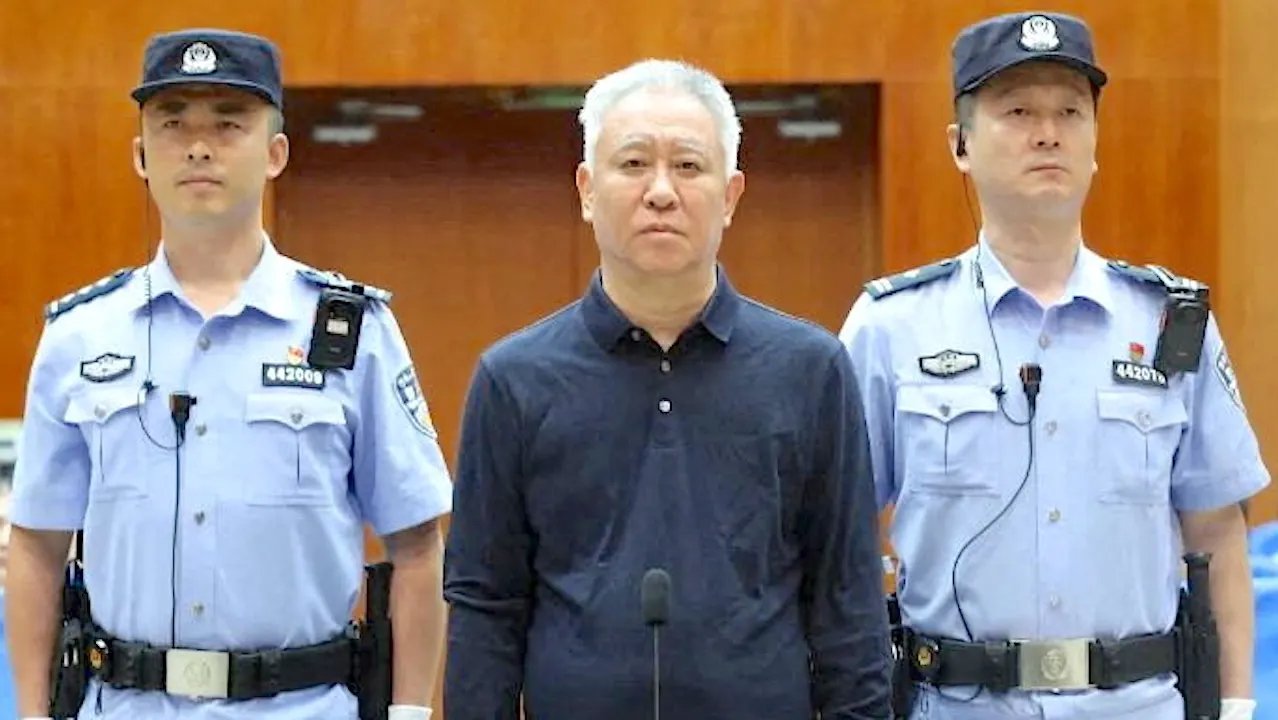
Photographs released by the court depicted a gray-haired Hui standing between two officers, his sentence delivered with solemn finality. He had largely vanished from public view since his detention by Chinese authorities in 2023, his fate a stark contrast to his former prominence.
Hui’s life sentence brings a definitive end to the career of a man who built one of China’s largest real estate empires, a true rags-to-riches narrative. Born into a rural family in Henan province in 1958, he transitioned from the steel industry to establish Evergrande, which flourished during China’s unprecedented housing market boom. His success also saw him gain significant political influence, a common trajectory for wealthy Chinese businessmen who joined organizations like the Chinese People’s Political Consultative Congress (CPPCC).
The Shenzhen Intermediate People’s Court ordered the confiscation of Hui’s personal property. He had previously pleaded guilty in April to eight charges, including fundraising fraud, illegally taking public deposits, fraudulently issuing securities, and bribery.
The crackdown on excessive borrowing within China’s real estate sector, initiated by authorities in 2020, proved to be the catalyst that triggered a liquidity crisis for many developers, ultimately leading to a significant downturn in the property market. Evergrande, founded by Hui in 1996, had pursued an aggressive expansion strategy during China’s decades-long property boom, leveraging heavy borrowing to fund its vast array of projects nationwide. At its zenith, the company was China’s largest developer by contracted sales, and Hui himself amassed a fortune estimated at over $45 billion in 2017, earning him the title of Asia’s richest man.
The company’s spectacular collapse has been a major contributor to a protracted crisis in China’s real estate sector. Falling home sales, unfinished construction projects, and widespread developer defaults have cast a long shadow over China’s economic growth and eroded consumer confidence for years.
The ramifications of Evergrande’s downfall extended to millions of ordinary Chinese investors and homebuyers. The company’s inability to repay wealth-management products led to widespread protests as investors watched their savings evaporate. Many buyers of uncompleted apartments were left in a state of agonizing uncertainty regarding the fate of their future homes. Social media discussions reflect the widespread discontent, with comments such as, "All ordinary citizens have paid the cost," and, "What about our money?"
Chinese authorities revealed that revenues were overstated by tens of billions of dollars in both 2019 and 2020, underscoring the scale of the financial deception.
Prior to his criminal sentencing, Hui had already faced regulatory penalties. In 2024, China’s securities regulator imposed a fine of approximately $6.5 million and banned him from the country’s securities markets for life due to inflated financial results and other violations.
Evergrande’s corporate demise has continued apace even as Hui’s criminal case progressed. A Hong Kong court ordered the company into liquidation in 2024, and its shares were subsequently delisted from the Hong Kong Stock Exchange, signifying the final chapter of its corporate existence.
Reuters and The Associated Press contributed to this report.