




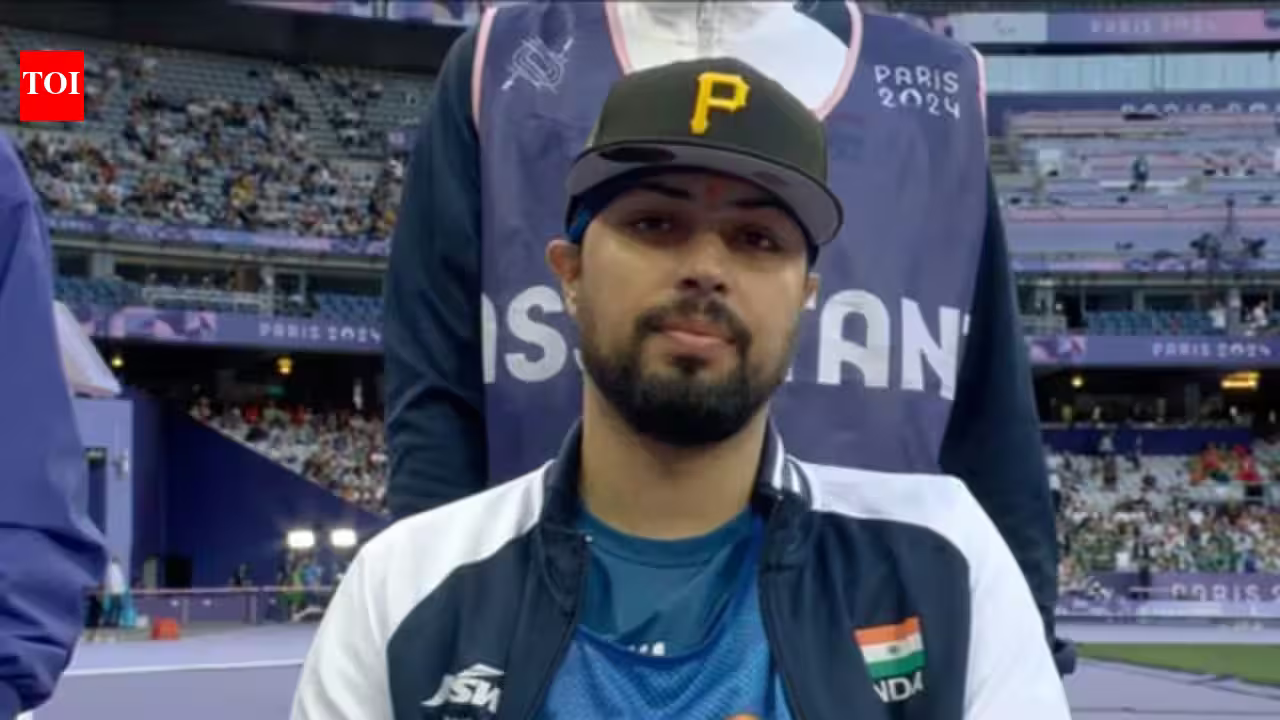
Aichi-Nagoya is witnessing a masterclass in determination and athletic precision as the Indian contingent continues its historic march at the 2026 Asian Para Games. In a stunning display of dominance on the field, the duo of Pranav Soorma and Ram Ratan Singh secured a memorable one-two finish in the men’s discus throw, cementing their status as powerhouses on the continental stage.
The Tuesday afternoon session at the stadium became an instant highlight of the Games, as Soorma, the 32-year-old veteran of the sport, etched his name into the record books. With a best throw of 11.66 meters executed during his fourth attempt, Soorma not only claimed the gold medal but also established a brand-new Asian record, leaving no doubt about his current form and technical mastery.
Following closely behind, 31-year-old compatriot Ram Ratan Singh demonstrated remarkable poise to secure the silver medal. Singh’s best effort of 10.35 meters, recorded in his second attempt, was sufficient to hold off the international field and ensure that the Indian flag would fly from the two highest pedestals on the podium. Both athletes, competing in the F51 classification, showcased the rigorous training and unwavering discipline that have become the hallmarks of India’s growing para-sports ecosystem.
A Legacy of Excellence in Motion
For Pranav Soorma, this victory is more than just a single medal; it is a continuation of a glittering trajectory. Having previously conquered the men’s club throw F51 event at the Asian Para Games in China, Soorma has successfully transitioned that winning momentum to the discus circle. His performance in Aichi-Nagoya reaffirms his reputation as one of India’s most prolific and consistent para-athletes.
Ram Ratan Singh’s silver-medal finish was the perfect complement to Soorma’s gold. The synergy between the two athletes, who pushed each other throughout the competition, highlighted the depth of talent currently emerging from the Indian camp. As the duo stood side-by-side during the medal ceremony, it served as a poignant reminder of the strength of the Indian athletics program and the camaraderie that fuels these elite competitors.
The Complexity of the Raza Points System
While the visual spectacle of the event was dominated by the Indian pair, the final standings provided a fascinating study in the nuances of para-sport classification. Iran’s Alireza Hemami, competing in the F53 category, registered a raw distance of 20.20 meters—a mark significantly longer than those recorded by Soorma and Singh. However, it was the Indian duo who ultimately occupied the top two spots in the final rankings.
This outcome was determined by the application of the Raza Point System, a sophisticated methodology essential for fair competition in combined classification events. Because the F51, F52, and F53 categories involve athletes with varying levels of impairment, the Raza system adjusts raw performances to account for the specific physiological limitations associated with each class. By converting raw distances into standardized points, the system ensures that the competition remains a test of athletic capability rather than a simple measurement of physical reach.
The F51 category, in which both Soorma and Singh compete, consists of athletes who face significant limitations in trunk, leg, and hand movement, alongside varying restrictions in arm function. By combining these categories, event organizers ensure that athletes have a robust field to compete against even when individual classification numbers are limited, while the Raza system provides the necessary mathematical framework to ensure parity.
Building Momentum for the Future
The success of Soorma and Singh is yet another chapter in what has been a transformative era for Indian para-sports. As the medal tally continues to grow in Aichi-Nagoya, the narrative surrounding the Indian team has shifted from one of participation to one of consistent dominance.
The technical precision shown by the Indian duo serves as a powerful message to the global athletic community: India is no longer merely looking to contend; they are here to set the standard. With the Games in full swing, the performances of these two athletes will undoubtedly serve as an inspiration to the next generation of para-athletes back home, proving that with enough focus and the right institutional support, the limitations of the body can be transcended by the limitless potential of the human spirit.
As the dust settles on the discus field, all eyes now turn to the remaining events where India’s track and field stars are poised to make further gains. If the performance in the men’s F51/52/53 discus is any indication, the road to the podium in Aichi-Nagoya is going to be paved with more Indian success stories before the closing ceremony arrives.
Disclaimer: This content is auto-generated for informational purposes only.
Source: Read Original News