






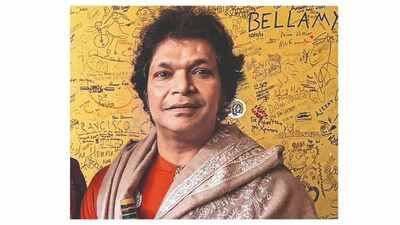
Fresh from receiving the prestigious Sangeet Natak Akademi Award in the Creative and Experimental Music category, Grammy-winning flautist Rakesh Chaurasia remains deeply rooted in the classical tradition while embracing new musical possibilities. The flautist believes innovation and tradition are not opposing forces but complementary ones, and rejects the notion that film music diminishes the instrument’s artistic stature.Bollywood has been an important part of his musical journey. “I love playing for Bollywood and working for film music has in its own way enriched my understanding of music as a whole. I’ve been assocaited with film music since 1989,” he says, recalling that composer Laxmikant gave him his first opportunity. “The precision in every note and the nuances are huge takeaways for every musician who has played for Bollywood,” he says. He points out that some of Indian classical music’s greatest maestros, including his guru, Pt. Hariprasad Chaurasia, as well as Pt. Shivkumar Sharma and Pt. Ram Narayan, also contributed significantly to film music. “My Guruji has left an indelible mark in some songs from the yesteryears. Even today, those songs are memorable.” The exposure to film music, he adds, has also helped him collaborate with artists from around the world, broadening his musical horizons. ‘THERE ARE BOLLYWOOD COMPOSERS WHO STILL VALUE RAGAS AND TRADITIONAL INSTRUMENTATION’ While many lament the declining presence of ragas and traditional instrumentation in contemporary chartbusters, Chaurasia sees the shift as part of music’s natural progression. “It definitely is the natural evolution of popular music. But, even today, there are Bollywood composers who value ragas and traditional instrumentation. The real change may not be that film music has abandoned classical roots, but that it is no longer the primary vehicle for introducing classical music to audiences. Today, platforms such as YouTube, streaming services, music festivals and independent artists play an equally important role in connecting listeners with classical traditions.”‘INNOVATION IS THE BACKBONE OF INDIAN CLASSICAL MUSIC’Receiving the Sangeet Natak Akademi honour in the Creative and Experimental Music category, on June 10, carries special significance for the flautist. “Firstly, I am grateful for the honour,” he says. “The ability to be creative and experimental stems from the fact that my musical roots are firmly grounded in classical music.” Far from viewing experimentation as a departure from tradition, Chaurasia sees it as intrinsic to the classical form itself. “Innovation is the backbone of Indian Classical Music,” he says. As long as musicians stay within the grammar of the tradition, he believes new sounds can help bring younger audiences closer to the art form. “If that means a slight shift in sound draws in newer audiences, it’s a win-win for all.” ‘INSTRUMENTS PLAY A MAJOR ROLE IN CONVEYING EMOTIONS IN ANY SONG’Despite concerns that celebrity culture has overshadowed instrumental musicians in contemporary cinema, Chaurasia remains optimistic about the state of film music. “Every artiste has to adapt to the changing times, while retaining the core,” he says. “Honestly, there’s nothing to be frustrated about the music of the Indian film industry.” He argues that alongside rap, pop and item songs, audiences continue to enjoy music rooted in classical, Sufi and ghazal traditions. Most importantly, he believes instrumentalists remain indispensable to the emotional power of a song. “Other than the voice, instruments play a major role in conveying emotions in a song,” he says. “The singer may be the face of the song, but without the accompanying musicians, would the song be as effective?” For Chaurasia, that balance between tradition and change remains the key to music’s enduring relevance—a philosophy that has carried him from classical concert stages to Bollywood studios and on to global recognition.