







HoverAir Attempts to Sidestep US Drone Ban with "Flying Camera" Loophole
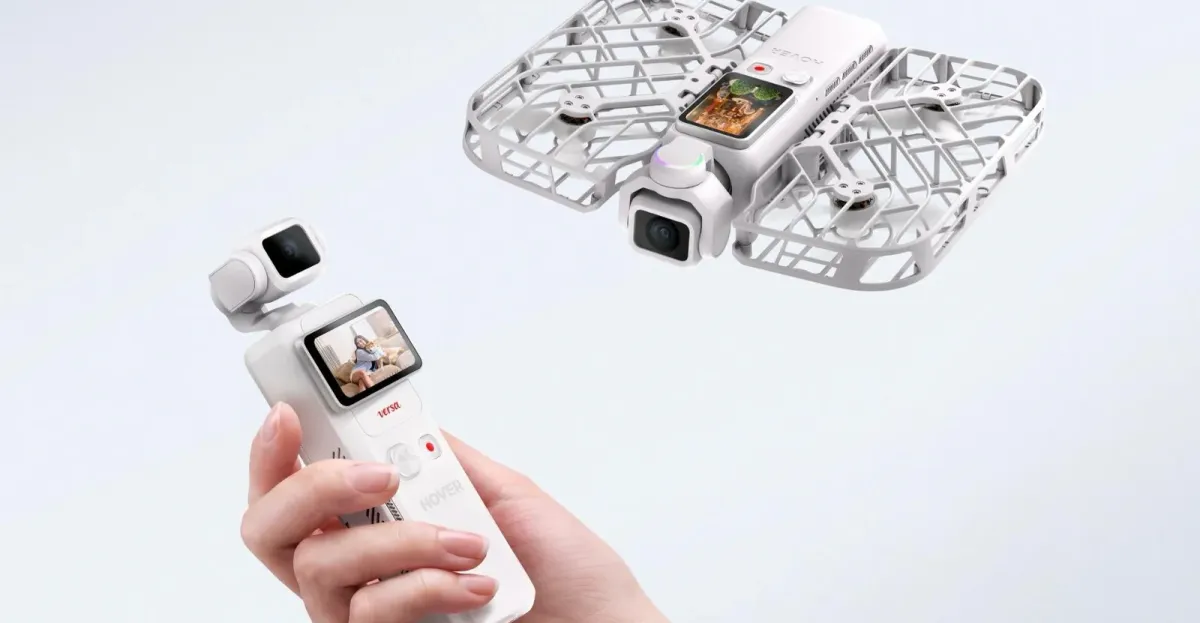
San Francisco, CA – Drone manufacturer Zero Zero Robotics, known for its innovative HoverAir line, is raising eyebrows with its latest product, the $750 Versa. The company claims the Versa is not a drone, but rather a "DJI Pocket-style mini steadycam with optional snap-on propellers that let it fly," a classification that appears to be an audacious attempt to circumvent a recent US government ban on foreign-made drones.
The controversial move comes after a December 2025 US government directive prohibited future foreign drones from entering American markets, leading to casualties like HoverAir’s own Aqua drone. However, Zero Zero Robotics believes it has found a critical loophole in the regulations.
According to Anita Facundo, HoverAir’s global marketing director, "The Flight Kit is an accessory that extends VERSA’s capabilities. Therefore, HOVERAir is in full compliance with the applicable regulatory requirements for the full product configuration offered to US customers." This strategic framing suggests the core device is a camera, with flight capabilities being an add-on, thereby potentially bypassing the restrictive drone ban.
Remarkably, this strategy seems to have initially succeeded. Public records indicate that the Federal Communications Commission (FCC) approved the new HoverAir Versa on August 9th, and the company has since launched it on Indiegogo, assuring customers of its regulatory compliance.
However, the situation is far from settled. While the FCC’s foreign drone ban specifically targets foreign-made drones and requires companies to prove either domestic manufacturing or no national security threat, it doesn’t automatically extend to cameras, with the exception of those from DJI and Autel Robotics, explicitly named in the 2025 National Defense Authorization Act (NDAA).
HoverAir’s paperwork submitted to the FCC reportedly focused solely on the camera component, a truthful declaration given that HoverAir cameras are not currently banned from certification in the US. The initial approval was granted by a private Telecommunications Certification Body (TCB) based on this submission.
The propellers, which transform the Versa into a flying device, are believed to lack wireless radios, connecting physically to the camera via copper contacts. This design choice could further complicate regulatory oversight, as the FCC primarily certifies gadgets with internal wireless communication components.
The "loophole," however, might be more precarious than it seems. The FCC’s ban extends not only to "drones" but also to "UAS critical components," a category that the FCC has explicitly stated includes cameras. Since the HoverAir Versa camera possesses radios, it falls under the FCC’s jurisdiction.
Given this nuance, and the public emergence of HoverAir’s strategy, the FCC is likely to conduct a more thorough review. The agency possesses a little-known mechanism to reverse certifications within a 30-day window, a period which has not yet elapsed for the HoverAir Versa.
Zero Zero Robotics has shown good faith in the past, offering refunds for the Aqua drone when it became clear it could not be sold in the US. The company is also offering the Versa camera as a standalone product, though early Indiegogo data suggests most customers are interested in the flying capabilities.
For US consumers, the situation creates uncertainty. The allure of a portable, flying camera is strong, but the regulatory ambiguity casts a shadow. As one observer noted, "I badly want to try this flying camera. It looks fun! But here in the US, I wouldn’t personally put money towards a Versa till I know the FCC’s OK with it."
This unfolding scenario highlights the complex and often fluid nature of technology regulation, particularly in rapidly evolving sectors like drones and advanced cameras. With a growing number of devices, from drones to smart routers and even robot vacuums, falling under the purview of the FCC, these are indeed "interesting times" for both manufacturers and consumers. The ultimate fate of the HoverAir Versa in the US market remains to be seen.