








Grass Valley Unveils Unified Live Production Ecosystem for IBC2026
AMSTERDAM — Grass Valley is set to redefine the boundaries of modern broadcasting at IBC2026, where it will demonstrate a fully integrated live production environment designed to bridge the gap between traditional hardware and software-defined workflows. By bringing dedicated processing, cloud-based applications, and partner technologies into a single operational framework, the company aims to provide broadcasters with unparalleled flexibility without sacrificing the speed and reliability essential to live television.
This ambitious showcase centers on Grass Valley’s “Dynamic Media Facility” strategy. The initiative seeks to empower production teams by introducing advanced software-defined capabilities while maintaining the tactile control surfaces and high-performance workflows that industry professionals rely on for mission-critical broadcasts.
Bridging Hardware and Software
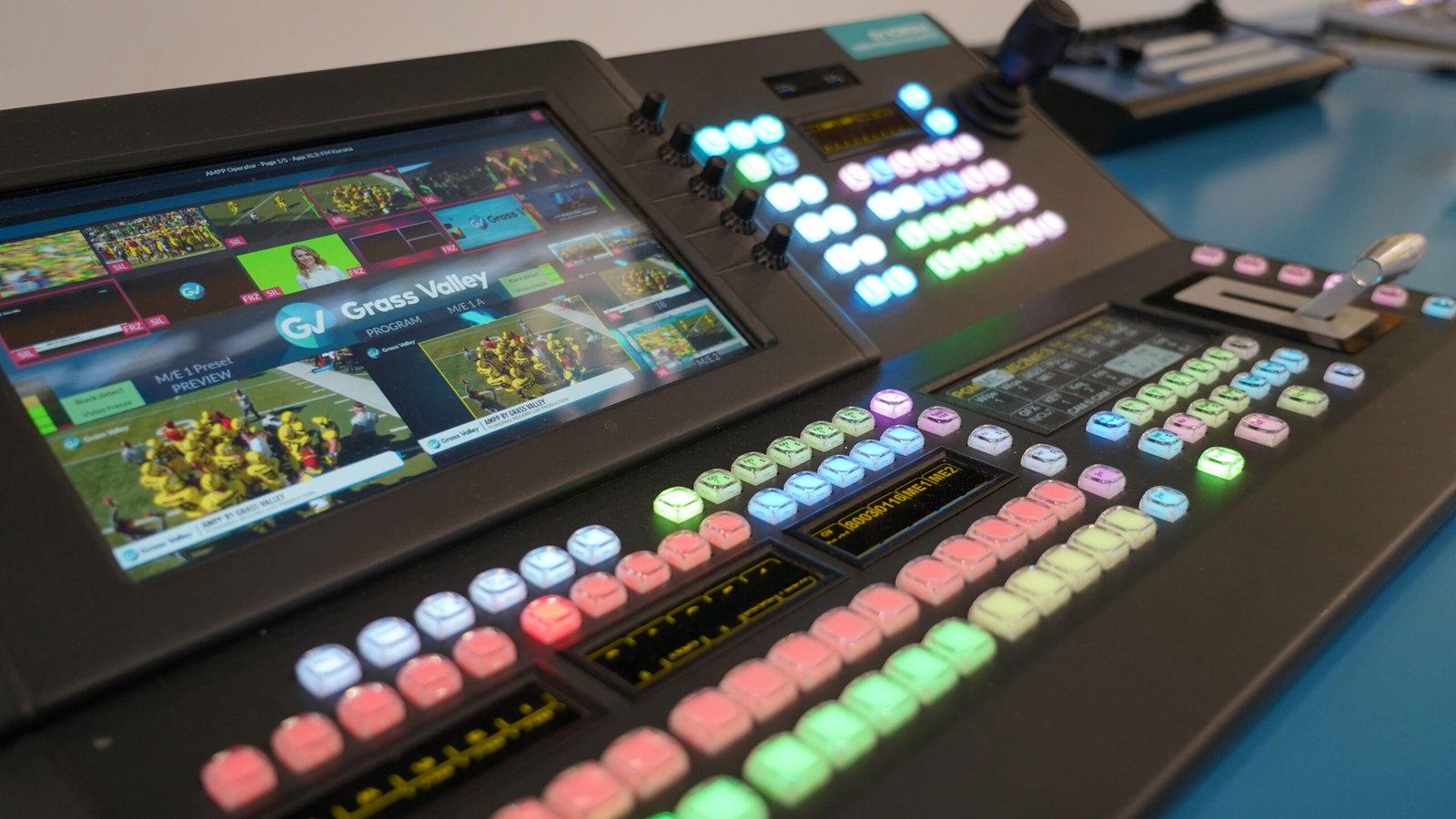
At the heart of the demonstration is the renowned K-Frame production core. According to Greg Huttie, Vice President of Live Production Solutions at Grass Valley, the platform continues to serve as the industry’s “trusted live core” while expanding its reach across distributed and software-based environments.
“Live production does not leave room for hesitation,” said Huttie. “Operators need immediate control, predictable performance, and the confidence to make decisions in the moment. We are showing how K-Frame continues to provide that core, while extending its reach across software-based production, replay, venues, and distributed teams.”
Key upgrades to the K-Frame at IBC2026 include enhanced UltraMatch format conversion and deeper integration with Daktronics LED mapping, allowing a single production to feed both broadcast outputs and in-venue displays simultaneously. Furthermore, integration with CUEZ Automate allows for the seamless execution of repeatable sequences without stripping operators of their editorial authority.
The Evolution of Maverik X and AMPP
Grass Valley is further blurring the lines between hardware and cloud with new capabilities for Maverik X. By extending familiar tactile control surfaces into the AMPP environment, the company allows operators to utilize familiar modular panels, Korona, Stream Deck, and Skaarhoj surfaces across on-premises, edge, and cloud deployments.
New Maverik X features, such as WYSIWYG DVE control and timeline sequence automation, allow production teams to build complex, triggered actions that span the entire AMPP ecosystem. “Software production should expand what a production team can do, not force it to relearn how to work,” noted Jonathan Lyth, Product Director for Live Applications and Enterprise Media.
Comprehensive Replay, Audio, and Remote Connectivity
The IBC showcase will also highlight significant advancements in LiveTouch X, which now offers enhanced multi-camera controls and deeper integration with triple-speed LDX cameras. For remote and hybrid workflows, the company is introducing:
- AMPP Commentator: A browser-based solution enabling high-quality audio commentary from any location.
- Audio Cart: A dedicated application for the seamless playout of stings, music, and audience sound effects.
- AMPP Intercom: A robust communication platform that links remote locations and on-site facilities into a single architecture.
Unifying the Media Operation
Beyond traditional sports and entertainment, Grass Valley is addressing the corporate and enterprise market with Event Producer X and Framelight X. These tools simplify complex production needs—such as town halls and leadership briefings—for less-specialized users, while still providing the professional-grade tools required for high-end output.
“Hybrid production is not about choosing hardware or software,” added Lyth. “It is about bringing the right resources together for each production and making them simple for people to operate. That is how AMPP helps customers unify media operations.”
Grass Valley will be hosting these demonstrations at Hall 9, Stand A01 throughout IBC2026. By prioritizing familiar workflows within a modernized, cloud-enabled infrastructure, the company is signaling a shift toward a more modular, yet highly integrated, future for live production.