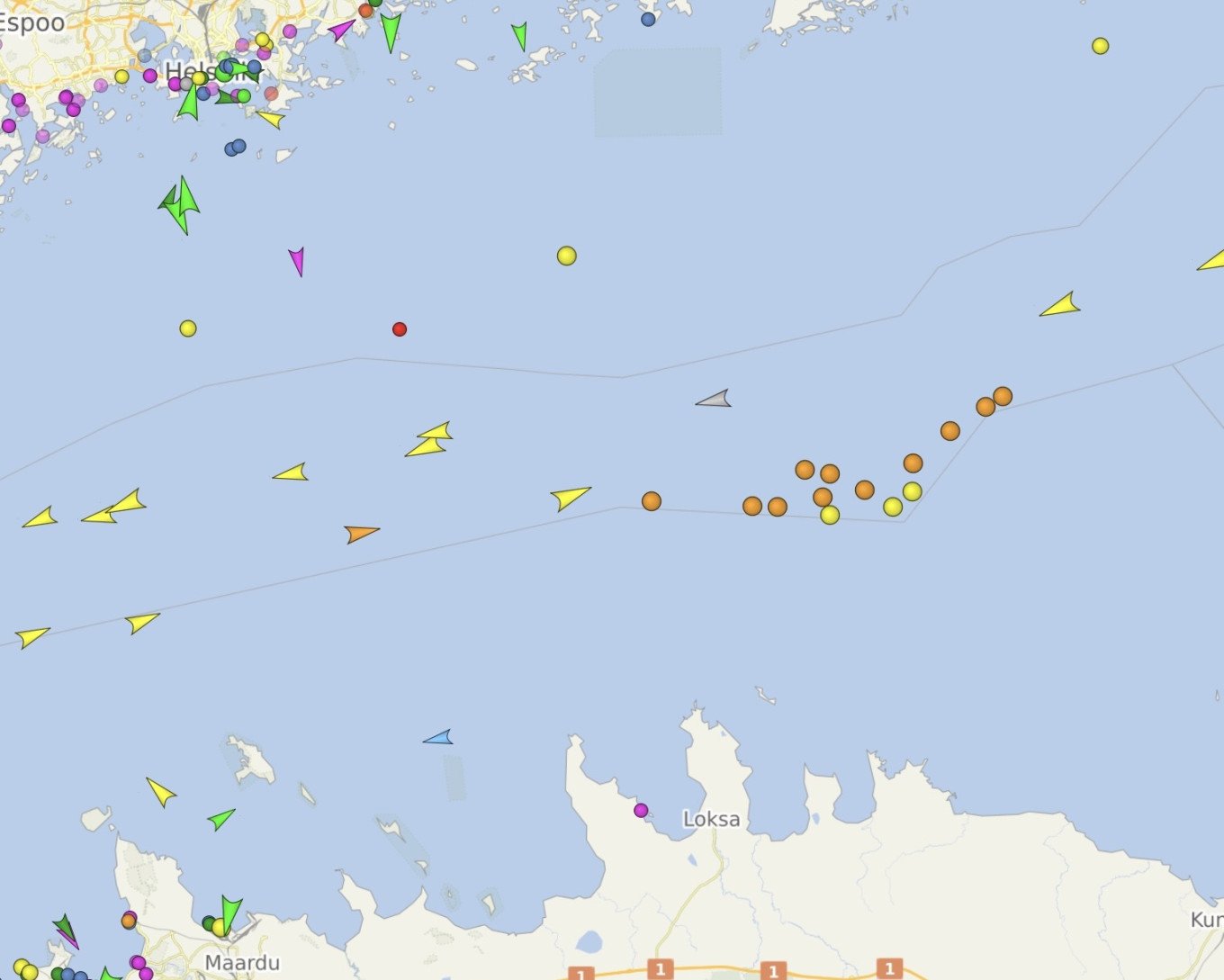
Dozens of Russian shadow fleet tankers are idling in the Gulf of Finland as they wait for oil terminals damaged by Ukrainian air strikes to resume operations, in what experts say raises the risk of sabotage or environmental damage in one of the world’s busiest shipping lanes.
Between 30 and 40 shadow fleet tankers are clustered around unofficial anchorage points in Russian waters, as well as the 6-nautical-mile-wide strip of international waters between Finland and Estonia.
“These are vessels that are linked to the Russian state. And now that the Russian state has acknowledged that link, they could be used for adversarial purposes while waiting,” Elizabeth Braw, a senior fellow at the Atlantic Council, told The Moscow Times.
The ships are unable to reroute to nearby ports due to the risk of being detained.
Screenshot April 14 from vesselfinder.com
NATO launched Operation Baltic Sentry in January 2025 to monitor suspicious shipping activity in the region after a spate of incidents in which shadow fleet vessels allegedly damaged subsea cables in the Gulf of Finland.
Only one incident of “malign damage” was detected that year, in December, when Finland detained the Fitburg cargo vessel on suspicion of severing a telecoms cable.
Russia’s shadow fleet includes over 3,000 vessels, hundreds of which have been sanctioned by the EU and the U.S. They provide a crucial source of income for Russia’s war chest as it continues its full-scale invasion of Ukraine.
The ships often sail under flags of convenience, meaning they are registered in countries with lax oversight, and use false registration details to avoid identification. Some crew members have been linked to Russian security services and private military companies.
The effective closure of the Strait of Hormuz amid the U.S.-Israeli war with Iran saw revenue from Russia’s seaborne crude exports surge by 115% month-on-month in March. Nearly half of these exports were transported by shadow fleet vessels.
Prices for Urals crude, typically sold at a discount compared to Brent, soared to a 13-year high of $116 per barrel in early April as global customers scrambled for alternative suppliers. The Financial Times estimated that the high oil prices generated up to $150 million a day in extra revenue for Russia’s budget.
The Gulf of Finland is vital for this economic lifeline, with 42% of exports passing through the ports at Ust-Luga and Primorsk combined.
But Ukrainian drone strikes in recent weeks caused damage so severe that no ships were able to dock at either port for several days, cutting into Russia’s windfall from the Iran war. Open-source data suggests that only two tankers are expected to dock at Primorsk between April 16 and May 18.
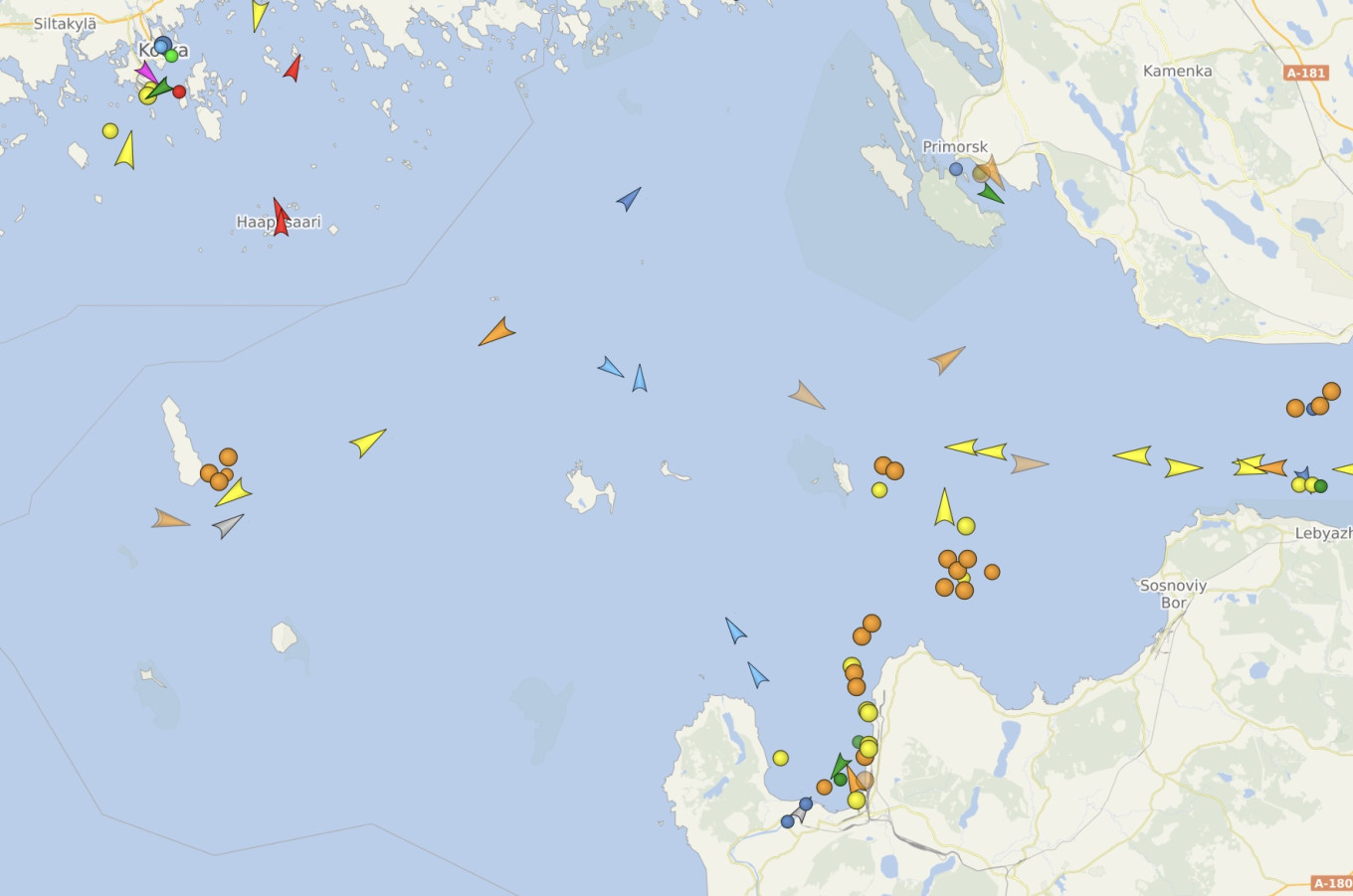
Screenshot April 14 from vesselfinder.com
Military officials and environmental experts have warned that the build-up raises the risk of an environmental disaster in the region.
Oil tankers are generally scrapped when they are 20-25 years old. However, Russia shelled out $10 billion between 2022-25 to buy hundreds of aging ships second-hand to keep its oil revenue flowing as Ukraine’s allies sanctioned ships associated with Russian exports.
These outdated craft, staffed by inexperienced crews, are more prone to structural failures, including oil leaks.
“These old tankers lack sufficient insurance, which means they are unable to cover any costs related to cleaning up a potential oil spill,” said Ksenia Vakhrusheva, an analyst at the environmental NGO Bellona.
Since the stalled tankers are currently empty and waiting to pick up their cargo from Russian ports, the environmental risks are less immediate than if they were full.
However, Varukhsheva warned there was still a risk of fuel leaking from the ships’ own fuel tanks.
Both Finland and Estonia have detained suspected shadow fleet vessels suspected of carrying out sabotage or failing maritime compliance standards.
Russia has increased its military presence to escort these vessels as other European nations — including Britain, Sweden and Belgium — have said they would take similar action.
Estonian naval commander Ivo Värk said last week that the growing Russian naval presence had raised the risk of escalation to the point where Estonia would only consider intervening if infrastructure already had been damaged or there was an imminent risk of an oil spill.
“The problem is that every ship has the right to innocent passage,” Braw said. “Ships have the right to wait for Russia’s Baltic Sea ports to be repaired. Because they are shadow fleet ships, they are not exactly the most welcome visitors. But they have a right to be there.”
A Message from The Moscow Times:
Dear readers,
We are facing unprecedented challenges. Russia’s Prosecutor General’s Office has designated The Moscow Times as an “undesirable” organization, criminalizing our work and putting our staff at risk of prosecution. This follows our earlier unjust labeling as a “foreign agent.”
These actions are direct attempts to silence independent journalism in Russia. The authorities claim our work “discredits the decisions of the Russian leadership.” We see things differently: we strive to provide accurate, unbiased reporting on Russia.
We, the journalists of The Moscow Times, refuse to be silenced. But to continue our work, we need your help.
Your support, no matter how small, makes a world of difference. If you can, please support us monthly starting from just $2. It’s quick to set up, and every contribution makes a significant impact.
By supporting The Moscow Times, you’re defending open, independent journalism in the face of repression. Thank you for standing with us.
Continue

Not ready to support today?
Remind me later.
×
Remind me next month
Thank you! Your reminder is set.