






"Operationally, Definitely No": Former IAF Vice Chief Issues Blistering Critique of Tejas Fighter Program
In a candid and highly critical assessment of India’s indigenous defense manufacturing, former Indian Air Force (IAF) Vice Chief, Air Marshal Nagesh Kapoor, has questioned the long-term viability of the Tejas Mk-2 fighter jet. Having retired from service less than two months ago, the Air Marshal’s comments represent some of the most pointed public criticism to date regarding the pace and direction of the state-run Tejas project.
The Problem of Obsolescence
When asked whether it is strategic for India to invest in a fourth-generation aircraft expected to enter service in the mid-2030s—a time when global powers are transitioning toward sixth-generation platforms—Air Marshal Kapoor was categorical: "No, operationally, definitely No."
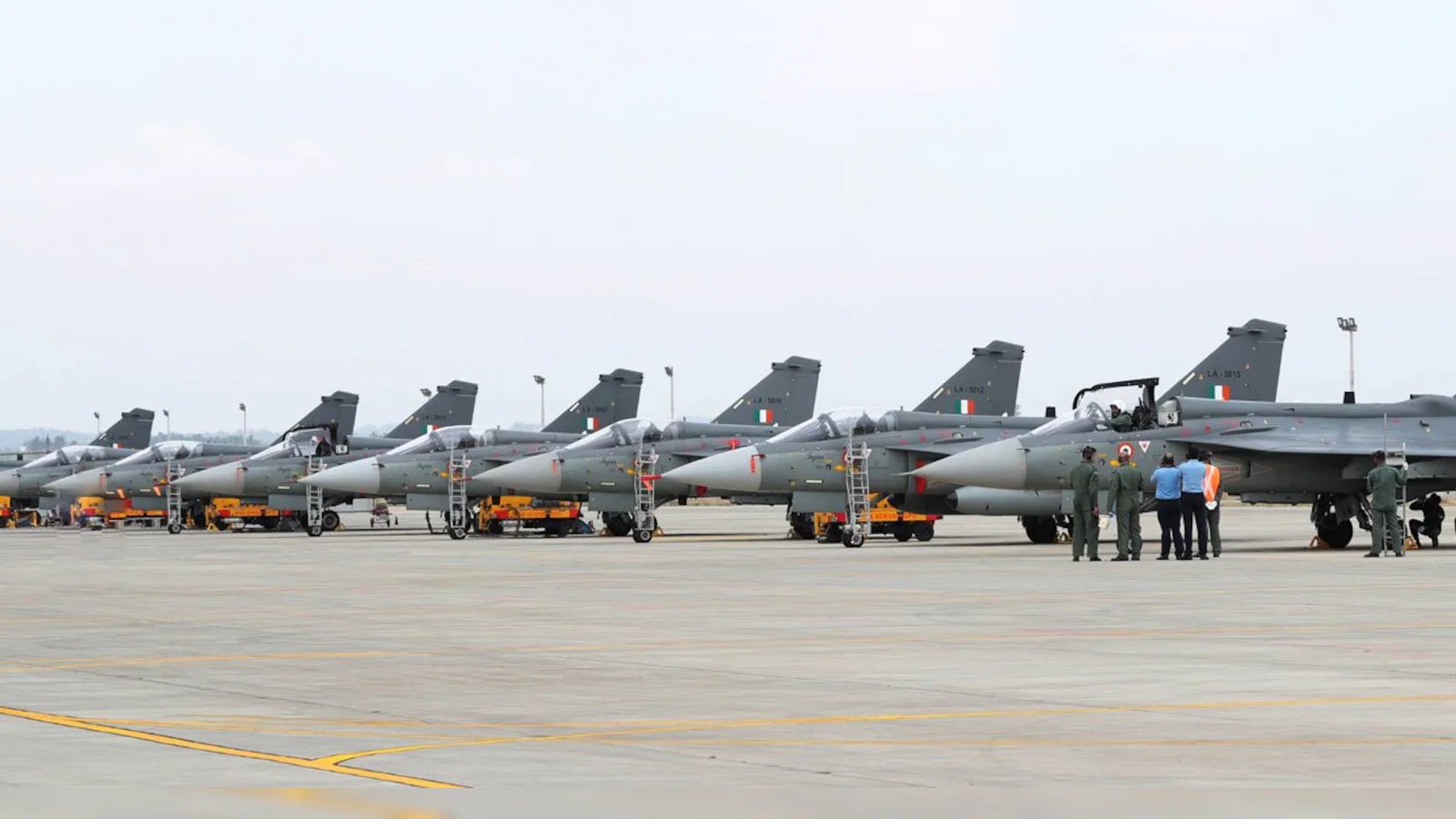
While the world shifts toward fifth-generation stealth fighters like the U.S. F-22 and the Chinese J-20, and looks toward sixth-generation advancements—which include AI-driven autonomy, "loyal wingman" drones, and hyper-networked "system of systems" capabilities—India remains tethered to developing upgraded versions of the fourth-generation Tejas.
"China is on its way to deploying 500 fifth-generation J-20 fighters by 2030," the Air Marshal noted. While he acknowledged that fourth-generation fighters could serve a role in secondary, non-cutting-edge missions due to the vast size of the country, he warned that they cannot replace the need for true modern superiority.
A Frustrated Air Force
A recurring theme in the Air Marshal’s critique was the perceived lack of accountability and urgency from Hindustan Aeronautics Limited (HAL). He described the current unavailability of the Tejas Mk-1A variant as a "huge concern."
"Why must it be that a machine that was promised to us so many years back with a certain set of capabilities continues to be denied to us on one pretext or the other?" Kapoor asked. "Why must we be hamstrung because someone somewhere has not been able to keep their promises?"
The Tejas program has faced chronic delays since its prototype first flew in 2001. The more advanced Tejas Mk-1A, ordered in 2021, has yet to see a single delivery to the IAF, hindered by engine supply chain issues and integration hurdles with avionics and radar. Meanwhile, the successor Tejas Mk-2 has seen its roll-out timeline pushed back repeatedly, with first flights now estimated for 2027.
A Call for Global Partnerships
The former Vice Chief argued that India is missing the forest for the trees by focusing solely on indigenous upgrades at the cost of years of development. He suggested that India should pivot toward international collaboration to bypass the "Gen 4.5" trap.
"Why not FCAS? Why not GCAP? Why not join in on any one of those programmes?" he suggested, referring to the European Future Combat Air System (FCAS) and the Japan-UK-Italy Global Combat Air Programme (GCAP). He argued that partnering with established global consortia would provide a faster track to next-generation capabilities than continuing a cycle of internal delays.
A Shifting Industrial Landscape
The criticism comes at a time when the Indian defense industry is undergoing a significant transformation. In February 2026, HAL was excluded from the government’s Advanced Medium Combat Aircraft (AMCA) stealth fighter project after failing to meet financial and industrial capacity requirements.
With HAL’s order backlog reportedly eight times its annual turnover, the government has begun pivoting toward private-sector participation. Major players—including Tata Advanced Systems, an L&T-BEL consortium, and a Bharat Forge-BEML consortium—are now the primary contenders to lead India’s future stealth ambitions.
As the debate continues, the IAF-HAL divide underscores a growing tension between the government’s "Make in India" defense mandate and the urgent, real-world requirement for a credible, modern frontline deterrent.