









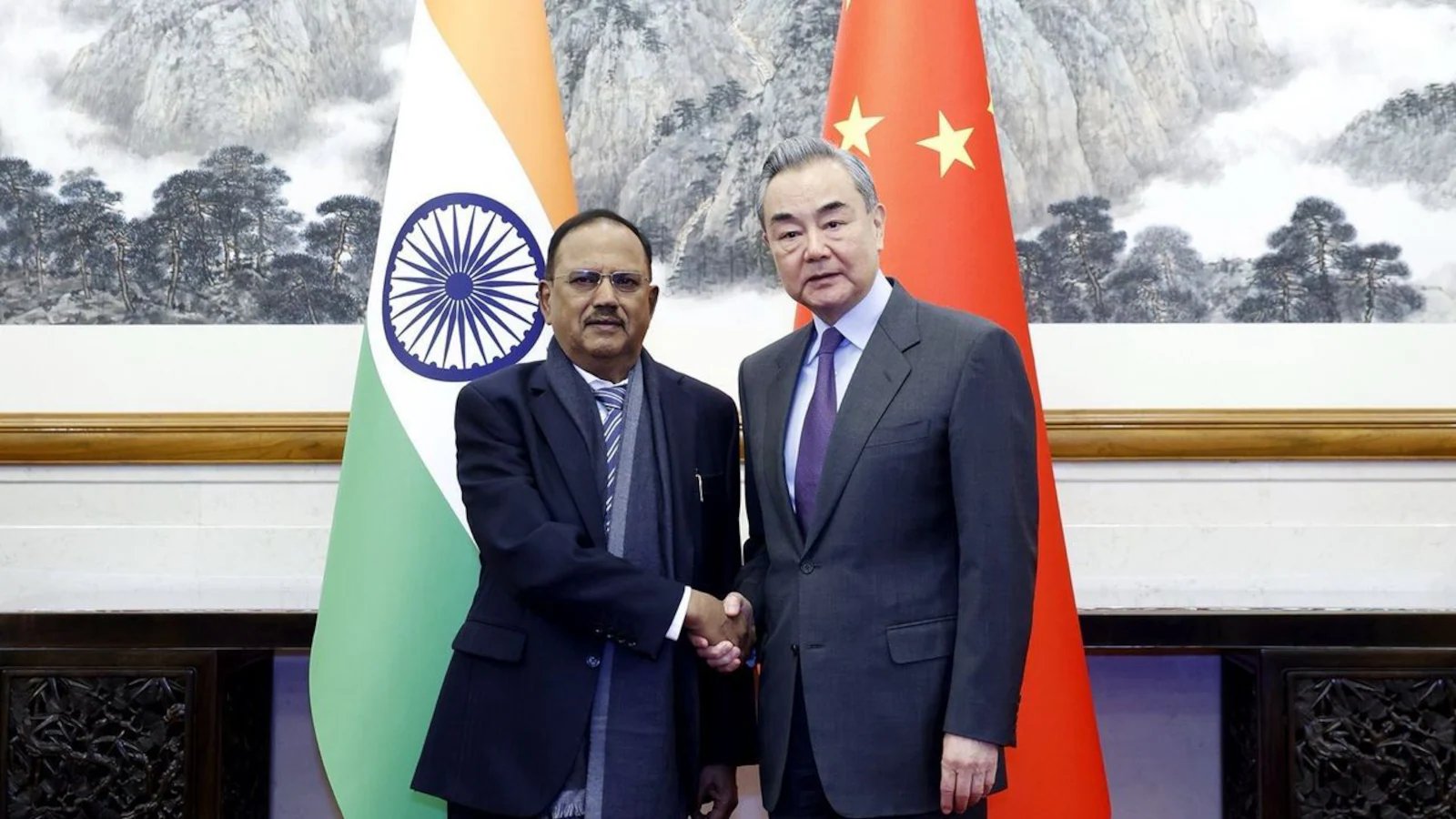
India, China Reiterate Commitment to Boundary Settlement Amid Diplomatic Push
BEIJING – In a significant move toward stabilizing bilateral relations, India and China have reaffirmed their commitment to achieving a political resolution for their long-standing border disputes. The discussions, held during a two-day visit to Beijing by Indian National Security Advisor (NSA) Ajit Doval, underscored the strategic necessity of maintaining peace along the Line of Actual Control (LAC).
A Focus on Stability
NSA Doval held comprehensive talks with Chinese Foreign Minister Wang Yi, with both officials serving as the designated Special Representatives (SR) for the boundary dialogue. The sessions were characterized by the Indian Ministry of External Affairs (MEA) as a “candid and in-depth” exchange of views, aiming to build upon the strategic guidance provided by Prime Minister Narendra Modi and President Xi Jinping.
The talks are viewed as a critical step in repairing ties that were severely strained following the 2020 Galwan Valley clashes. Central to the dialogue was the Indian position that peace and tranquillity in border regions are the necessary prerequisites for the “continued development and progress” of the overall bilateral relationship.
Strategic Cooperation
NSA Doval emphasized that the normalcy currently being witnessed in the India-China relationship is a direct consequence of both nations’ efforts to manage their differences.
“We have extensively talked about it today just to see how to effectively reinforce and further consolidate our efforts to maintain peace and tranquillity in the border areas,” Doval stated. He highlighted the positive momentum in relations, citing the resumption of the Kailash Manasarovar Yatra via Nathu La and traditional border trade as tangible examples of how regional stability benefits citizens on both sides.
Foreign Minister Wang Yi echoed these sentiments, noting that the relationship between the two nations has transcended bilateral concerns to take on “global and strategic significance.” Wang stressed the need for enhanced mutual trust and the removal of obstacles, stating, “We need to be good friends that enjoy good neighbourliness and be good partners that contribute to each other’s success.”
Looking Toward the Future
The dialogue, which falls under the framework of the Special Representatives mechanism established in 2003, comes at a pivotal time. With the upcoming BRICS summit on the horizon, both nations appear keen to ensure that the border issue does not impede broader regional and international cooperation.
Despite historical challenges, both sides have pledged to continue working toward a “political settlement” of the boundary question, keeping their long-term interests in view. While military posturing has occasionally cast a shadow over recent engagements, the high-level diplomatic exchange in Beijing serves as a signal that both New Delhi and Beijing are prioritizing stable, predictable communication channels to manage their complex 3,488-km frontier.